When it comes to operational excellence, two terms are often used interchangeably — efficiency and effectiveness. Yet, they represent two very different dimensions of performance. Understanding the difference between them is essential for every organization aiming to improve productivity, reliability, and quality through Lean and TPM (Total Productive Maintenance) principles.
Effectiveness – Doing the Right Things
Effectiveness means achieving the desired goals — delivering what is needed, when it’s needed, and with the required quality.
It answers the question:
Are we doing the right things to achieve our objectives?
In a production environment, effectiveness is reflected in how well a process or system meets customer requirements — such as on-time delivery, quality, and flexibility. A company can be efficient in producing large quantities, but if the products are not what the customer wants, it is not effective.
Efficiency – Doing Things Right
Efficiency focuses on the optimal use of resources — manpower, machines, materials, and time.
It answers the question:
Are we doing things in the best possible way, with minimal waste?
In Lean terms, efficiency is about reducing muda (waste), mura (inconsistency), and muri (overburden). The goal is to achieve maximum output with minimum losses — a principle that lies at the core of TPM.
Lean + TPM = Doing the Right Things, the Right Way
While Lean emphasizes value creation and flow — making sure we focus on the right activities — TPM ensures that machines and equipment are reliable enough to perform those activities efficiently and without interruptions.
Together, they create a powerful combination for achieving high OEE (Overall Equipment Effectiveness).
The Link Between TPM and OEE
OEE measures how effectively a production system is utiliz ed by combining three factors:
- Availability – percentage of planned time the equipment is running,
- Performance – speed and output rate compared to the ideal,
- Quality – proportion of good products versus total produced.
Each of these dimensions is affected by the Six Big Losses, which TPM directly addresses.
The Six Big Losses and TPM’s Impact
| Type of Loss | Description | Related OEE Factor | TPM Pillar that Reduces It |
| 1. Equipment Breakdown | Unplanned downtime due to failure | Availability | Planned Maintenance and Autonomous Maintenance prevent breakdowns through regular inspections and operator involvement. |
| 2. Setup and Adjustment | Time lost when changing products or tools | Availability | Focused Improvement (Kobetsu Kaizen) and Planned Maintenance shorten changeovers (SMED method). |
| 3. Idling and Minor Stops | Frequent small interruptions | Performance | Autonomous Maintenance empowers operators to detect and eliminate minor issues early. |
| 4. Reduced Speed | Equipment running below ideal rate | Performance | Focused Improvement identifies and removes speed losses through root cause analysis. |
| 5. Process Defects | Scrap and rework due to machine or process issues | Quality | Quality Maintenance ensures stable conditions and prevents defects at the source. |
| 6. Startup Losses | Defects and instability during start-up | Quality | Early Equipment Management ensures new equipment starts with optimal performance and reliability. |
The Pillars that Build Reliability and Performance
The 8 Pillars of TPM form a holistic framework that ensures both efficiency and effectiveness across the organization:
- Autonomous Maintenance – operators take ownership of equipment care.
- Planned Maintenance – preventive and predictive actions reduce breakdowns.
- Focused Improvement – cross-functional teams eliminate chronic losses.
- Quality Maintenance – ensures defects are prevented, not detected.
- Early Equipment Management – improves design for maintainability and reliability.
- Training and Education – builds skills and autonomy.
- Safety, Health, and Environment – ensures safe and sustainable work.
- Office TPM – extends efficiency principles to administrative processes.
When these pillars are integrated and sustained, the organization becomes both effective (achieving strategic goals) and efficient (optimizing how resources are used to reach them).
Digital TPM: Turning Data into Sustainable Improvement
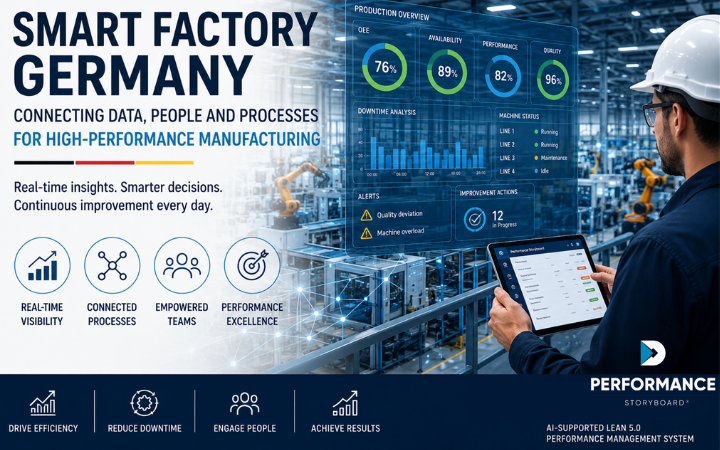
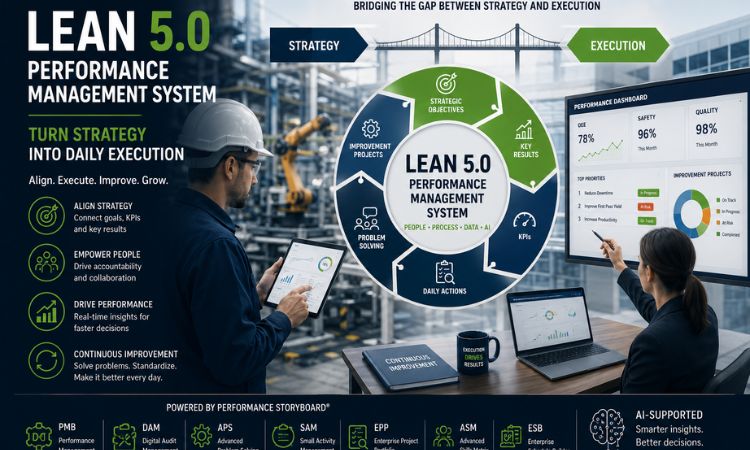
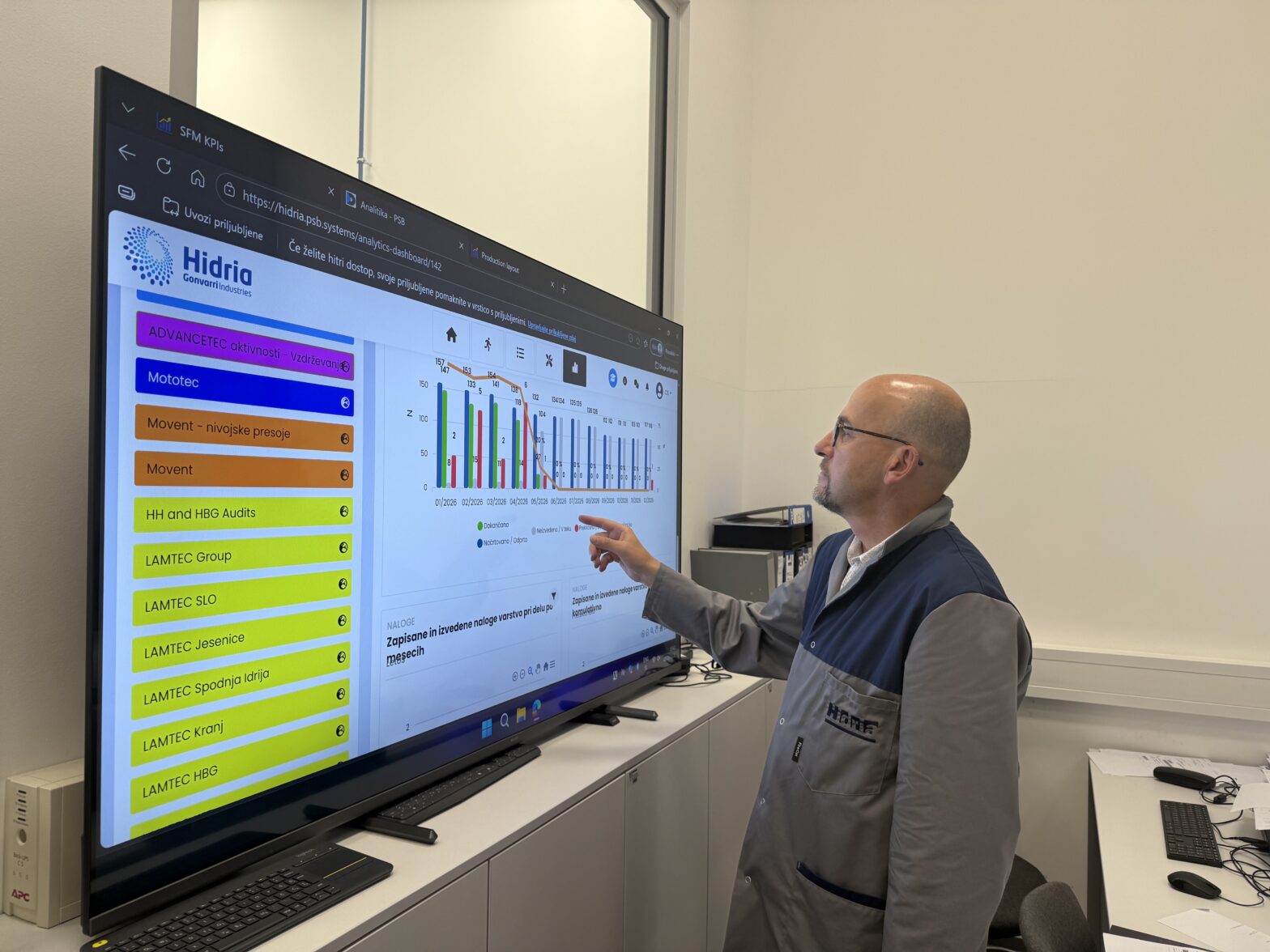
In the era of Industry 4.0, digital platforms such as Performance Storyboard® make it possible to monitor, visualize, and improve TPM activities in real time.
By connecting maintenance actions, OEE data, skills, and audits, companies gain a complete picture of equipment performance — allowing faster decisions, predictive maintenance, and measurable improvements in both efficiency and effectiveness.
Conclusion
Effectiveness means doing the right things.
Efficiency means doing things right.
TPM brings both together — empowering teams to maintain equipment, prevent losses, and build a culture of reliability and continuous improvement.
When implemented systematically and supported by digital tools, TPM becomes more than a maintenance program — it becomes a strategic enabler of operational excellence.