Most manufacturing companies perform audits regularly. Quality audits, Layered Process Audits (LPA), 5S audits, safety audits and process audits have become a standard part of modern manufacturing systems. Despite this, many organizations continue to face recurring quality issues, repeated deviations and corrective actions that never seem to reach a permanent solution.
The reason is rarely the number of audits performed.
Experience shows that the biggest difference lies in what happens after the audit has been completed.
Every Deviation Has a History
A customer complaint rarely appears without warning.
A machine breakdown is usually preceded by small abnormalities. Scrap is often the final consequence of deviations that have existed for days or even weeks. The same applies to safety incidents and process instability.
Every problem develops over time.
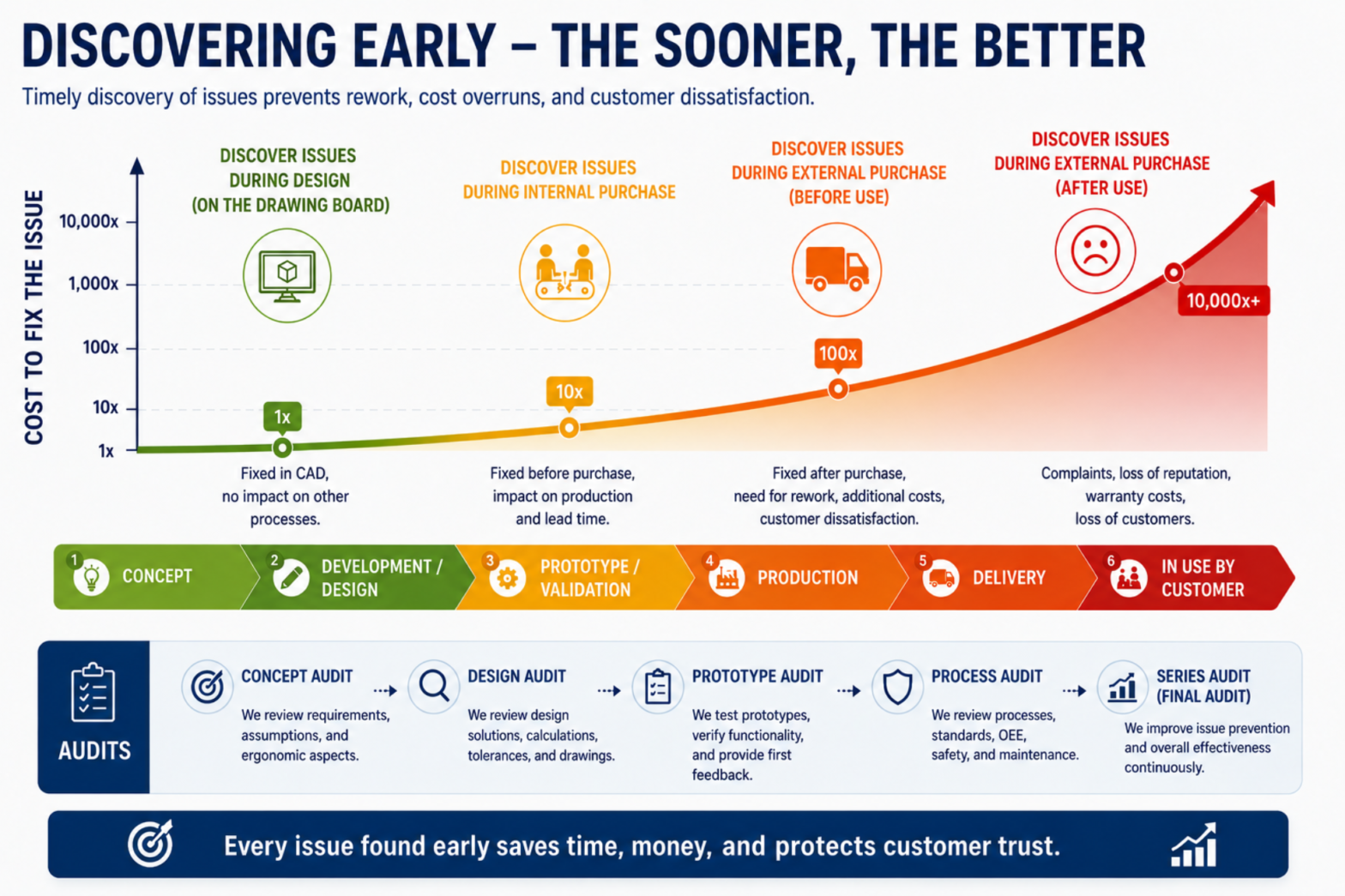
The earlier a deviation is identified, the easier it is to eliminate. Detecting the same issue later increases the cost of correction, disrupts production and often affects multiple departments before the root cause is addressed.
This is one of the main reasons why Daily Audit Management (DAM) has become an important part of Operational Management.
Audits Should Cover the Entire Value Stream
Production is usually the first area associated with audits.
However, implementation projects often reveal that many manufacturing problems originate long before production starts.
Design decisions made during product development, missing process requirements, incomplete manufacturing documentation or weaknesses in production planning frequently become visible only after serial production has begun.
Organizations that review only production activities often discover problems when the cost of correction is already significantly higher.
A broader audit approach provides visibility across the entire value stream and helps organizations identify deviations much closer to their source.
Process Stability Depends on Everyday Discipline
Stable processes are rarely the result of one major improvement.
They are built through hundreds of small activities that are performed consistently every day.
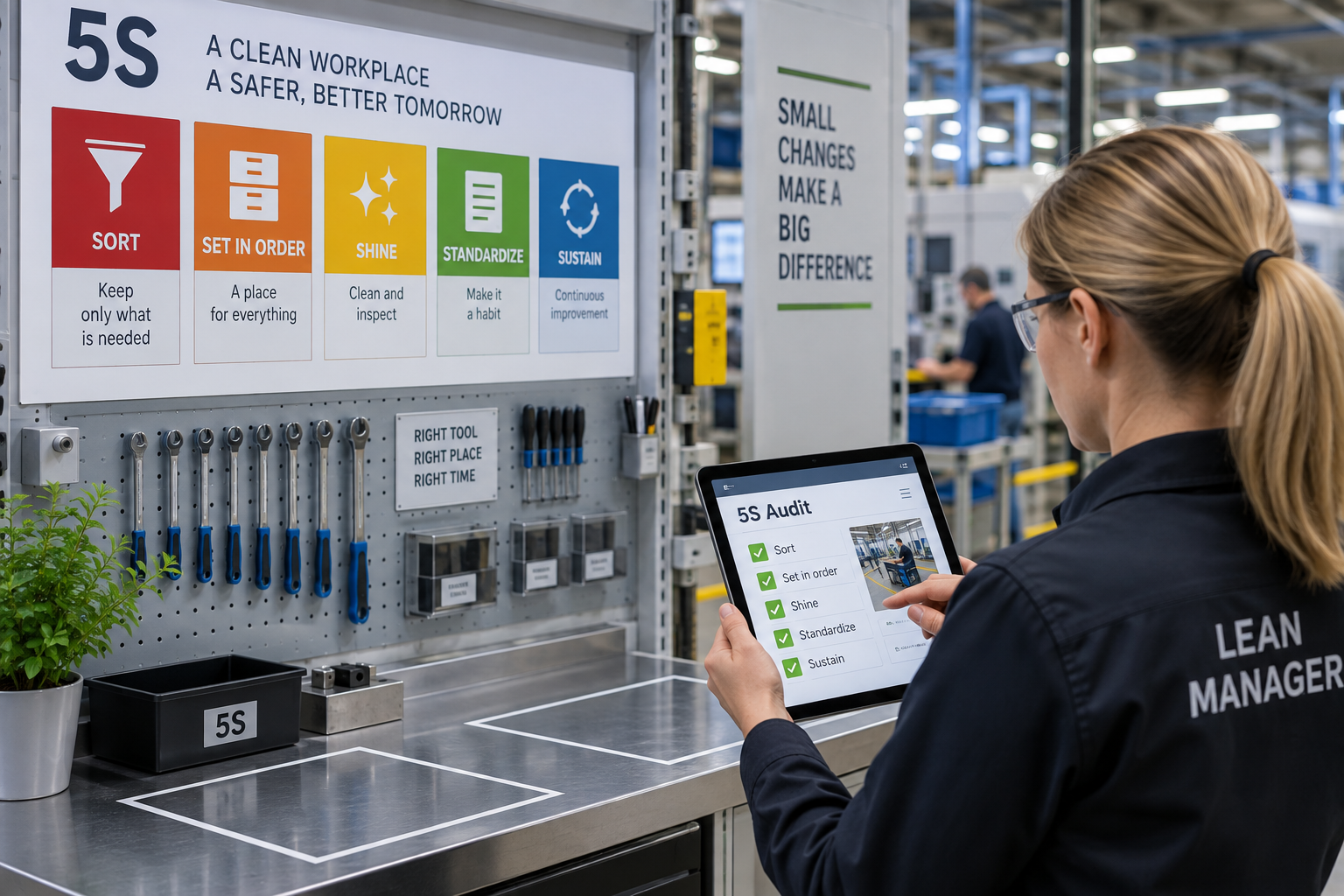
During audits, managers typically verify:
- Standard Work
- workplace safety
- ergonomics
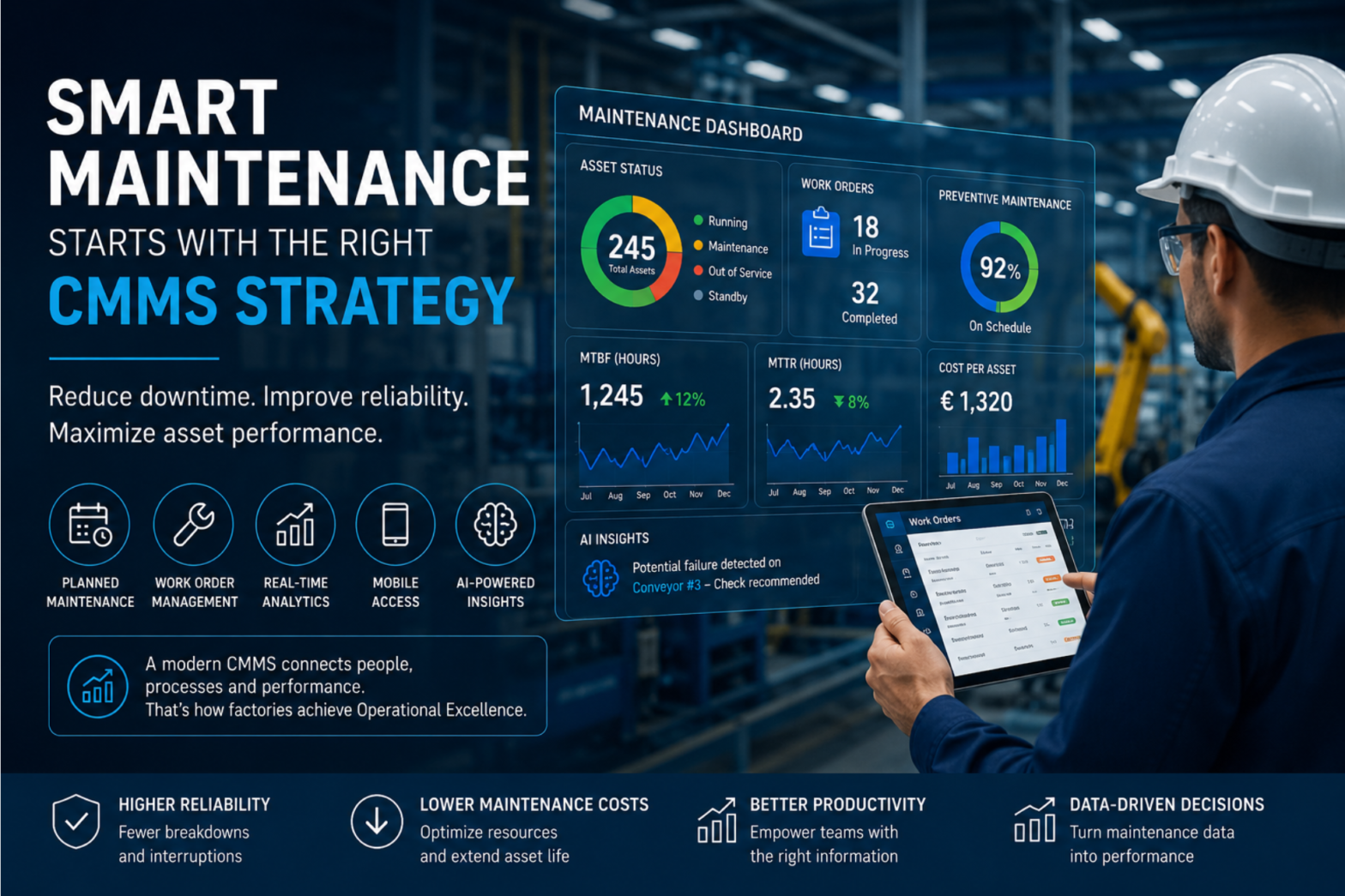
- equipment condition
- workplace organization
- adherence to operating procedures
- implementation of previous corrective actions
Each observation provides information about the current condition of the process.
Viewed individually, these observations may appear insignificant.
Viewed together over time, they reveal trends that allow organizations to respond before larger problems develop.
Audit Findings Must Become Actions
One pattern appears repeatedly across manufacturing organizations.
Audit checklists are completed on time, observations are documented and reports are generated. Several weeks later, the same deviations appear again.
The reason is usually straightforward.
Observations have not been converted into actions with a responsible owner, a completion date and follow-up verification.
A well-structured Daily Audit Management process creates a direct connection between every observation and the activities required to eliminate the cause of the deviation.
Execution becomes part of the audit process instead of a separate activity.
Digital Audits Improve Visibility
Many organizations have replaced paper checklists with digital audits.
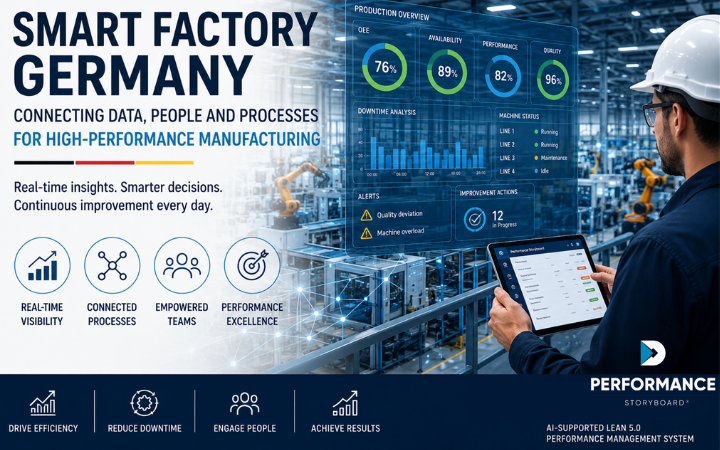
Digitalization simplifies data collection, reporting and traceability. It also provides management with immediate visibility of open observations, overdue actions and recurring deviations across different production areas.
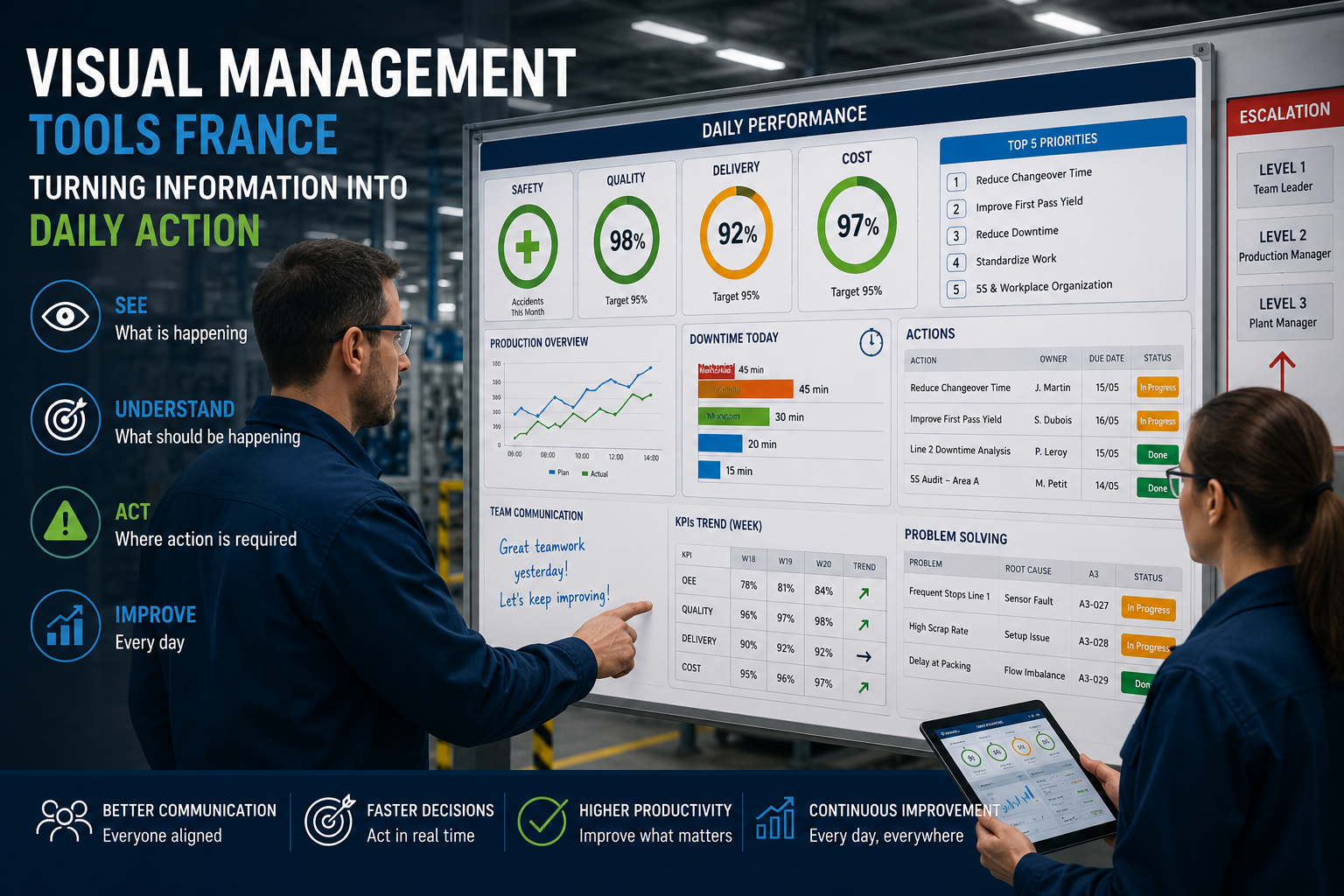
The greatest benefit appears when audit findings become part of the organization’s daily execution system.
Managers no longer review completed checklists.
They review unresolved issues, implementation status and recurring process weaknesses.
This creates a much clearer picture of overall process stability.
Building a Culture of Continuous Improvement
Organizations that integrate audits into their daily management routines usually experience similar improvements over time.
Deviations are detected earlier.
Corrective actions are completed more consistently.
Responsibilities become clearer.
Recurring problems gradually decrease.
Employees also begin to see audits differently.
Instead of viewing them as inspections, they recognize them as a practical tool that helps improve everyday work and supports Continuous Improvement.
Daily Audit Management as Part of Operational Excellence
Organizations pursuing Operational Excellence need reliable information about the condition of their processes every day.
Audits provide that information.
When observations are connected with execution, responsibility and follow-up, management gains a structured overview of operational performance and can respond before deviations develop into larger business problems.
Over time, Daily Audit Management becomes more than an audit process.
It becomes an integral part of the company’s daily management system and one of the mechanisms that supports stable processes, predictable performance and continuous operational improvement.
Executive Insight
Many organizations measure the effectiveness of their audit system by the number of completed audits.
A more meaningful indicator is how quickly identified deviations are eliminated and how often the same issues reappear.
Companies that consistently connect Daily Audit Management, corrective actions and daily operational follow-up gradually reduce process variability, improve execution discipline and strengthen the foundations of Operational Excellence.