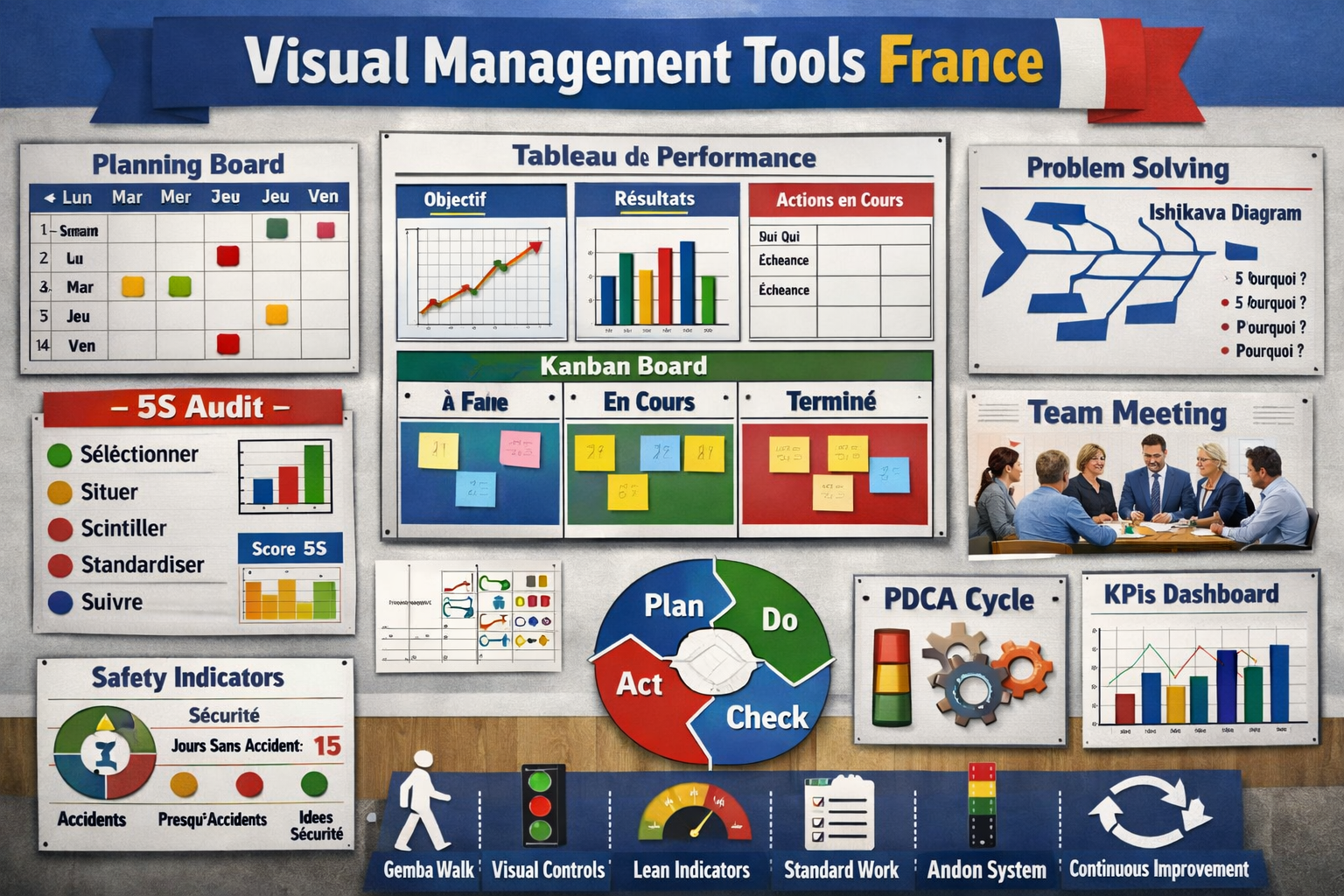
From visibility to structured execution in modern manufacturing
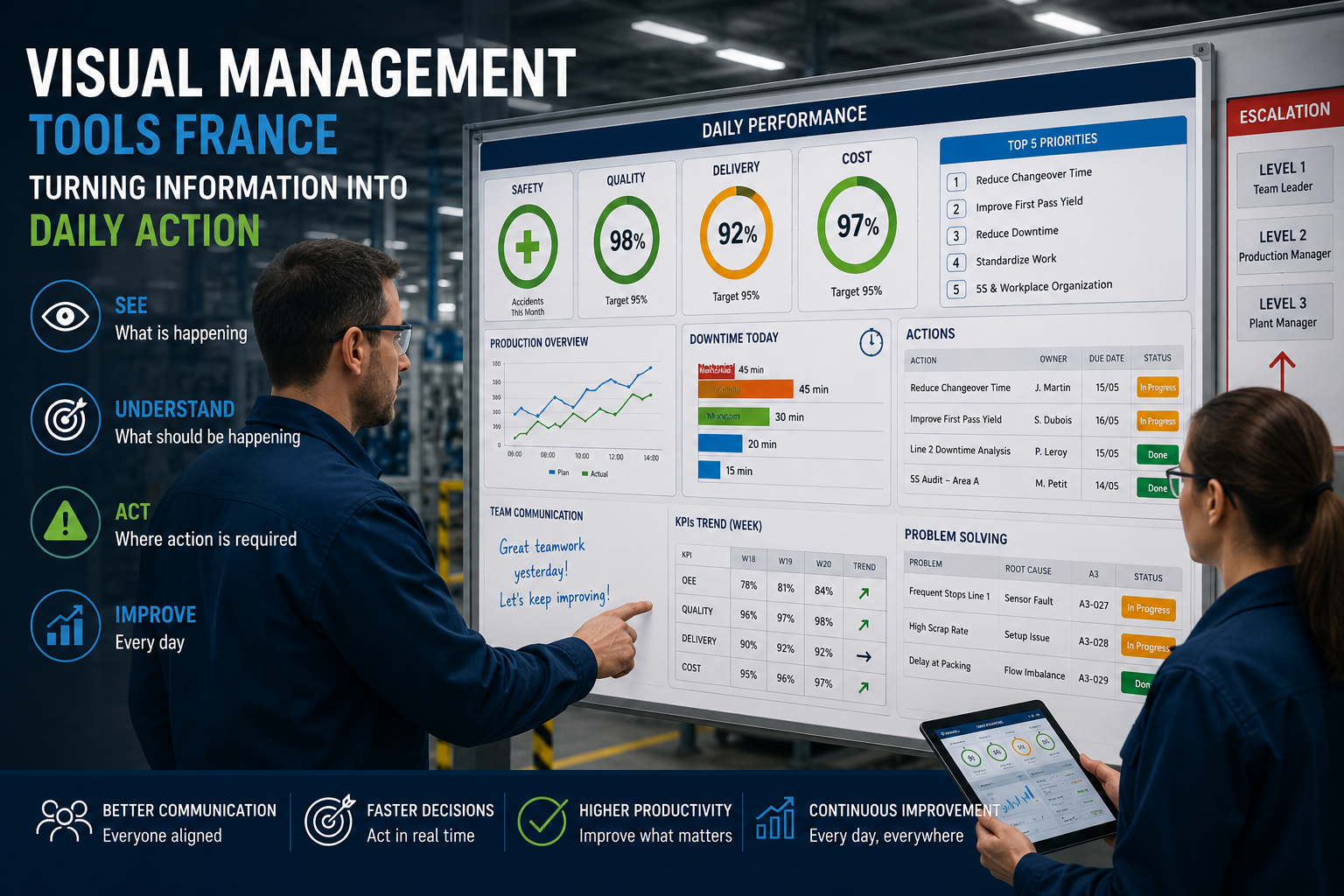
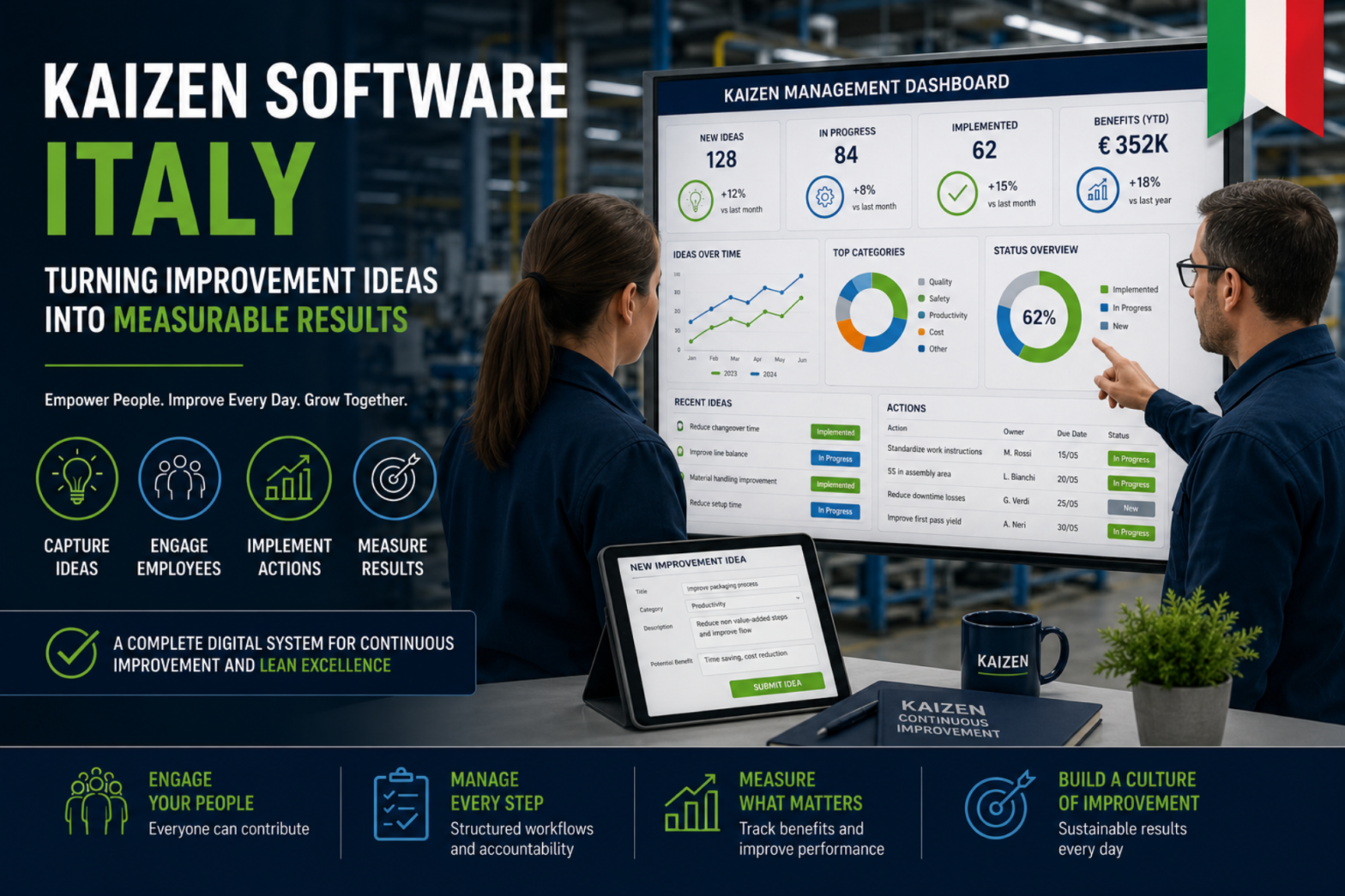
In French manufacturing, visual management is a well-established foundation of Lean practice. Across industries, companies use boards, KPIs, and daily meetings to create transparency and align teams around performance.
Today, this foundation is being further developed.
The focus is shifting toward a more advanced use of visual management tools France — one that strengthens the connection between real-time operations and management decisions.
The objective is clear:
to ensure that visibility directly supports action, and action drives results.
Visual Management as a driver of performance
At its core, visual management provides clarity.
It enables teams to understand performance at a glance, identify deviations, and align around priorities. When supported by consistent routines, it becomes a powerful mechanism for coordination across shifts, teams, and hierarchical levels.
French manufacturers are increasingly enhancing this capability by integrating visual management systems into structured Daily Management.
In this context, visual management supports:
- clear ownership of KPIs
- regular, structured review routines
- timely response to deviations
- continuous alignment between teams and objectives
This creates a stable operational rhythm, where performance is not only visible, but actively managed.
Strengthening Daily Management discipline
The evolution of visual management tools France is closely linked to the development of Daily Management practices.
Daily Management introduces consistency and discipline into everyday operations. It ensures that performance is reviewed systematically, decisions are made on time, and actions are followed through.
Within this framework, visual management becomes the central interface between data and action.
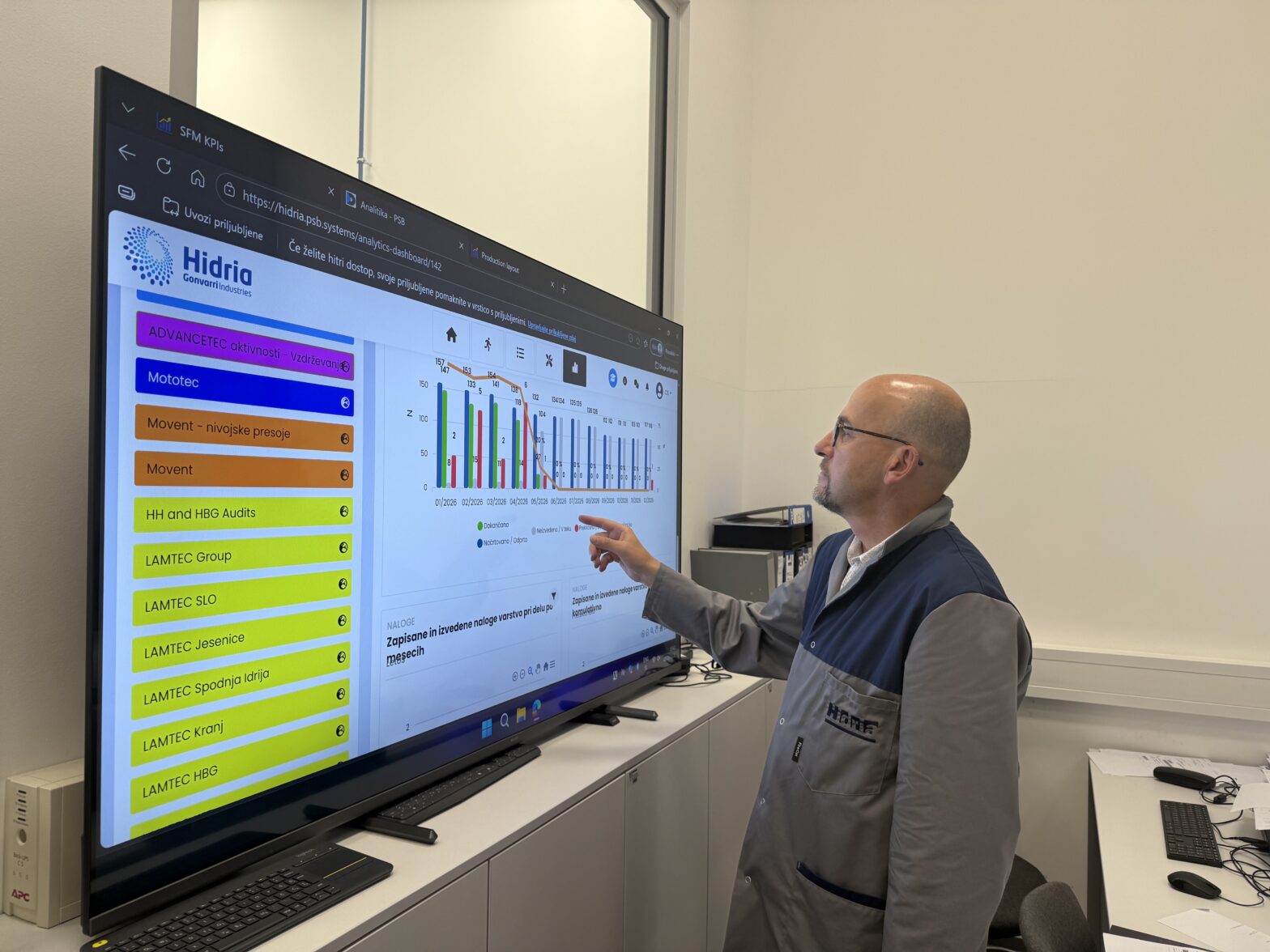
The concept of Gemba plays an important role in this process. By focusing on the actual place where value is created, organizations ensure that decisions are grounded in real conditions and verified facts .
This strengthens both the quality of decisions and the engagement of teams.
The role of real-time information
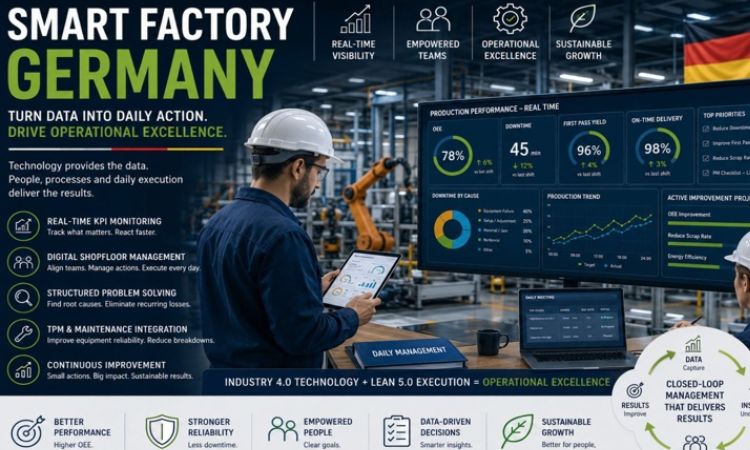
Modern visual management tools France increasingly incorporate real-time data from production systems, equipment, and operational processes.
This enhances the ability of organizations to:
- detect deviations earlier
- respond within the same operational cycle
- maintain alignment across all levels of the organization
Real-time visibility supports faster and more informed decision-making, enabling teams to act with greater confidence and precision.
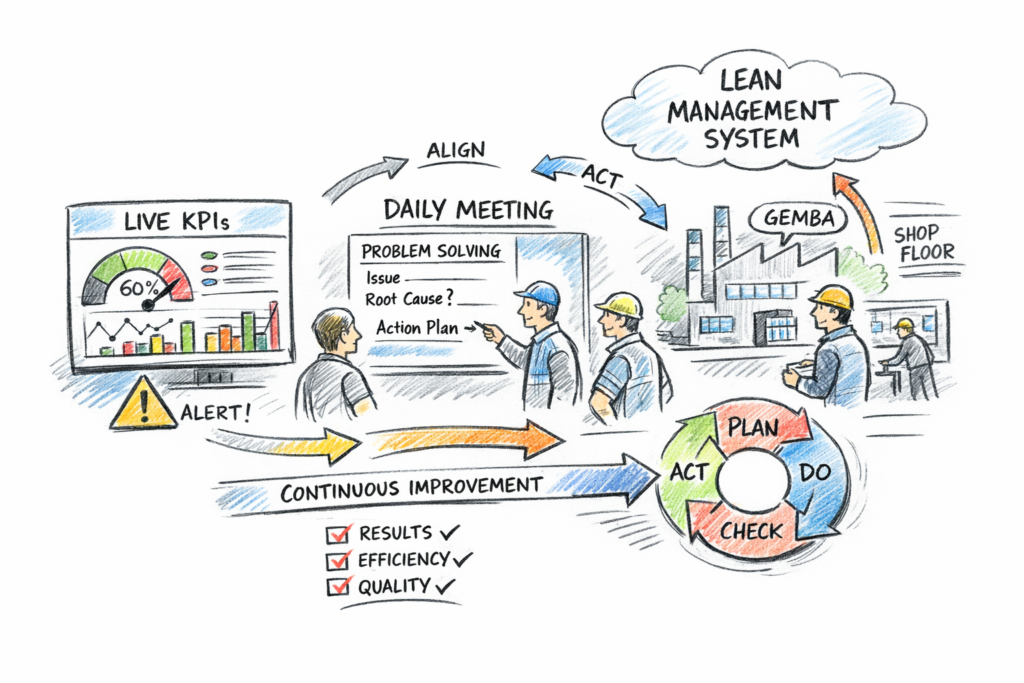
Integration within a Lean Management System
The most advanced implementations position visual management within a broader Lean Management System.
In this environment, visual management is closely connected with:
- strategic objectives
- KPI structures
- daily management routines
- problem-solving processes
- continuous improvement activities
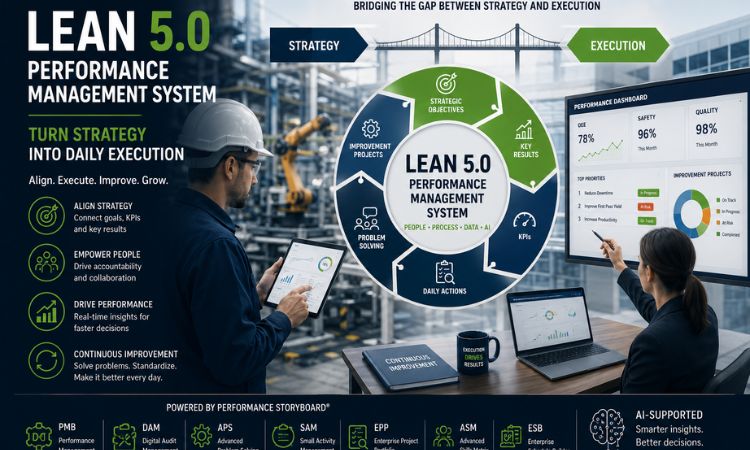
Performance Storyboard is a modular Lean Management System that connects strategy, KPIs, daily management, TPM routines, audits, structured problem-solving, and people development into one integrated digital framework.
Within such a system, visual management tools France play a central role in linking operational reality with structured execution.
Operational impact
When visual management is embedded in a structured system, its contribution becomes measurable.
Performance indicators guide decisions.
Deviations initiate immediate actions.
Actions are tracked and verified.
This creates a continuous improvement cycle aligned with PDCA (Plan–Do–Check–Act), where each step contributes to sustained performance improvement .
Organizations benefit from:
- faster response to operational issues
- improved consistency across teams and shifts
- stronger alignment between strategy and execution
- a more structured approach to continuous improvement
Implications for leadership
For management, this development represents a shift toward more focused and effective leadership.
Leaders work with clear, structured information provided by visual management tools France.
They concentrate on guiding actions, supporting teams, and ensuring follow-up.
Meetings become more efficient and decision-oriented.
Communication becomes more transparent and fact-based.
Responsibility is clearly defined and visible.
This strengthens the overall management system and supports sustainable performance.
Conclusion
The development of visual management tools France reflects the ongoing evolution of Lean in modern manufacturing.
Visual management continues to provide clarity and alignment.
Integrated within Daily Management and a Lean Management System, it becomes a key driver of execution and continuous improvement.
Organizations that build on this foundation achieve:
- greater operational stability
- faster and more consistent decision-making
- stronger connection between shopfloor reality and management
In this context, visual management is not only a method of displaying performance.
It is a structured approach to managing it every day, at every level of the organization.