When a poorly defined management process is digitalized, it does not automatically become a better process. It simply becomes digital.
This is one of the lessons we have learned repeatedly while working with manufacturing companies on Lean transformations and the digitalization of operational management. Companies are understandably attracted by what technology can provide: faster access to information, digital boards, automated workflows, notifications, analytics and increasingly AI-supported capabilities. Yet the fundamental management questions remain surprisingly traditional.
Which information does a manager actually need? What happens when a deviation occurs? Who is responsible for the next step? When does an issue need to be escalated? Which problems require structured analysis? How do we know that an agreed action has actually solved the problem?
If these questions are not clearly answered, technology can add functionality without necessarily improving the way an organization is managed.
For Lean Managers evaluating Lean 5.0 tools in Germany, this is an important starting point. Digital technology can strengthen Lean Management considerably, but its value depends on the maturity of the management processes it is expected to support.
First define how the organization should be managed. Then decide how digitalization can make that management system stronger.
Lean Maturity and Digital Maturity Are Connected
The relationship between Lean and digitalization has also been examined in German manufacturing.
Fraunhofer ISI analyzed data from 1,256 manufacturing companies to investigate the relationship between Lean Management and Industry 4.0 readiness. The study found a clear relationship between Lean maturity and digital maturity: companies with a higher level of Lean implementation also tended to demonstrate higher Industry 4.0 readiness.
The sequence identified by the researchers is particularly relevant for Lean Managers. Digital technologies frequently followed the implementation of Lean concepts, and Fraunhofer concluded that a high Lean level can be regarded as an important prerequisite for reaching the leading group in digital maturity.
The research also found that companies combining Lean principles with Industry 4.0 technologies showed higher average operational performance than companies with a weaker combination of the two approaches.
This supports an important principle for Lean digitalization: Lean and technology should not be treated as competing approaches. A mature Lean Management System provides the management logic that digital technology can then make more transparent, connected and easier to execute consistently.
Digitalizing a Board Is Easy. Digitalizing the Management Logic Is Harder.
Consider a company that has spent several years developing its daily management process. Meetings take place at defined times, relevant information is reviewed, deviations are discussed and actions are assigned. Management now decides to replace physical boards with digital ones.
Technically, this is relatively straightforward.
The more difficult questions begin afterwards.
Which deviation requires an action? How long should an unresolved issue remain at one management level before escalation? What distinguishes an immediate corrective action from a recurring problem that requires structured root-cause analysis? Who is authorized to close an action? Is completing the action sufficient, or must its effectiveness also be verified?
These are not software questions.
They are Lean Management questions.
If the organization has not defined the answers, digitalization will reproduce the existing ambiguity or force teams into a workflow that may not reflect the way the company actually wants to manage its operations.
This is why the preparation for digital Lean Management should begin with the management process rather than with a list of software requirements.
Standardize the Management Process Before You Digitalize It
Lean Managers are accustomed to standardizing production processes. We define the best known way to perform work, make abnormalities visible and improve the standard when a better method is found.
Operational management deserves the same discipline.
Before digitalizing daily management, for example, a company should be able to describe how its daily management process is expected to work across organizational levels. The purpose of each meeting should be clear. Responsibilities should be defined. Escalation rules should be understood. The organization should know how open actions are followed and when a recurring problem moves from immediate corrective action into structured problem-solving.
In practice, preparing for digitalization often exposes differences that have developed gradually over the years.
One department escalates an unresolved issue after one day, another after a week. One team closes an action when the task has been performed, while another verifies whether the expected result was achieved. One production area initiates structured problem-solving after repeated occurrences, while another continues creating new corrective actions for the same problem.
Digitalization does not create these inconsistencies.
It makes them visible.
For a Lean Manager, this is valuable information. Before configuring a digital system, the organization has an opportunity to decide which management practices should become the standard and which ones should be improved.
Lean 5.0 Should Strengthen the Management System
This is where Lean 5.0 becomes more interesting than simply replacing physical Lean tools with digital versions.
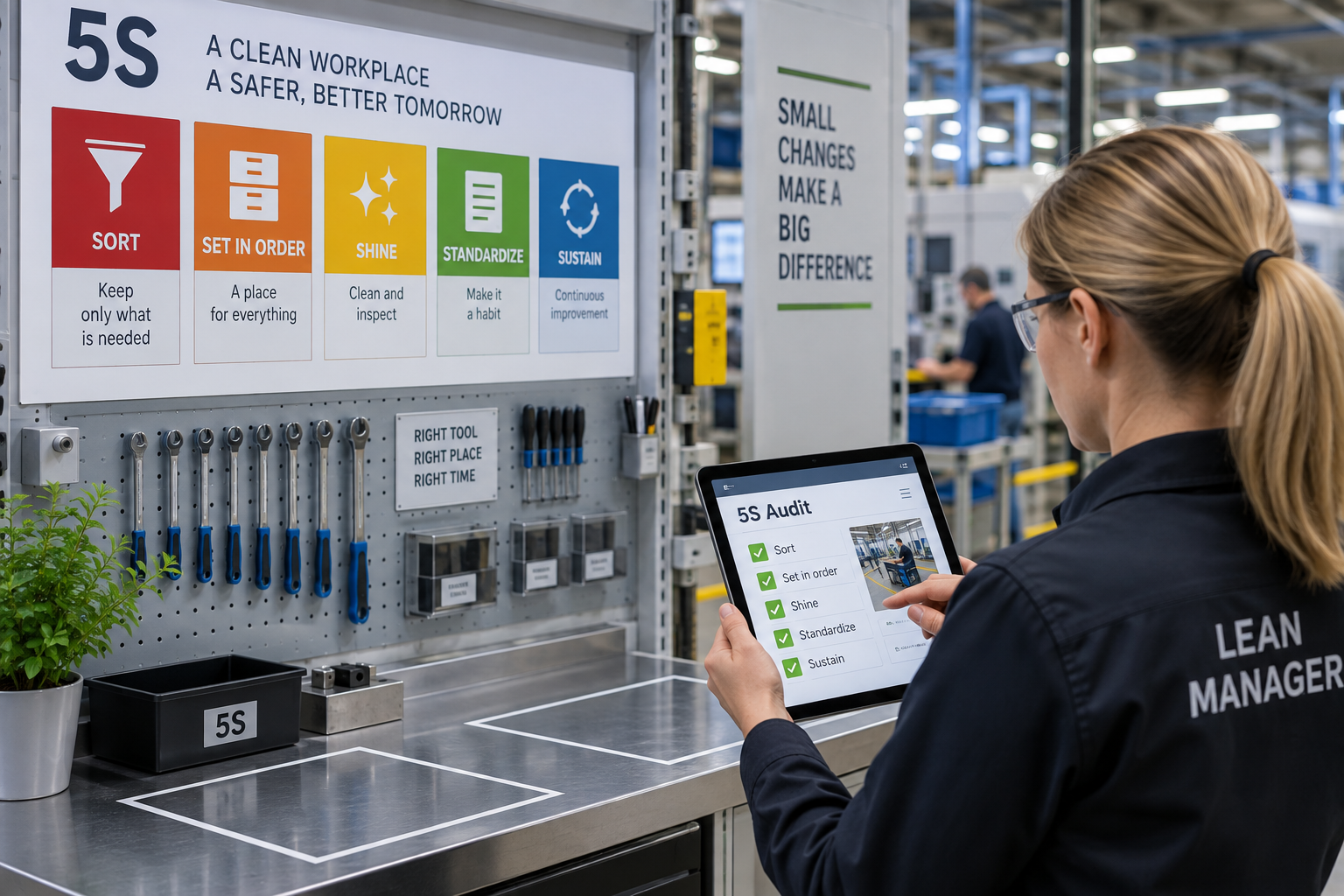
Putting an audit form on a tablet is useful. Replacing a whiteboard with a digital board can improve accessibility. Moving action lists from Excel into a common environment can improve transparency.
But these changes alone do not create a stronger Lean Management System.
The greater opportunity is to strengthen the connections within the management process: from a deviation to a decision, from a decision to responsibility, from responsibility to action, and from completed action to verified result.
For a mature Lean organization, the question should therefore not be:
Which Lean tools can we digitalize?
A better question is:
Which parts of our Lean Management System can become more effective when they are digitally supported and connected?
This changes the starting point completely.
Technology is no longer defining the process. The Lean Management System defines the process, and technology is selected and configured to support it.
Digital Lean works best when technology follows the Lean logic, not when Lean has to follow the logic of the technology.
What This Means for Performance Storyboard®
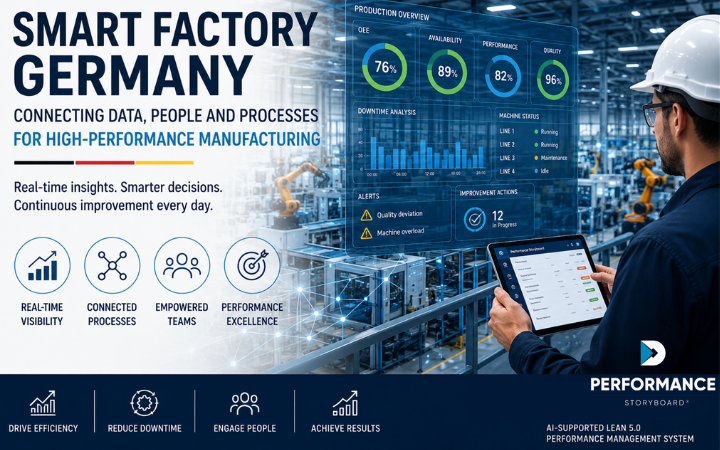
This principle is also fundamental to the way Performance Storyboard® has been developed.
Performance Storyboard® grew from more than twenty years of practical DEMETRA Lean Way experience with Lean Management, operational excellence and the digitalization of management processes in manufacturing companies.
The starting point was not a list of software functions. It was the way manufacturing organizations actually manage their operations: how managers review performance, recognize deviations, establish priorities, assign responsibilities, escalate issues, solve problems and follow improvement activities.
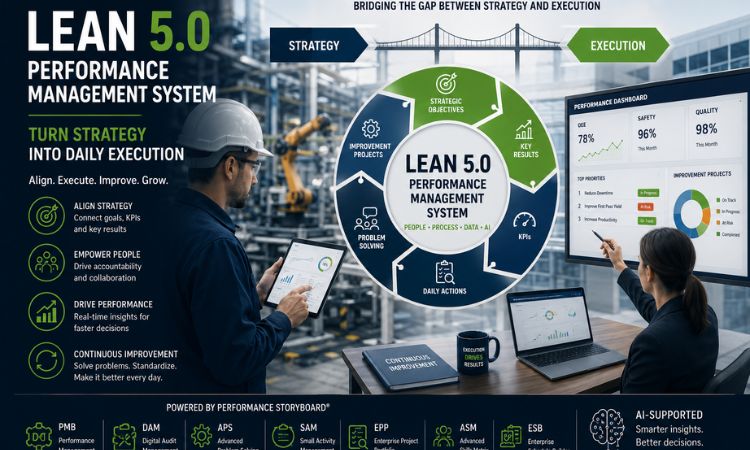
Performance Storyboard® is therefore designed as a Lean Management System with digital support for established management processes.
The distinction matters.
A digital solution should not define Lean Management for an organization. The company first needs to understand how its management system should work. Digital support can then make those standards easier to execute consistently, improve transparency across organizational levels and reduce the manual effort required to maintain information and follow-up.
For this reason, a meaningful digital Lean implementation should not begin with screens or functions.
It should begin with the company’s management processes.
A Practical Test for Lean Managers
Before selecting or implementing any digital Lean solution, take one existing management process and follow it from beginning to end.
Daily management is usually a good place to start.
Choose one real deviation from the shop floor and trace what happens to it. Where is it first identified? Who decides what happens next? How is responsibility assigned? What happens when the problem cannot be solved at that level? When is it escalated? If the problem recurs, when does structured problem-solving begin? How is the effectiveness of the final corrective action verified?
Do not map how the process is supposed to work.
Observe how it actually works.
At every step, ask:
Is this the process we want to digitalize and standardize across the organization, or simply the process we happen to have today?
That distinction is critical.
Digitalizing the current process without questioning it can preserve unnecessary complexity and inconsistent management practices. Defining the desired management standard first gives technology something valuable to support.
Executive Insight: Digital Maturity Needs Management Maturity
Manufacturing will continue to become more digital. AI, connected systems and increasingly accessible operational information will give managers capabilities that were not available even a decade ago.
The fundamental requirements of operational excellence remain much more stable.
Organizations still need clear standards. Abnormalities need to become visible. Managers need to establish priorities. Recurring problems need root-cause analysis rather than repeated containment. Actions need clear ownership, and improvements need to be verified and sustained.
The evidence from German manufacturing reinforces what we have observed in practical Lean work: digital maturity and Lean maturity can strengthen one another.
For Lean Managers, this has a very practical implication.
Before discussing what a new digital Lean system should do, define how your Lean Management System should work.
Then use technology to make that standard easier to execute, more transparent and more consistent across the organization.
A weak process does not become Lean because it is digital.