Why Most Visual Management Systems Fail
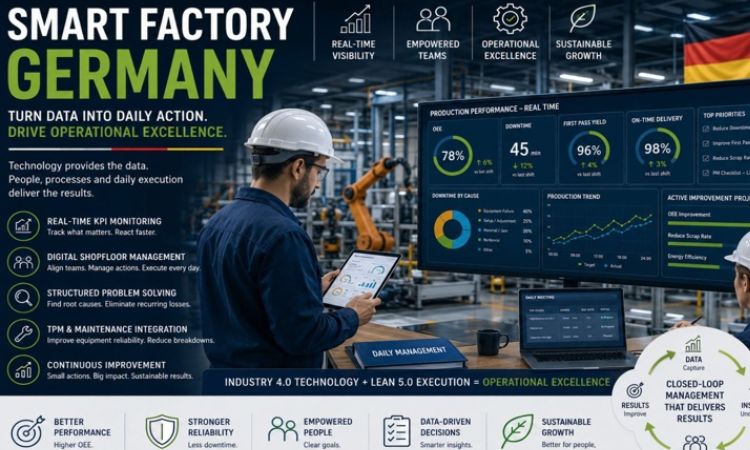
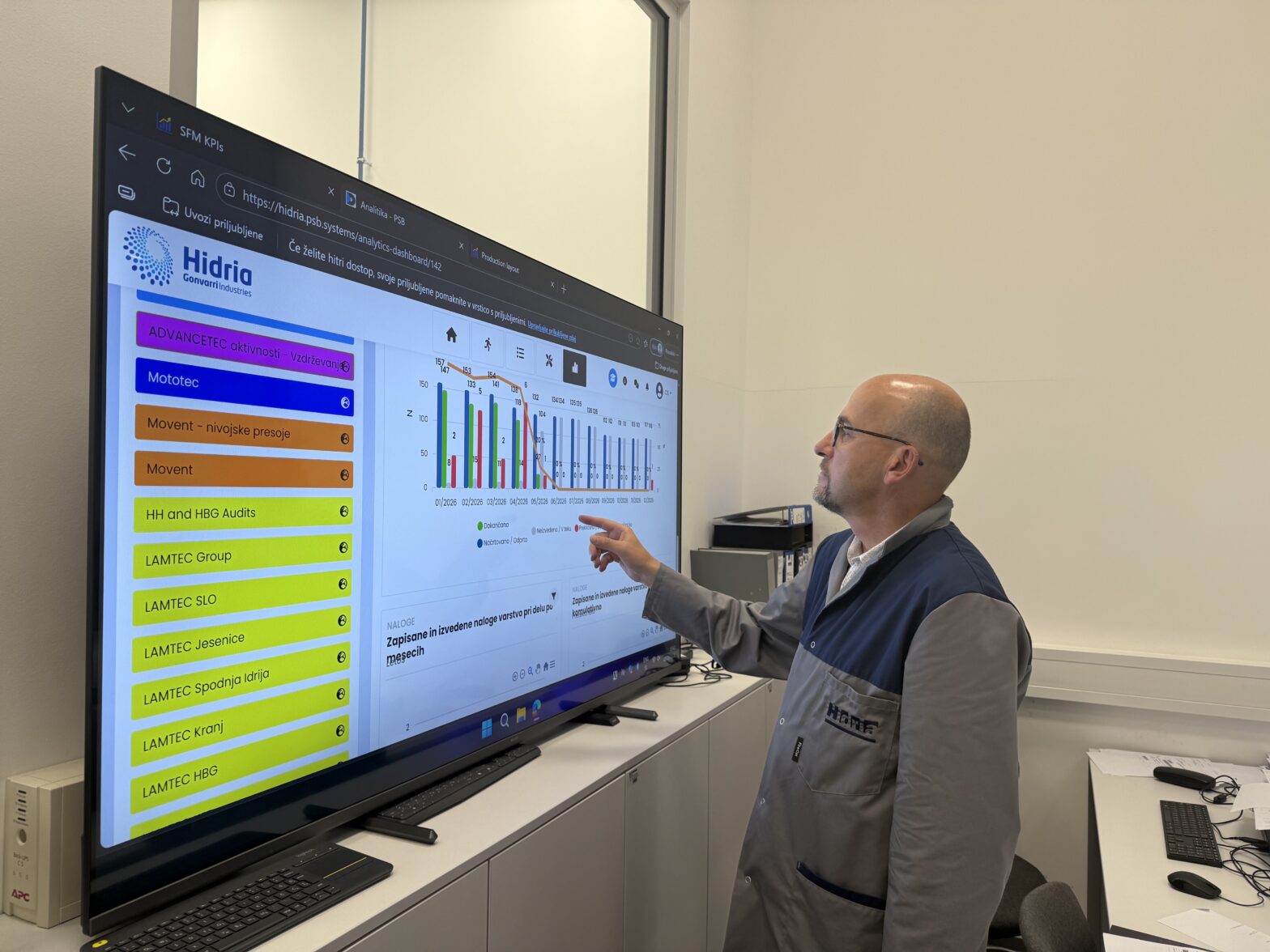
Walk through many manufacturing facilities and you will see dashboards, KPI screens, production reports and performance charts displayed throughout the factory.
Yet despite having more information than ever before, many organizations still struggle with:
- Repeating problems
- Slow decision-making
- Poor shift communication
- Lack of accountability
- Limited employee engagement
- Inconsistent execution of improvement actions
The problem is not a lack of information.
The problem is that information often stops at visibility.
Visual Management only creates value when it drives action.
What Is Visual Management?
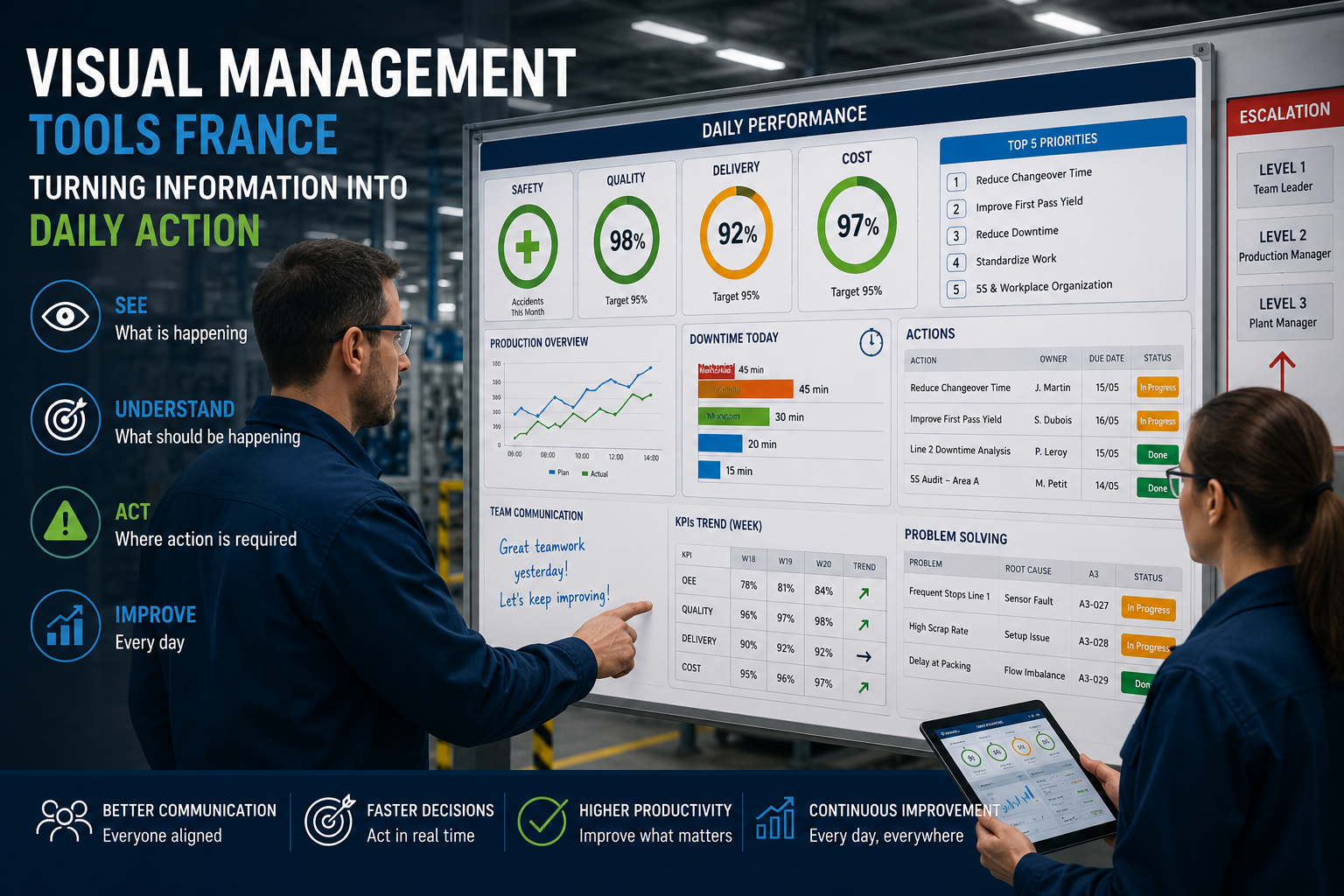
Visual Management is a Lean Management practice that makes operational conditions, performance, priorities and abnormalities visible so that teams can react quickly and make better decisions.
The purpose is simple:
Make normal conditions visible.
Make abnormal conditions impossible to ignore.
A well-designed visual management system helps people understand:
- What is happening
- What should be happening
- Where deviations exist
- What actions are required
Without lengthy reports, meetings or data analysis.
Visual Management Is More Than KPI Boards
Many companies still associate visual management with:
- Whiteboards
- Production charts
- KPI dashboards
- Digital displays
These tools are important.
However, true visual management is a management system, not a display system.
The most effective organizations connect visual management with:
- Daily Management Systems (DMS)
- Shopfloor Management
- KPI Management
- Problem Solving
- Lean Audits
- Continuous Improvement
- Escalation Processes
This creates an environment where visibility leads directly to action.
Why Traditional Communication Slows Operations
A common challenge in manufacturing is information delay.
Production teams experience issues long before management becomes aware of them.
Typical symptoms include:
- Different departments using different data
- Shift handovers with missing information
- Delayed escalation of problems
- Slow reaction to KPI deviations
- Lack of ownership for corrective actions
As a result, valuable time is lost while people search for information instead of solving problems.
Visual Management eliminates these delays by providing real-time visibility directly where decisions are made.
Visual Management and Lean Manufacturing
Visual Management is one of the most important elements of Lean Manufacturing.
It supports:
- Waste reduction
- Faster problem identification
- Standardized work
- Team communication
- Continuous improvement
- Operational discipline
Organizations that successfully implement Lean rarely rely solely on reports.
They create visual workplaces where performance, priorities and problems are immediately visible to everyone.
Practical Example: Reducing Daily Escalation Delays
A manufacturing company experienced frequent production disruptions despite having multiple reporting systems.
Initial Situation
- KPI reports generated daily
- Problems discussed several days later
- Actions frequently delayed
- Limited accountability
Implemented Solution
The organization introduced:
- Daily visual performance boards
- Shift KPI reviews
- Structured escalation process
- Digital action tracking
Results
- Faster problem escalation
- Improved shift communication
- Higher action completion rates
- Improved operational discipline
The key lesson was simple:
The visual board itself did not solve the problem.
The management process built around it did.
From Visual Management to Daily Management
The most advanced organizations connect visual management directly with daily execution.
Instead of displaying information only, they connect:
- Objectives
- Key Results
- KPIs
- Audits
- Problem Solving
- Improvement Projects
- Tasks
- Follow-up activities
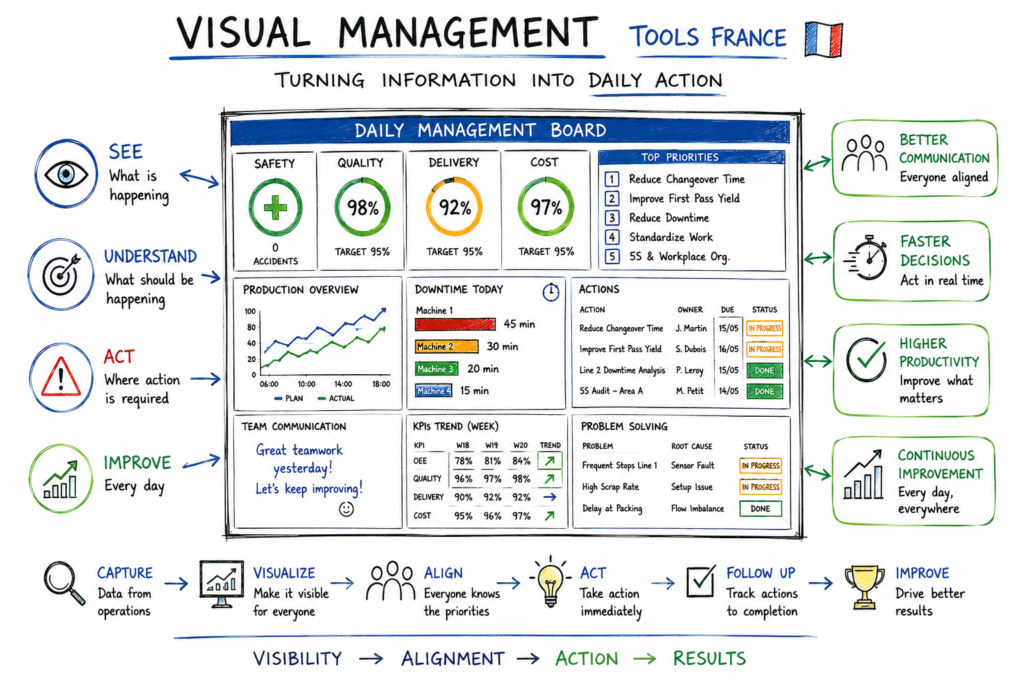
This creates a closed-loop management process.
When a KPI turns red:
- The issue becomes visible
- Ownership is assigned
- Actions are created
- Progress is monitored
- Results are verified
This is where operational excellence becomes sustainable.
The Role of Digital Visual Management
Traditional whiteboards remain valuable.
However, modern manufacturing environments require:
- Real-time updates
- Multi-site visibility
- Remote access
- Automated data integration
- Digital accountability
Digital Visual Management systems provide these capabilities while maintaining the simplicity and transparency that make visual management effective.
Visual Management and Industry 5.0
Industry 5.0 introduces a new perspective.
The objective is not only digitalization.
The objective is empowering people through technology.
Modern visual management systems help organizations:
- Improve decision-making
- Strengthen collaboration
- Develop accountability
- Increase engagement
- Support continuous learning
Technology provides visibility.
People create improvement.
How Performance Storyboard Supports Visual Management
Many software platforms focus on displaying information.
Performance Storyboard® focuses on executing improvement.
The platform connects:
- Strategic objectives
- Key Results
- KPIs
- Daily Management Systems
- Digital audits
- Problem solving
- Improvement projects
- Competence management
- Tasks and follow-up activities
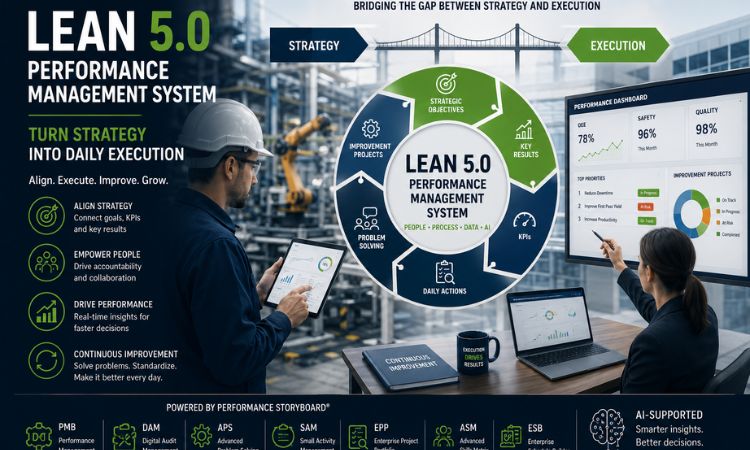
Within a single Lean 5.0 Performance Management System.
This enables organizations to transform visibility into action and action into measurable results.
Benefits of Modern Visual Management
Organizations that successfully implement visual management typically achieve:
Operational Benefits
- Faster issue identification
- Reduced downtime
- Improved productivity
- Better workflow coordination
- Increased OEE
Team Benefits
- Better communication
- Greater transparency
- Clear priorities
- Stronger accountability
- Increased engagement
Business Benefits
- Faster execution
- Improved customer satisfaction
- Stronger continuous improvement culture
- Greater organizational agility
Frequently Asked Questions
What are Visual Management Tools?
Visual Management Tools are systems that make performance, priorities and abnormalities visible so teams can react quickly and improve decision-making.
Is Visual Management part of Lean Manufacturing?
Yes. Visual Management is one of the core elements of Lean Manufacturing and supports transparency, waste reduction and continuous improvement.
Can Visual Management improve productivity?
Yes. By reducing communication delays and making problems visible sooner, organizations can improve operational performance and productivity.
What is the difference between a dashboard and Visual Management?
A dashboard displays information. Visual Management creates a process that transforms information into actions and results.
How does Performance Storyboard support Visual Management?
Performance Storyboard helps organizations connect KPIs, audits, problem solving, projects, tasks and daily management activities into one integrated Lean 5.0 Performance Management System.
The Future of Visual Management in France
The future of Visual Management is not about displaying more information.
It is about helping people make better decisions faster.
Organizations that successfully connect visibility, accountability and execution will create a significant competitive advantage.
Because performance does not improve when information becomes visible.
Performance improves when people act on what they see.