Manufacturing companies have invested heavily in digitalization over the past years. ERP systems, MES solutions, OEE analytics, Power BI dashboards, IoT platforms and artificial intelligence now generate enormous amounts of data. Yet in practice, many companies are discovering an interesting paradox — they have more data than ever before, while managers often have less time, focus and clarity in daily operations.
Today, the problem is often no longer a lack of information. The real challenge is execution.
Most organizations already have relatively mature business and data layers. They can detect deviations quickly, monitor KPIs, analyze downtime and generate reports almost in real time. However, the biggest gap often appears between data, decisions and the actual execution of actions in practice.
This is where operational problems begin repeating themselves. Actions remain open, responsibilities become unclear, improvement activities lose momentum and managers spend most of their time firefighting instead of systematically improving processes.
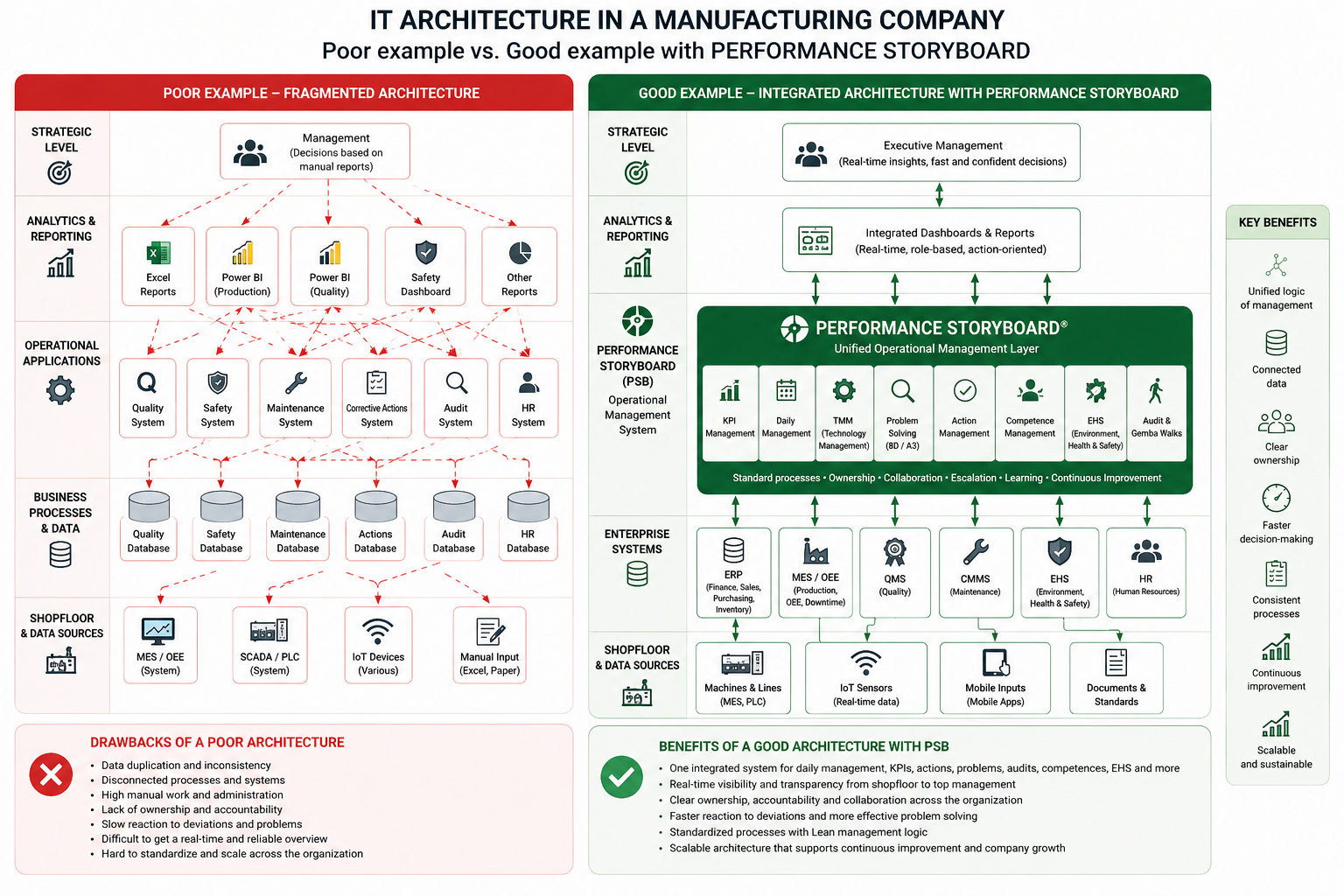
At the same time, many organizations face another major challenge. Digitalization is often introduced gradually and separately across departments. Quality implements one system, safety another, production a third, maintenance a fourth and engineering a fifth. The result is duplicated functionalities, disconnected processes, multiple databases and increasing administrative burden.
Employees are expected to use more and more applications, while the company still lacks a unified operational management view.
This is why many manufacturing companies today do not necessarily need more standalone applications. What they truly need is a more connected operational management architecture.
As a result, the so-called operational management layer is becoming increasingly important — the layer where KPIs, daily management, leadership routines, audits, continuous improvement activities, competence development and structured problem solving are connected into one integrated management system.
This is also where the logic of Lean management becomes highly relevant.
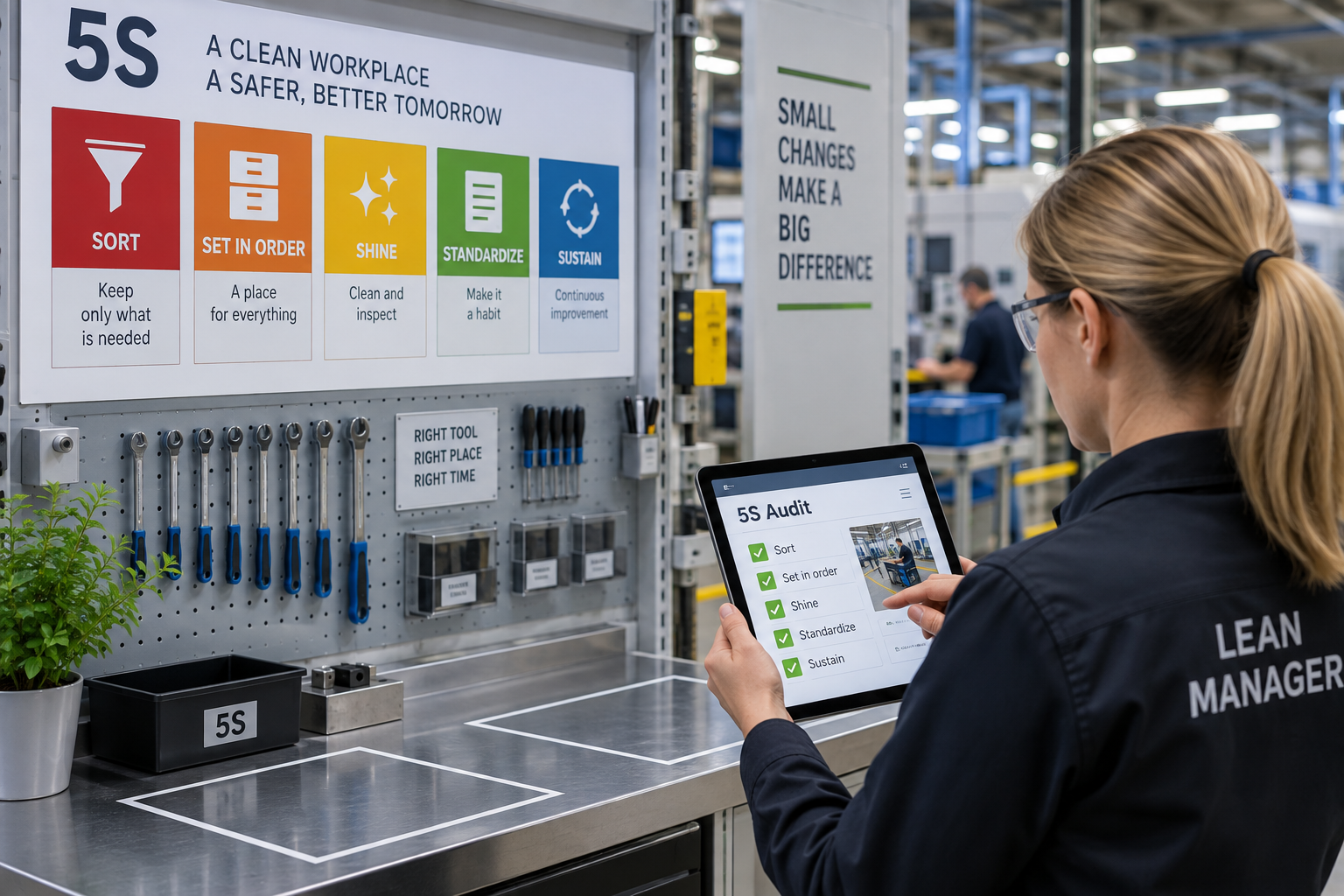
Lean has been one of the most proven organizational models for achieving world-class operational performance for decades. Lean was never only about tools, dashboards or reporting. Its real strength lies in standardized management processes, rapid response to deviations, people involvement, leadership discipline and continuous improvement culture.
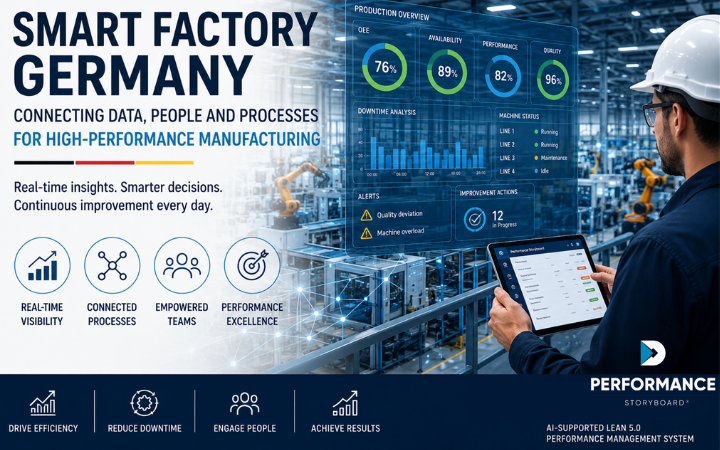
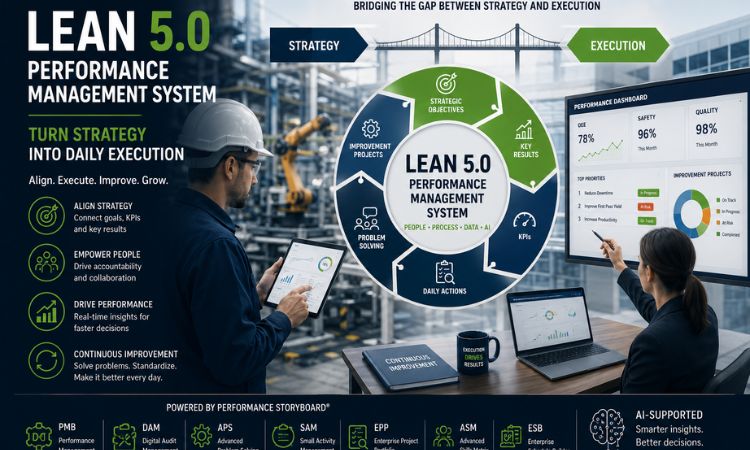
A good example of such an approach is PERFORMANCE STORYBOARD®, whose logic goes far beyond traditional KPI dashboards or management software. The system is designed as an integrated operational management architecture built around the principle:
Data → Decisions → Actions → Results
One of the major advantages of the system is that relatively universal PSB modules can support many different operational processes — from KPI management, daily management and continuous improvement activities to audits, Gemba Walks, structured problem solving, action management and competence development.
Instead of implementing more disconnected applications, companies can gradually build a more unified, standardized and execution-oriented operational management system.
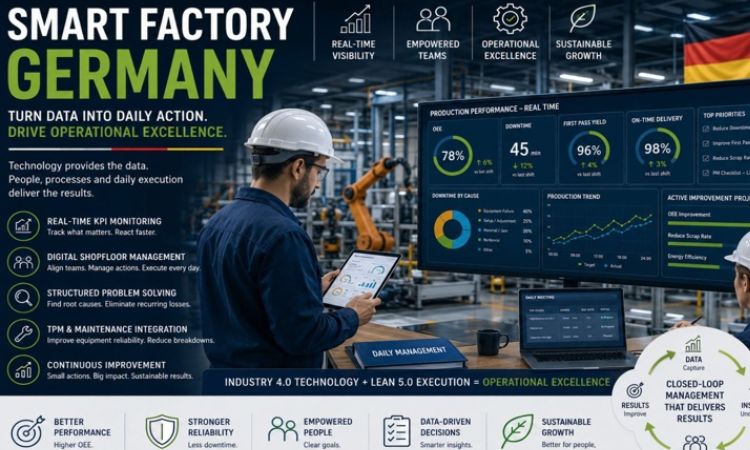
An interesting example of such an approach is , where the company is systematically developing the concept of a Lean 5.0 factory. Strong emphasis is placed on KPI transparency, crossfunctional collaboration, standardized leadership routines and connecting digitalization with real operational management practices.
Such examples clearly show that the future of manufacturing will probably not be decided simply by having more data or more artificial intelligence.
The real differentiator will be the ability of companies to connect people, processes, digitalization and execution management into one integrated operational excellence system.