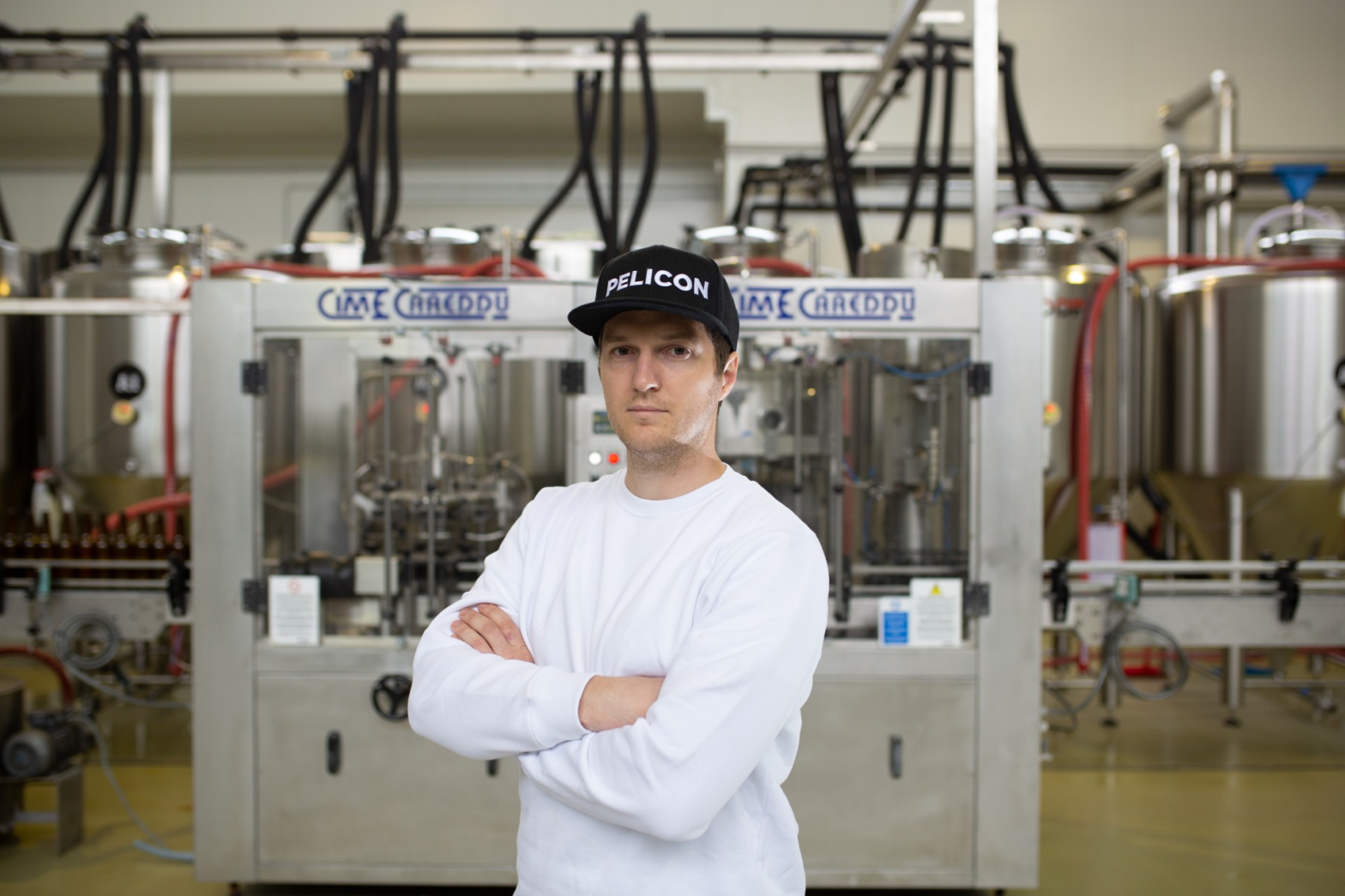
Pelicon Brewery is not a typical brewery. It is a company that combines craft production, in-house recipe development, its own distribution network, and a very direct, hands-on approach to continuous improvement. At the center of the story is Matej Pelicon – an entrepreneur who does not see Lean as a theory, but as part of everyday decision-making and daily work in production.
Matej met Bojan Šinkovec in February during a WCM training program in Nagoya, where they exchanged views on process optimization and organizational development through real industrial examples.
That is why we are especially pleased that Matej will join LEAN AKADEMIJA 2026 as a guest speaker. His story clearly demonstrates that Lean is not reserved only for large corporations. In smaller companies, it can often be even more direct, pragmatic, and effective. Pelicon is an excellent example of how a Lean mindset can become a key driver of growth, flexibility, and long-term success.
A hands-on entrepreneur, not a theorist.
How was Pelicon Brewery established, and how does your company operate today?
Anita and I founded Pelicon Brewery in 2013, and we are both still actively involved in the business today. As the name suggests, we produce beer, but also non-alcoholic beverages. We brew and bottle in our own brewery, install and maintain dispensing systems ourselves, develop our own recipes, and manage our own distribution.
What does implementing Lean approaches look like in a small company with limited resources?
We are a team of eight people and face a large number of challenges every day. Precisely because we are small, it is often difficult to find time for optimization. A significant part of our “Lean time” is dedicated to improving processes in order to gain time — time that we then reinvest into further improvements and Lean education.
Can you share a concrete example of how you solved an organizational challenge using a Lean approach?
During a parental leave absence, we did not hire a replacement employee. Instead, by restructuring working time, eliminating duplicated work, and introducing new workstations closer to the actual operations, we managed to cover the entire absence without major difficulties.
How do you approach company growth without increasing the number of employees?
For a long time, we struggled with seasonal demand, and we often ran out of certain beer styles. It became clear that with growth, we would quickly reach our capacity limits. I considered adding another shift, hiring a new employee, or optimizing the filling line.
What was the key turning point in your thinking?
Through the Lean approach, I realized that the real bottleneck was brewing, not filling. That completely shifted my focus.
How did you specifically optimize the brewing process?
Every day, I gradually adjusted and improved the brewhouse. In less than a year, we reached a point where the brewer only needs to be actively present around 25% of the time. We are currently continuing to upgrade the process with the goal of producing three batches in the same amount of time in which we currently produce two. The key is to focus on one issue and solve it properly.
How do you approach optimization given limited investment possibilities?
Since automation solutions are often too expensive or oversized for our needs, we develop most improvements ourselves. Every solution is carefully considered from multiple perspectives, with a strong focus on minimizing energy consumption.
Where do you see the greatest opportunities for improvement?
The cheapest — and often most effective — improvements are on existing machines. There are many opportunities in processes where operators mostly wait and monitor operations. It is important to understand that opportunities for improvement exist everywhere — even in areas we have already improved.
Do you have a “rule” that guides your improvements?
Our mantra is simple: first fix what bothers you the most.
How has your understanding of Lean evolved over time?
During the WCM program in Japan, I had the opportunity to see different Kaizen approaches firsthand. Almost everyone emphasized that Lean is not easy and that relatively few companies truly practice it consistently.
What does Lean actually mean to you?
Lean is not just a collection of tools, but a way of managing a company. Once you start recognizing waste everywhere and understand that many problems can be eliminated or reduced with minimal investment — often simply with your own time and effort — your way of thinking changes completely.
How does this influence the organization and the people?
Gradually, you start involving employees, asking for their opinions, and encouraging them to think differently. Over time, this changes the company culture. Approaches such as Hoshin Kanri follow the same logic. At some point, you begin asking yourself: “How did we ever work any other way?”
🌟 Join us at LEAN ACADEMY 2026