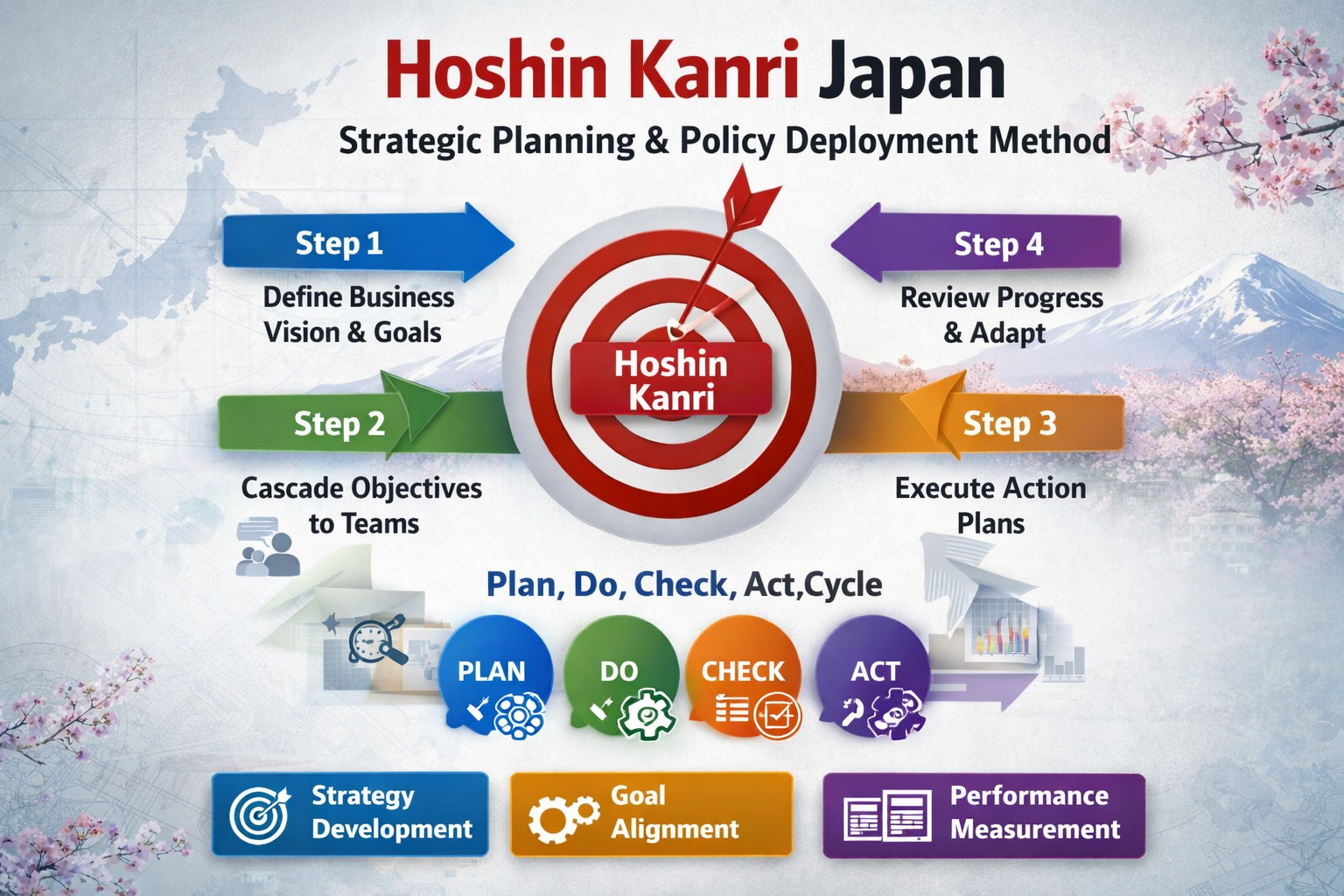
Hoshin Kanri Japan stands as Japan’s premier strategic planning methodology, transforming how organizations align goals from top leadership to frontline workers. This powerful “policy deployment” system originated in Japanese manufacturing excellence and now guides global organizations toward breakthrough objectives with unprecedented clarity and engagement. Unlike traditional strategic planning that often fails in execution, Hoshin Kanri creates a living management system where strategy and operations seamlessly integrate. Performance Storyboard embraces these time-tested principles, providing modern visual management tools that make Hoshin Kanri accessible and sustainable for today’s organizations seeking to bridge the gap between strategic ambition and operational reality.
5 Principles of Hoshin Kanri Japan Planning
Hoshin Kanri rests upon five foundational principles that distinguish it from conventional strategic planning approaches. These principles ensure strategy is not merely created in boardrooms but actively deployed throughout the organization with clarity, alignment, and unwavering accountability.
Principle 1: Focus on Vital Few Objectives
Rather than dispersing organizational energy across dozens of initiatives, Hoshin Kanri Japan concentrates on 3-5 breakthrough goals annually. This disciplined focus prevents resource dilution and ensures sufficient attention on what truly matters. Performance Storyboard helps organizations maintain this focus through clear visual prioritization that keeps breakthrough objectives front and center.
Principle 2: Alignment and Integration
Every organizational level must understand how their daily work contributes to strategic objectives. Hoshin Kanri creates vertical alignment from CEO to frontline worker and horizontal alignment across departments, eliminating silos and conflicting priorities. Performance Storyboard’s dashboards make these connections visible and tangible.
Principle 3: Catchball Process
Interactive dialogue between management levels refines goals, secures genuine commitment, and identifies potential obstacles before they derail execution. This iterative conversation ensures strategies are both ambitious and achievable, with clear ownership at every level.
Principle 4: PDCA Cycle Integration
The Plan-Do-Check-Act continuous improvement cycle embeds learning and adaptation into strategic execution. Regular reviews enable course corrections based on reality rather than rigid adherence to outdated plans. Performance Storyboard facilitates these PDCA cycles with real-time tracking and collaborative review features.
Principle 5: Visual Management
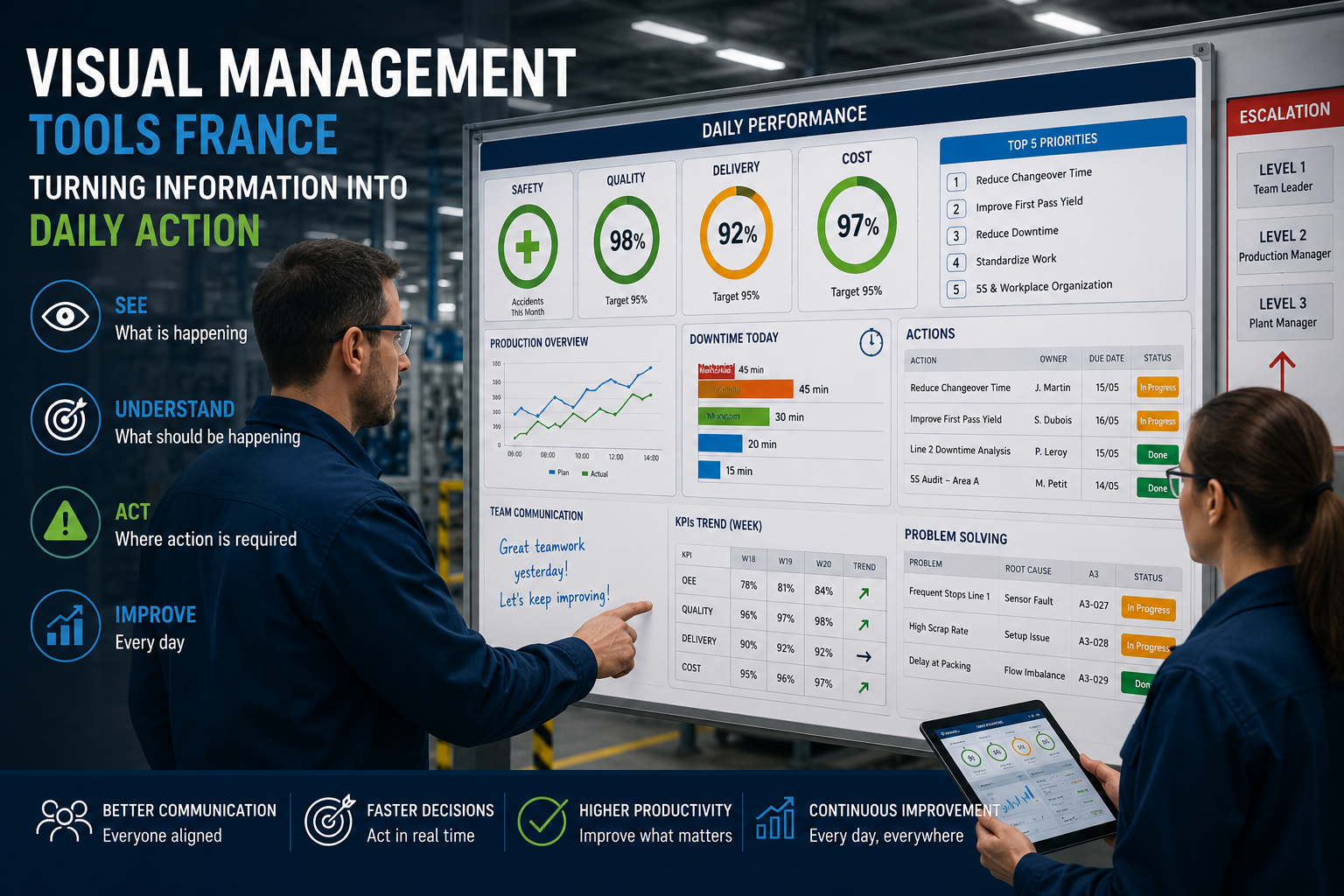
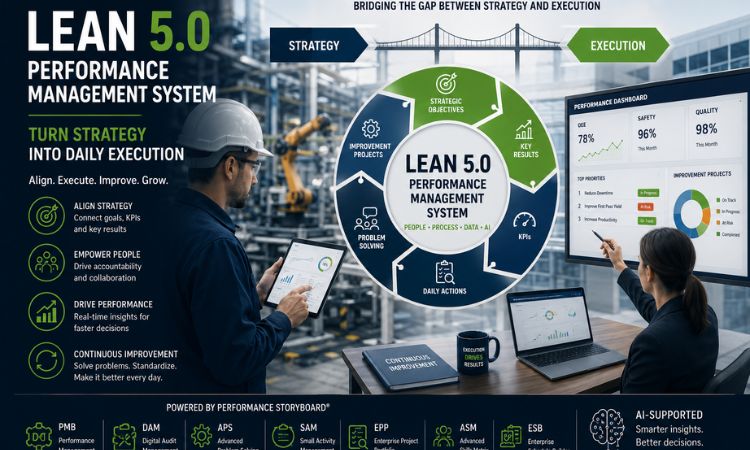
Making strategy visible through X-matrices, bowling charts, and comprehensive dashboards transforms abstract plans into concrete, actionable roadmaps. Performance Storyboard excels at creating these visual representations that keep teams aligned and engaged throughout the strategic journey.
Hoshin Kanri – The Japanese Strategic Planning Process
The Hoshin Kanri Japan process represents a fundamental departure from Western strategic planning models. Rather than top-down directive planning, it creates dynamic conversation throughout the organization that balances strategic intent with operational reality. This systematic approach has made Japanese companies world leaders in quality and efficiency.
The complete Hoshin Kanri cycle operates on both annual and multi-year timeframes. Leadership begins by setting breakthrough objectives—ambitious goals that require significant organizational change rather than incremental improvements. These objectives cascade through the organization via the catchball process, where each management level translates strategic intent into tactical plans appropriate for their scope of responsibility. Mid-level managers don’t simply execute directives; they actively shape how objectives will be achieved, proposing resources, timelines, and success metrics based on their operational expertise.
Read more: Choosing the Best Audit Management Software Netherlands Companies Can Trust
Hoshin Kanri’s Origins
Understanding Hoshin Kanri Japan historical context illuminates why this methodology remains remarkably effective decades after its development. Born from Japan’s post-war industrial renaissance, this approach emerged as leading companies sought systematic ways to achieve ambitious quality and productivity goals that would rebuild their nation’s economy.
The X-Matrix and other signature Hoshin tools evolved through practical experimentation on factory floors rather than academic theory. This pragmatic origin explains their enduring effectiveness—they were designed by practitioners solving real alignment challenges. Performance Storyboard honors these origins while modernizing the approach through digital tools that preserve Hoshin Kanri’s essence while enhancing accessibility for contemporary organizations operating in distributed, global environments.
Importance of Hoshin Kanri in the Present Day
Today’s volatile, uncertain, complex, and ambiguous (VUCA) business environment makes Hoshin Kanri Japan increasingly relevant for organizations facing rapid technological change, global competition, and evolving customer expectations. The methodology’s emphasis on alignment, agility, and continuous improvement addresses critical challenges that traditional planning approaches struggle to solve.
The persistent strategy execution gap—where approximately 70% of well-conceived strategies fail during implementation—represents billions in wasted resources and missed opportunities. Hoshin Kanri directly addresses this gap by creating transparent connections between strategic intent and daily actions. Every employee can articulate how their work contributes to organizational breakthrough objectives, fostering engagement and ownership that transforms strategy from abstract document to lived reality.titive advantage.
Standard Process for Building a Company’s Strategy vs. Hoshin Kanri
Traditional strategic planning typically follows a linear, top-down process: environmental scanning and SWOT analysis, followed by goal-setting in executive retreats, then cascading objectives through organizational hierarchy. While this provides direction, it often produces strategies that remain PowerPoint presentations rather than operational reality.
Conventional planning’s limitations include insufficient buy-in from middle management and frontline workers who must execute the strategy, disconnect between ambitious strategic goals and operational capabilities, and annual rigidity that prevents mid-course corrections when assumptions prove incorrect. Strategies become shelf-ware—impressive documents that gather dust while daily operations continue largely unchanged.
Directions for Mission, Vision and Strategy in the Traditional Approach
Conventional strategic planning models typically begin by defining mission statements that articulate organizational purpose, vision statements describing desired future state, and strategic pillars that organize high-level objectives. These foundational elements then cascade downward through organizational hierarchy via goal-setting processes that assign targets to divisions, departments, and ultimately individuals.
While this provides directional clarity, the traditional approach often results in strategies remaining abstract concepts disconnected from operational decision-making. Mission and vision statements written in inspirational language rarely translate into concrete guidance for middle managers facing daily choices about resource allocation and priorities. Annual planning cycles with limited mechanisms for mid-year adjustment create rigidity that prevents responsive adaptation to changing circumstances.
How Should a Company Operate According to Hoshin Kanri?
Organizations practicing authentic Hoshin Kanri function fundamentally differently than those using traditional planning approaches. The methodology creates a management system where strategy and operations integrate seamlessly through disciplined practices and visual management tools.
Companies clearly distinguish breakthrough objectives (Hoshins) requiring significant change from routine operations maintained through daily management systems. This separation prevents strategic initiatives from being crowded out by operational urgencies while ensuring both receive appropriate attention. Regular catchball sessions at all organizational levels maintain alignment as conditions evolve, with monthly operational reviews at departmental levels and quarterly strategic reviews examining organizational-level progress toward breakthrough objectives.
Directions for Achieving the Mission and Vision in the Hoshin Kanri Approach
Unlike traditional cascading objectives, Hoshin Kanri employs dynamic, bidirectional processes to align organizational efforts toward breakthrough objectives. The methodology begins with long-term vision spanning 3-5 years, establishing aspirational direction that inspires and focuses organizational energy.
From this vision emerge annual breakthrough objectives—typically 3-5 Hoshins that will significantly advance progress toward the long-term vision. The X-Matrix tool connects these objectives with improvement strategies, tactical plans, key metrics, and responsible owners, creating transparency about relationships between these elements. Performance Storyboard’s digital X-Matrix makes these connections interactive and updateable, maintaining currency as execution progresses.
What Else is Worth Keeping in Mind?
Successful Hoshin Kanri implementation requires more than adopting tools—it demands cultural change, sustained leadership commitment, and realistic expectations about the transformation timeline. Organizations should recognize cultural prerequisites including openness to dialogue across hierarchical levels, transparency about both successes and challenges, and fundamental respect for people’s expertise regardless of organizational position.
Leadership commitment must extend beyond initial enthusiasm through the inevitable challenges of changing established patterns. Starting small with pilot implementations in one department or around one initiative allows organizations to learn the methodology before enterprise-wide deployment. Training requirements span all organizational levels, ensuring everyone understands both the mechanics and philosophy of Hoshin Kanri.
Conclusion – Hoshin Kanri Japan
Hoshin Kanri represents Japan’s enduring gift to strategic management—a methodology creating unprecedented alignment between vision and execution through disciplined focus, collaborative planning, and visual management. This systematic yet flexible approach enables organizations to achieve breakthrough results while maintaining operational excellence, addressing the execution gap that defeats most strategic initiatives.
Contact Us – Performance Storyboard
Unlock complete visibility into your operational performance with our Performance Storyboard solutions. Whether you need real-time KPIs, shop floor insights, or data-driven decision support, our experts are ready to help. We collaborate with manufacturing and industrial teams to design customized performance storyboards aligned with your business goals. From strategy and implementation to training and continuous improvement, we focus on delivering measurable results. Contact us today to discuss your requirements, request a live demo, or learn how a Performance Storyboard can transform your operations into a smarter, more efficient, and performance-driven system.