When I picked up the red Daruma in Tokyo, it was on purpose. The small figurine sat in the palm of my hand like a stubborn idea — you can tilt it, push it, drop it, and it always stands back up. Then the shopkeeper smiled and said something that has stayed with me ever since:
“Just one eye you can paint now. The second one must be earned.”
I stood there holding a doll that was intentionally incomplete. In Japan, you paint one eye when you commit to a goal. You paint the second only when the goal becomes reality. Not a plan. Not a PowerPoint slide. A result.
On the flight home, I kept thinking about how different this is from the way most companies treat goals. We often “paint both eyes” on the first day. We declare the strategy, present the KPIs, share the charts, print the posters, and then hope that improvement happens. We admire the goals. We do not necessarily act on them.
But holding that Daruma made something clear: goals are not real until they move. And they only move when we do, today, not eventually.
This is the mindset behind the Japanese Daily Management System (DMS). It isn’t designed to observe performance or create documentation. It exists so that problems are addressed immediately, at the moment they appear, while they are still small enough to change.
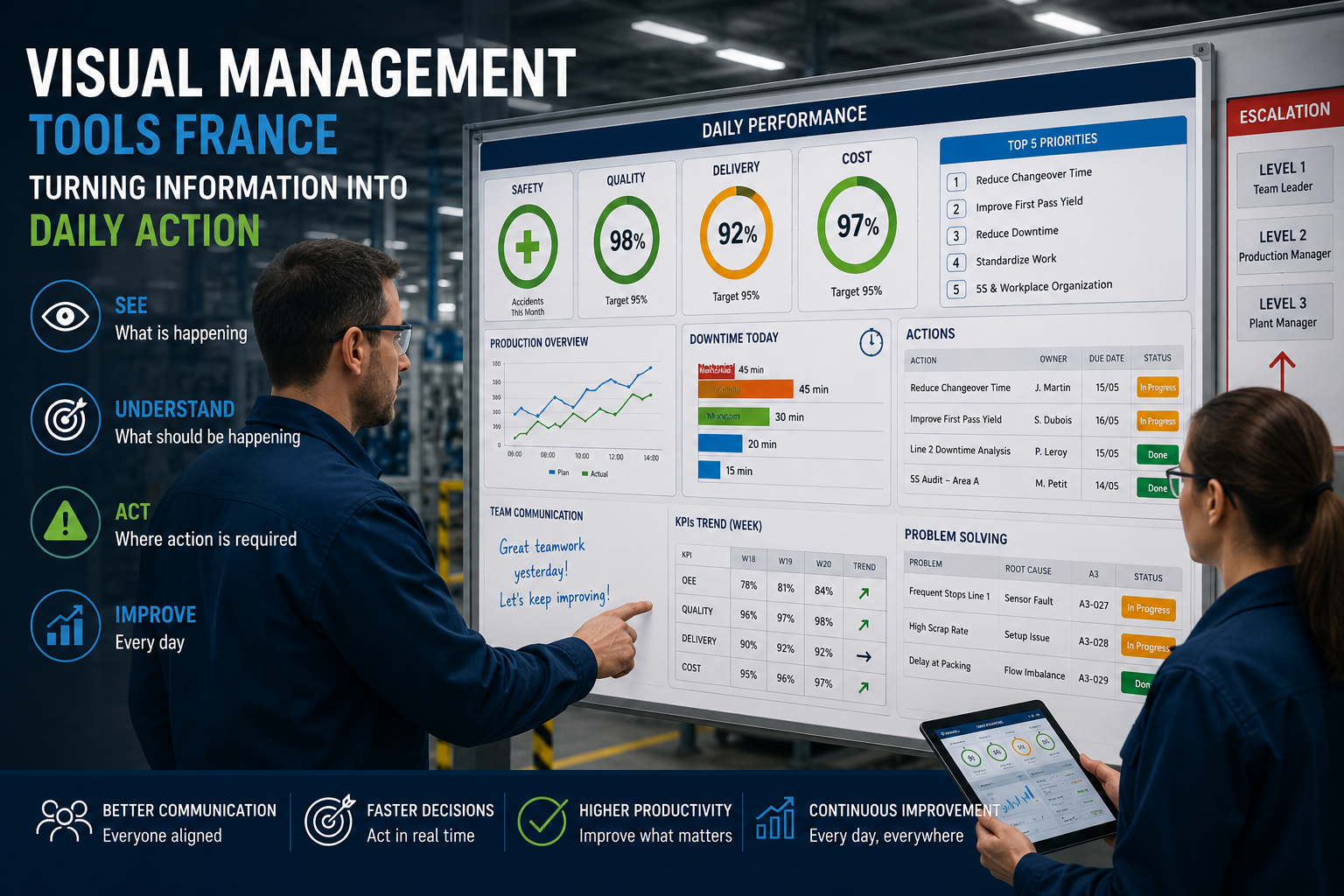
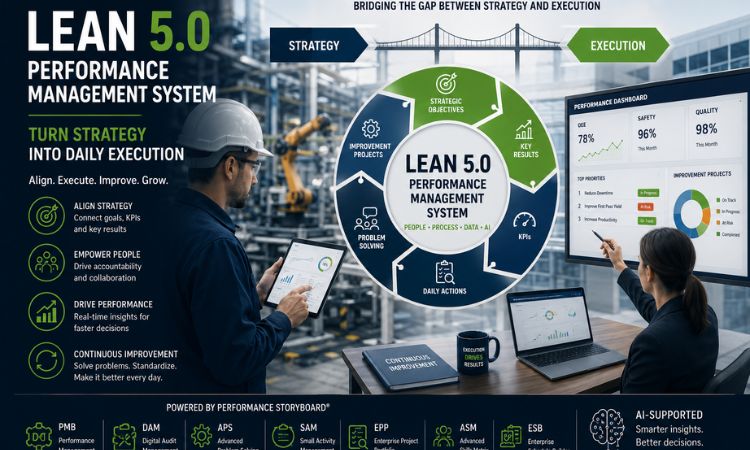
When we built our Performance Management Board (PMB), that became our core principle. PMB was not designed to be a “goal dashboard.”
It was designed to be a digital discipline.
When performance deviates, PMB doesn’t hide it inside a report. It shows it red — right now.
Not tomorrow. Not next quarter. Not in a summary meeting.
In a few seconds, anyone can see:
- where the issue is,
- what trend is changing,
- which KPI is off,
- who owns the area.
And within minutes, a task can be assigned, an improvement launched, or a method started: 5 Whys, Ishikawa, PDCA… No searching through Excel. No scattered notes. No excuses. This is not monitoring. This is execution.

A lot of red simply means a lot of opportunities for improvement.
Just like the Daruma reminds us that we must work for our goals, the red indicators in PMB remind us that goals don’t improve by themselves, they require action.
Holding that Daruma in my hand, I realized that the second eye belongs only to those who take action daily, not to those who merely design beautiful goals. And that is exactly what PMB supports: not painted eyes, but a clear visual presentation of KPIs and problems that demand action.
So our Daruma’s second eye remains blank.
Not forgotten.
Not decorative.
It waits for proof to be earned and to be painted green.
When we enter the Japanese market with the Performance Storyboard® solution, we will paint the second eye. And it will not be because we wished for it. It will be because we acted like the Daruma itself, persistent, upright, responding every time we fall or shift, making small improvements every single day.
Red is not a problem. Red is a reminder to act.
Daruma teaches us to earn our goals. PMB shows us where to work and how to act.