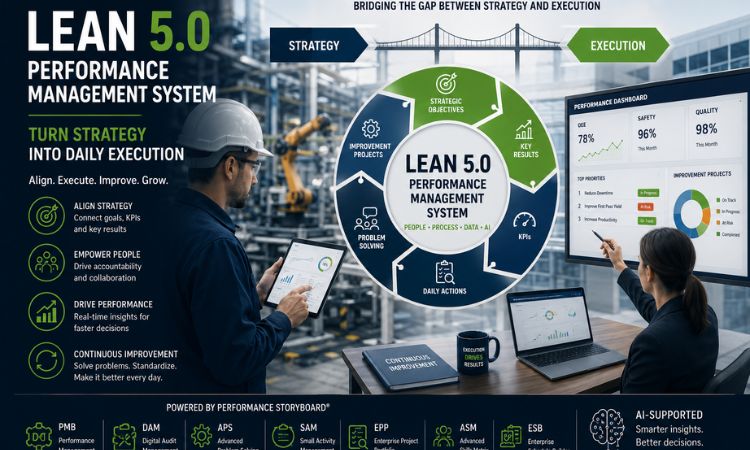
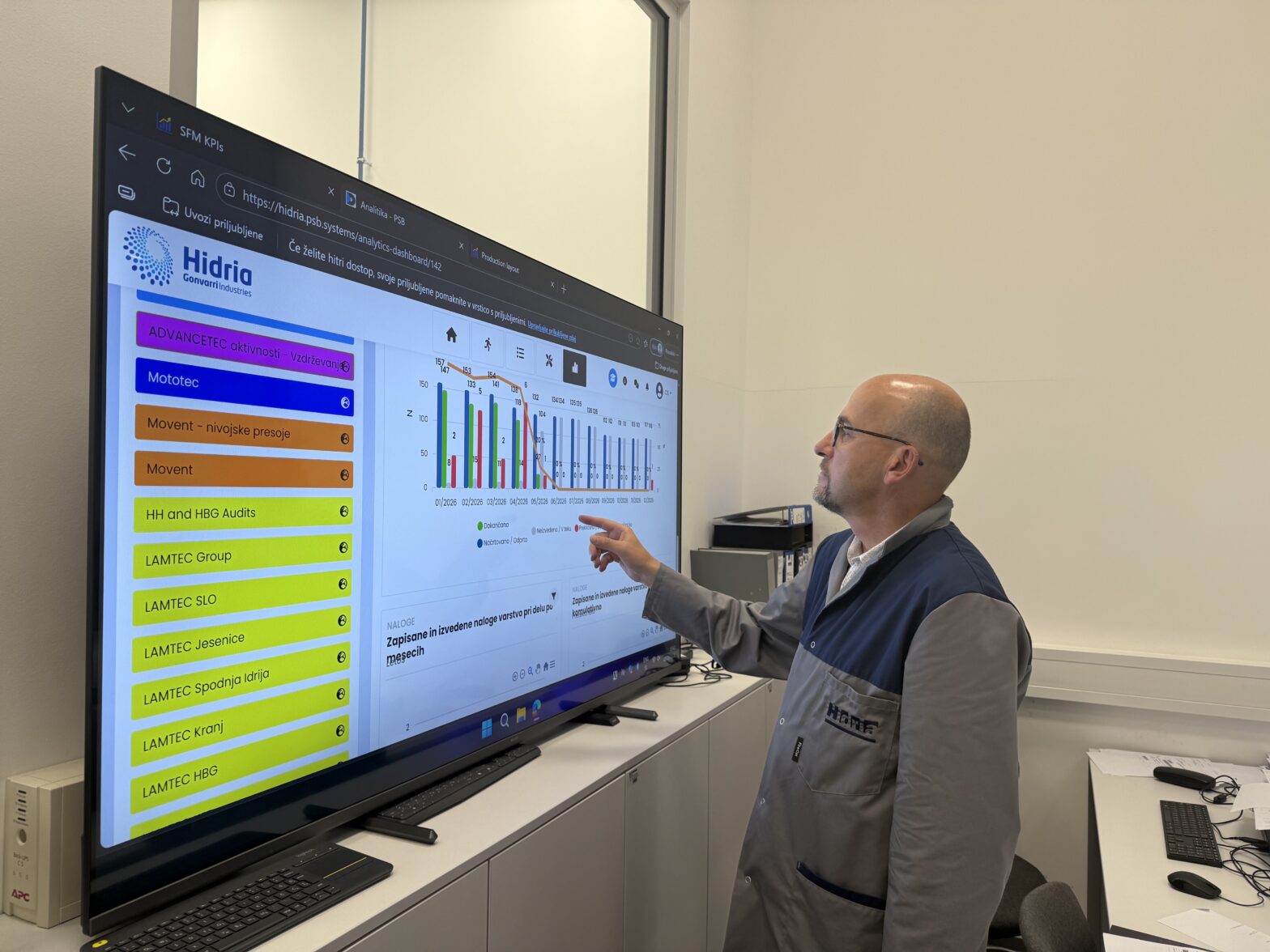
The beginning of the year is, in many companies, the time when goals are set, reviewed, and aligned. Leadership teams reflect on priorities, confirm directions, and define what will truly matter in the period ahead. This is also the moment when questions about strategy, performance, and expectations resurface—often accompanied by uncertainty about how to translate all of this into everyday work.
Every company has Strategic Direction to Daily Work: a vision, long-term goals, and guiding principles, typically defined by management and approved by the owner or the board. These directions clarify where the organization wants to go and what it aims to achieve in the long run. The challenge, however, rarely lies in defining the strategy itself, but rather in translating it into practice.
A gap often emerges between strategic documents and daily work on the shop floor. People understand that safety, quality, cost, or customer satisfaction are important, yet they do not always see how their daily activities are concretely connected to these objectives. This is precisely where the need for a clear and understandable performance management system arises.
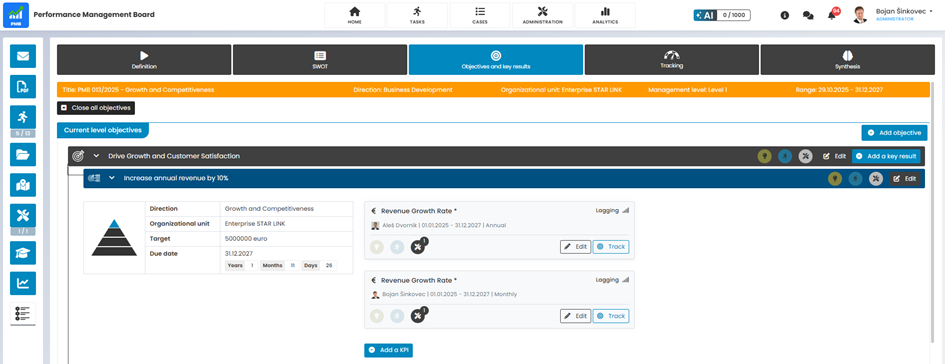
Japanese management practice offers a very simple yet highly effective logic: a path from Strategic Direction to Daily Work to measurable objectives and further to concrete activities. In practice, this logic is expressed through the cascade KMI → KPI → KAI, which forms the backbone of the PMB – Performance Management Board within the Performance Storyboard system.
KMI, KPI, KAI – What Do These Acronyms Actually Mean?
Before going further, it is useful to clarify the meaning of these commonly used, but not always clearly understood, terms:
- KMI (Key Management Indicator)
Answers the question: Why do we measure something, and where do we want to go as an organization? - KPI (Key Performance Indicator)
Answers the question: What must work well for us to achieve our objective?
KPIs are typically lagging indicators, as they show the results of past activities. - KAI (Key Activity Indicator)
Answers the question: Which concrete activities do we perform every day to improve the result?
KAIs are leading indicators because they measure actions that predict future outcomes.
The distinction between lagging (KPI) and leading (KAI) indicators enables performance management to shift from merely monitoring results to actively influencing them.
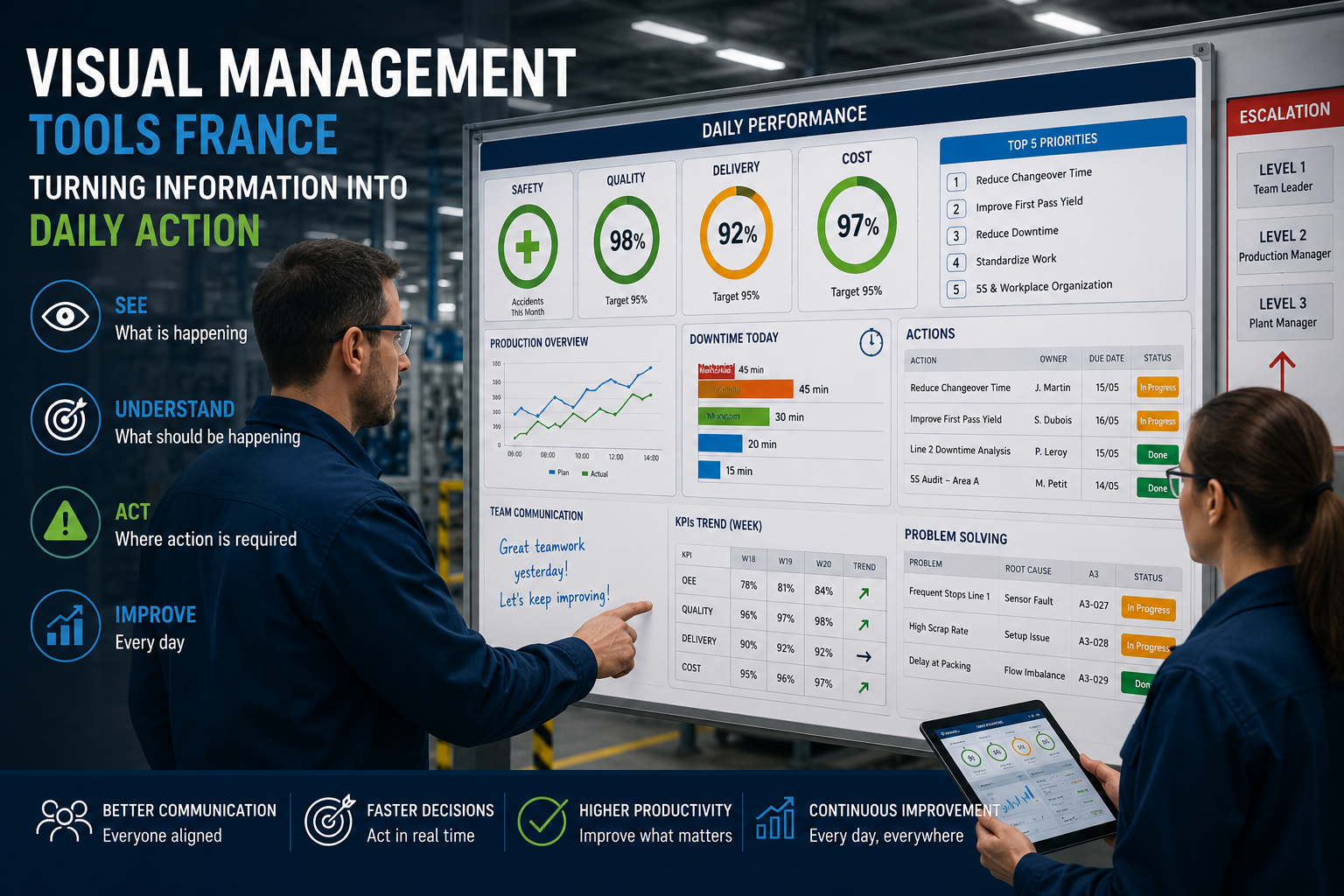
PMB is the tool that connects these three levels into one coherent and transparent whole.
Read more: Obeya Room Tools Sweden | Visual Performance Management
From Strategy to KMI: Defining What Success Really Means
At the very top are the Strategic Direction to Daily Work. They define which areas are critical for the company in the long term. From these directions, KMIs – Key Management Indicators are derived.
KMIs are not operational metrics and are not intended for daily monitoring. Their role is to answer a fundamental question:
What does success truly mean for our company?
They typically cover a limited number of areas such as safety and health, customers and quality, people and culture, asset utilization, and cost and profitability. KMIs are owned by management and do not change frequently. Within PMB, they are shown as a stable framework that provides clear context for all further decisions.
KPI as the Bridge Between Objectives and Processes
Once strategic priorities are clear, the next question is what must work well in the processes for those objectives to be achieved. This is where KPIs – Key Performance Indicators come into play.
KPIs break KMIs down into measurable elements that can be monitored at the level of processes, departments, or sites. If the strategic focus is asset utilization, KPIs may include OEE, throughput, or availability. If the focus is safety or quality, KPIs are not only end results but also process indicators.
PMB ensures that KPIs are clearly linked to KMIs, have defined ownership, and are tracked through trends rather than viewed as isolated numbers. In this way, KPIs stop being mere reports and become a true management tool.
KAI: Where Strategy Turns into Behavior
The most decisive shift happens at the level of KAIs – Key Activity Indicators. This is where strategy truly meets everyday work. KAIs do not describe results; they describe actions. They answer the question:
What will we do differently today, tomorrow, and this week to improve the KPI?
These are concrete team-level activities such as reducing setup times, minimizing stoppages, increasing safety observations, or accelerating the implementation of improvement suggestions. KAIs are small, tangible, and directly influence outcomes—making them easy for teams to truly own.
PMB makes these activities visible, traceable, and clearly linked to KPIs and, ultimately, to the company’s strategic objectives. This shifts performance management from control to guidance.
One View, One Logic
The greatest value of PMB within the Performance Storyboard framework lies in the fact that Strategic Direction to Daily Work, KMIs, KPIs, and KAIs are all presented in one logical, visual structure. Separate reports, presentations, and spreadsheets are replaced by a clear line of sight from the top of the organization to the Gemba.
In one place, it becomes possible to understand which Strategic Direction to Daily Work objective is at risk, which indicator is deviating, and which activities need to be adjusted. Meetings are no longer about explaining numbers, but about decision-making and learning.
When the System Truly Comes to Life
When a company consistently applies the logic from strategic direction to KMI, KPI, and KAI—and supports it with PMB—a meaningful shift occurs. People understand the purpose of their work, leaders manage through the right questions, and improvement becomes part of everyday work rather than a series of one-off projects.
Every activity gains meaning.
Every shift contributes.
Every improvement becomes part of a larger story.
It is a performance management system that consistently brings strategy to the Gemba—and makes it real there.