The Hidden Potential in Your Equipment: Why TPM Isn’t Just Theory
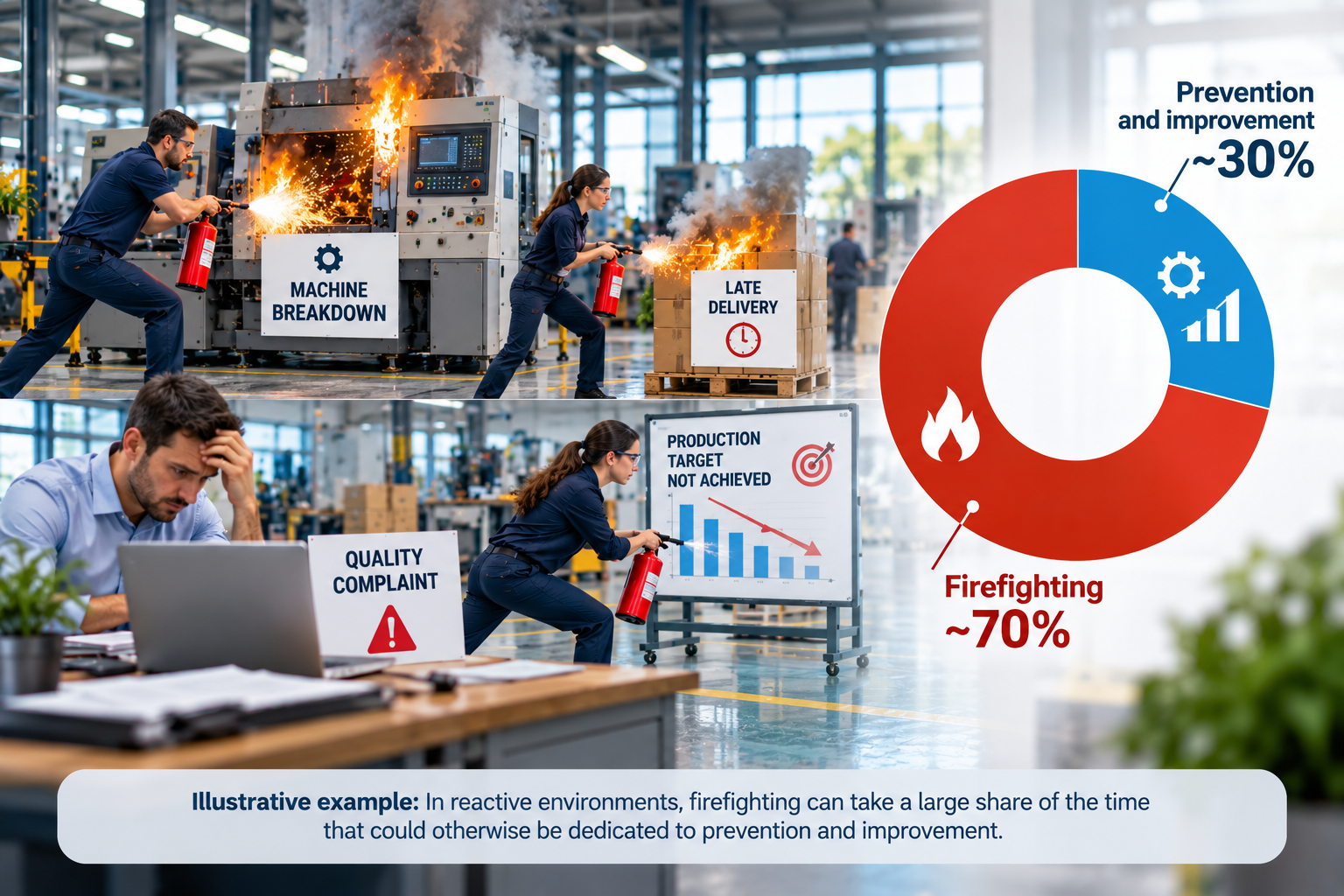
Total Productive Maintenance (TPM) is more than just a buzzword – it’s a powerful, shop-floor-driven strategy for reducing downtime, eliminating waste, and extending equipment lifespan. Yet many companies struggle to implement TPM effectively. Why? There are several reasons: lack of knowledge, suboptimal organization, unstructured loss-reduction processes, and the absence of the right tools to systematize and sustain TPM implementation.
Enter TMM – Total Maintenance Management from Performance Storyboard: a practical CMMS (Computerized Maintenance Management System) solution designed to turn TPM theory into real, measurable day-to-day results. Let’s explore how TMM transforms TPM from a strategic plan into operational performance.
TPM Meets Technology: What Makes TMM a Game Changer
1. Real-Time Equipment Monitoring with Actionable Insights
Forget clipboards and delayed reports. TMM can integrate with production monitoring systems (such as OEE tracking) to capture real-time data from each machine. When a fault or anomaly is detected, TMM immediately alerts the right personnel to respond. In parallel, the system allows operators to report irregularities even before they escalate into failures.
This means:
• Early detection of anomalies – potential failures
• Faster response from maintenance teams
• Less unplanned downtime
2. Smart Scheduling to End Reactive Maintenance
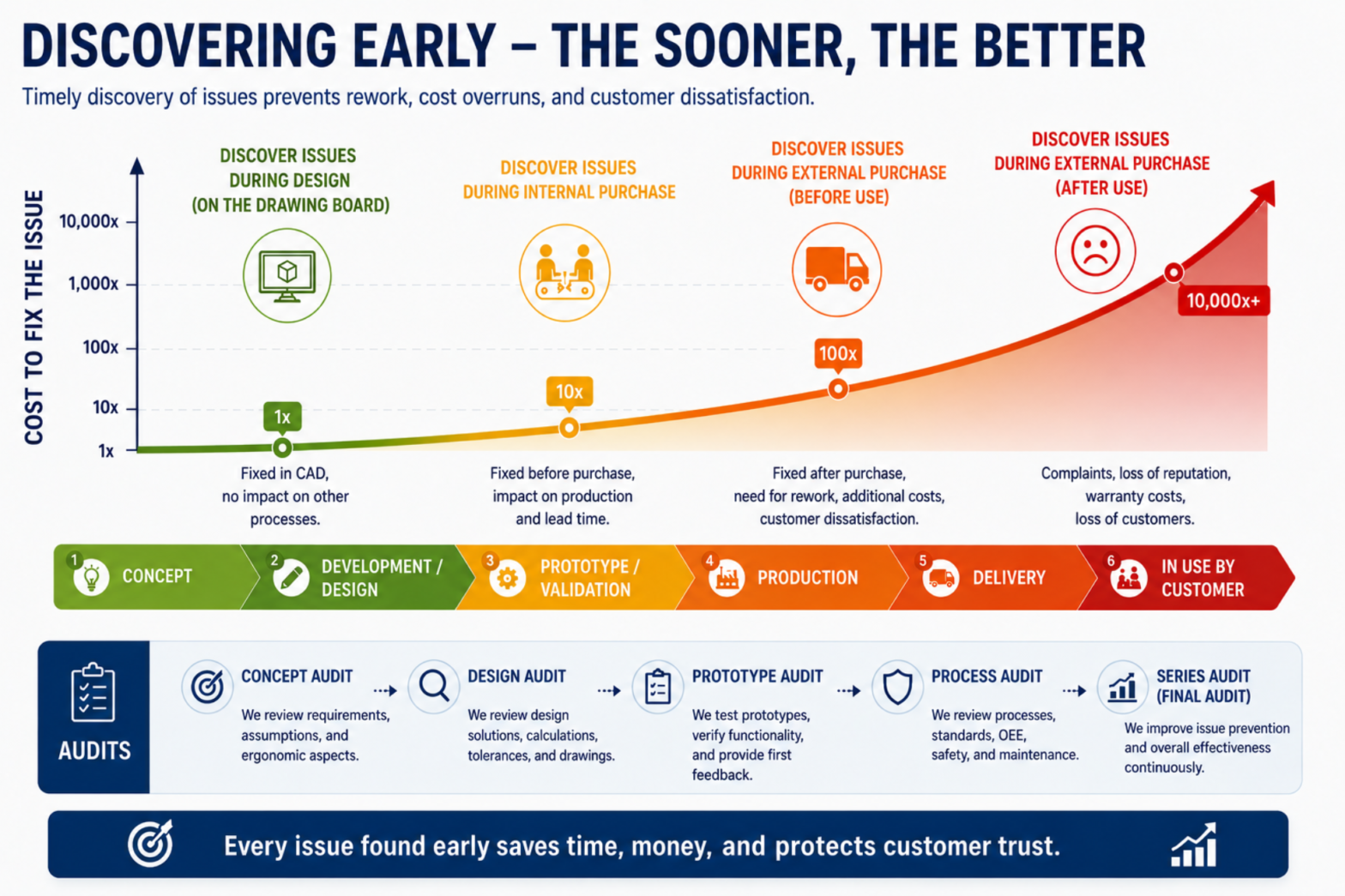
Manual planning leads to two extremes: over-maintenance or missed maintenance. TMM fixes this with intelligent, data-driven schedules. Whether it’s based on usage hours, condition data, or time intervals, TMM ensures the right maintenance at the right time—without guesswork.
Bonus: No more Excel sheets. TMM automates all scheduling, reminders, and documentation.
3. Empowering Operators with Autonomous Maintenance
Operators are the frontline of TPM, but most systems treat them like bystanders. Not TMM.
Your team gets mobile access to:
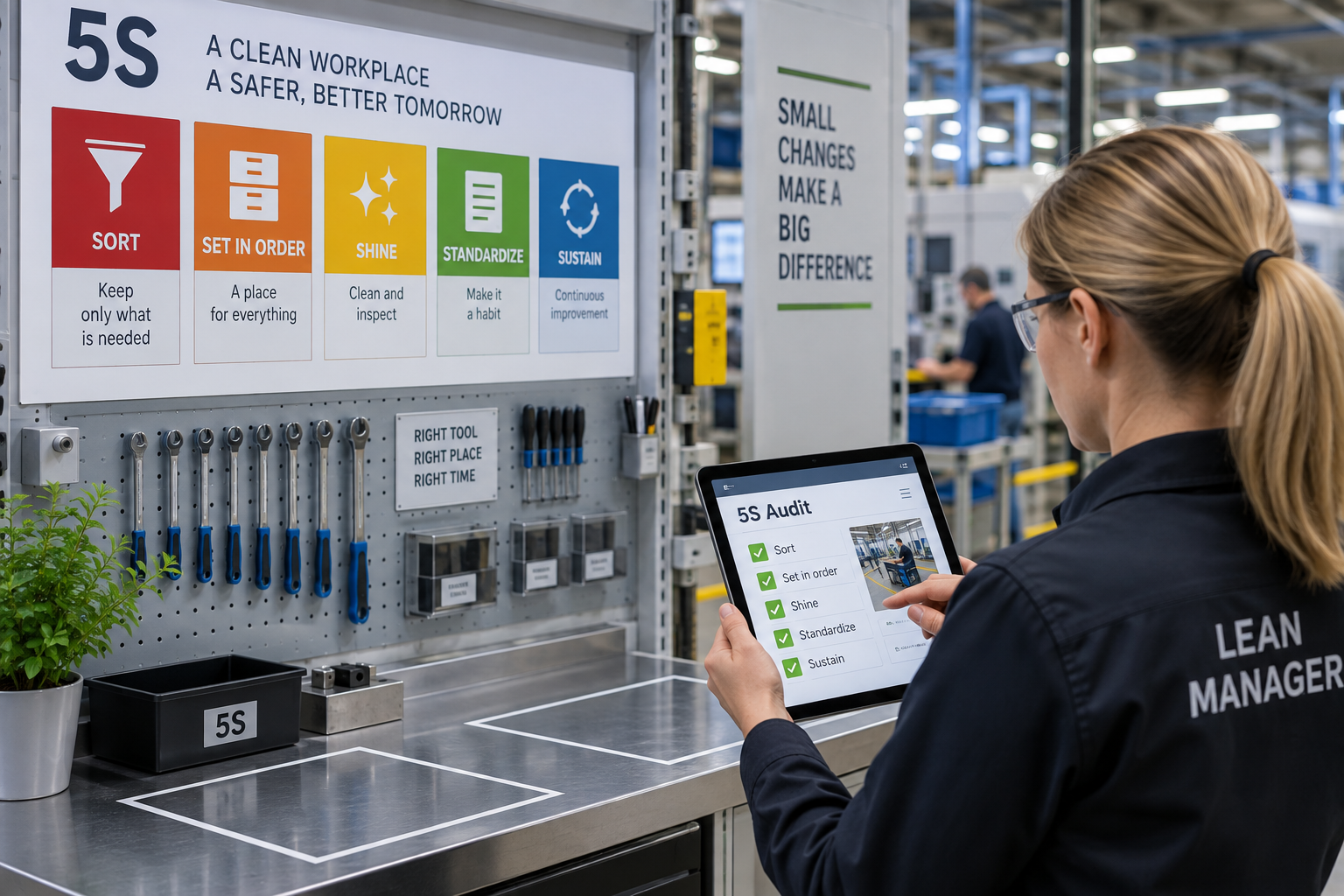
- Easy-to-follow cleaning and inspection checklists
- Visual SOPs for routine tasks
- One-click fault reporting with photos or notes
When operators are equipped and engaged, your machines stay healthier—and your technicians stay focused on higher-level tasks.
4. Visual Dashboards to Support Kaizen and LEAN Teams
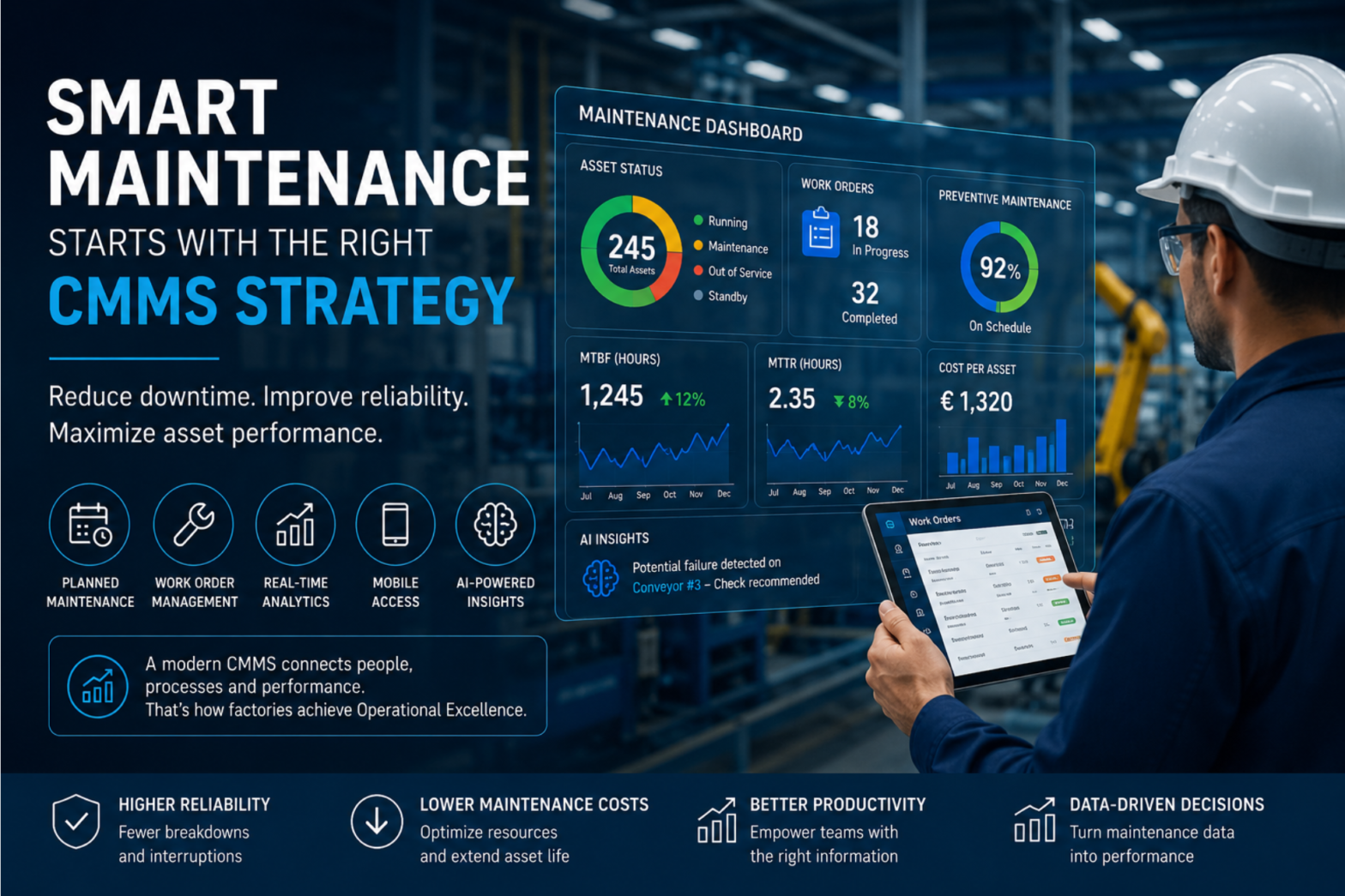
TMM doesn’t just collect data – it also analyzes and presents it in a clear, actionable way. Built-in analytics tools reveal patterns in downtime, defects, and delays. Your continuous improvement team can:
• Perform root cause analysis directly within the platform
• Track performance by production line, shift, or asset
• Set measurable goals and monitor them through visual dashboards.
And yes, TMM seamlessly supports your Lean, Kaizen, or Six Sigma initiatives.
5. Seamless Integration with ERP, MES, and Spare Parts Inventory
TMM is not an isolated system – it easily integrates with your existing ERP or MES solutions, ensuring full alignment across all processes, from procurement to production planning.
• Need a spare part? TMM checks inventory before the task even begins.
• Need to notify purchasing? TMM automatically triggers a reorder request.
• Looking to connect maintenance management with production monitoring?
Total Maintenance Management (TMM) makes it possible. This kind of integrated ecosystem prevents bottlenecks and significantly boosts overall plant efficiency.

A Day in the Life: TPM with TMM in Action
Imagine this:
- 6:45 AM: A press machine reports increased bearing temperature.
- 6:47 AM: TMM alerts the shift supervisor and schedules a priority check.
- 7:00 AM: A technician inspects it, logs corrective action, and records it as a learning.
- 8:00 AM: Daily TPM meeting reviews data from TMM and updates KPIs.
What used to take days now takes hours—without any paperwork chaos.
Frequently Asked Questions (FAQs)
1. What is the difference between TPM and TMM?
TPM is a methodology. TMM is the CMMS software that enables and automates its execution—making TPM truly effective in real-world factories.
2. Can small manufacturers benefit from TMM?
Absolutely. TMM is modular and scalable, making it ideal for companies of all sizes looking to improve reliability and cut costs.
3. Is training needed to use TMM?
Minimal training is needed. The interface is intuitive, and Performance Storyboard offers hands-on onboarding support.
4. How does TMM improve OEE and reliability?
By reducing downtime, preventing quality issues, and maximizing performance—addressing all three components of OEE. At the same time, it helps lower maintenance costs and eliminate other related losses.
5. Can TMM be customized for different industries?
Yes. TMM is used across automotive, food processing, pharmaceuticals, and more. Custom workflows and reports are available.
6. What makes TMM better than other CMMS systems?
TMM is built for TPM, not just task tracking. It supports operator engagement, real-time alerts, lean tools, and deep analytics—key features often missing in traditional CMMS platforms.
Conclusion: Don’t Just Maintain—Transform
TPM is a proven path to operational excellence—but only when backed by a tool that makes it doable, trackable, and scalable. TMM by Performance Storyboard isn’t just another maintenance platform; it’s the bridge between maintenance theory and measurable performance.
Whether you’re just beginning your TPM journey or looking to supercharge your existing program, TMM gives you everything you need to succeed. Explore it today at performance-storyboard.com/tmm.