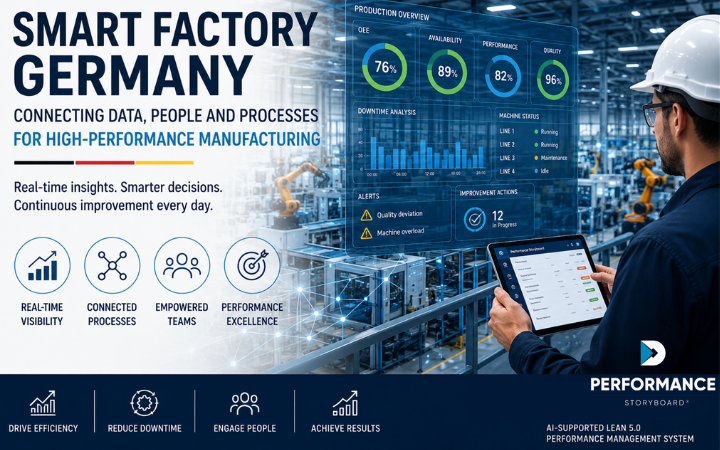
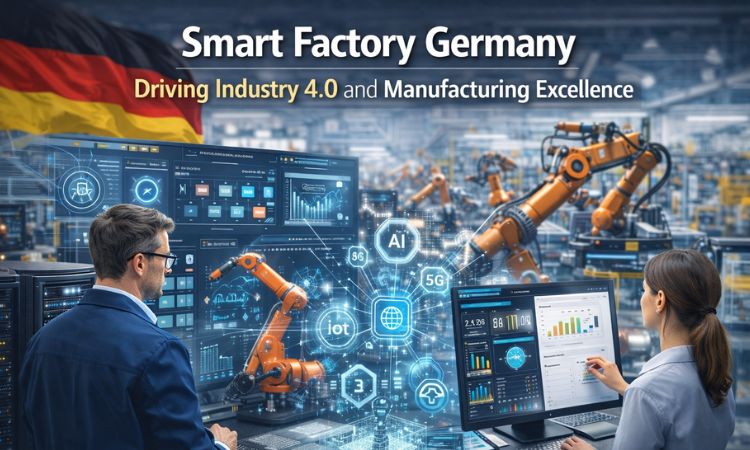
Germany is one of the global leaders in industrial automation and Industry 4.0 technologies.
Robotics, IoT, Artificial Intelligence (AI), digital twins, advanced automation systems — these technologies are widely implemented across German manufacturing, from large corporations to the Mittelstand.
And yet, in practice, many organizations experience similar challenges:
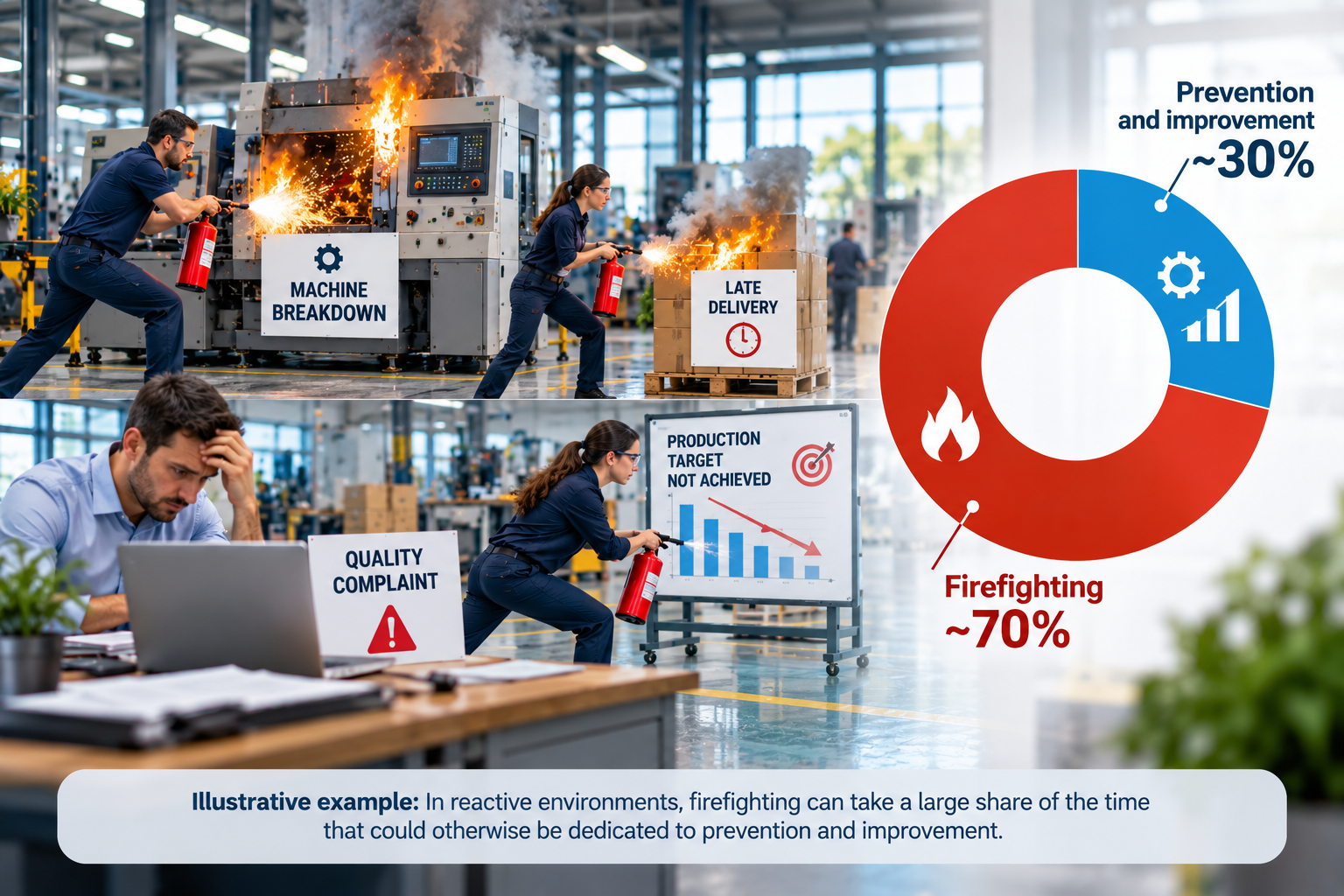
- KPIs are reviewed regularly — but deviations repeat.
- Downtime is analyzed — but root causes remain unresolved.
- Operational data exists — but in disconnected systems.
- New MES, OEE, and dashboard tools are installed — but Daily Management routines remain unchanged.
The challenge in Smart Factory Germany is rarely the absence of Industry 4.0 technology.
More often, it is the absence of an integrated Lean Management System that connects technology with disciplined execution.
What a Smart Factory Actually Requires
A true Smart Factory is not defined by connected machines alone.
Sustainable performance improvement requires:
- clear strategic objectives translated into operational KPIs
- visible deviations with defined escalation logic
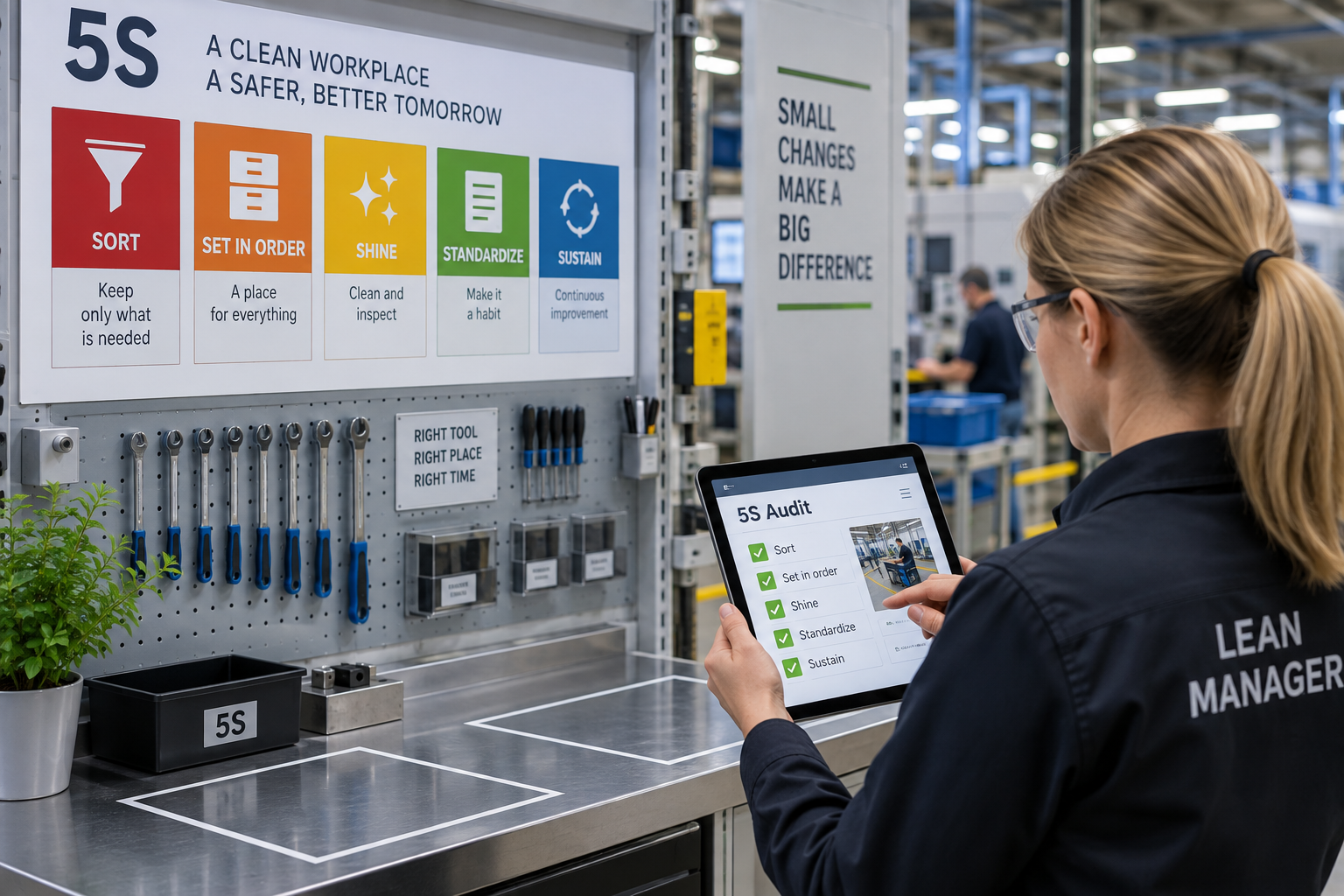
- structured Daily Management routines
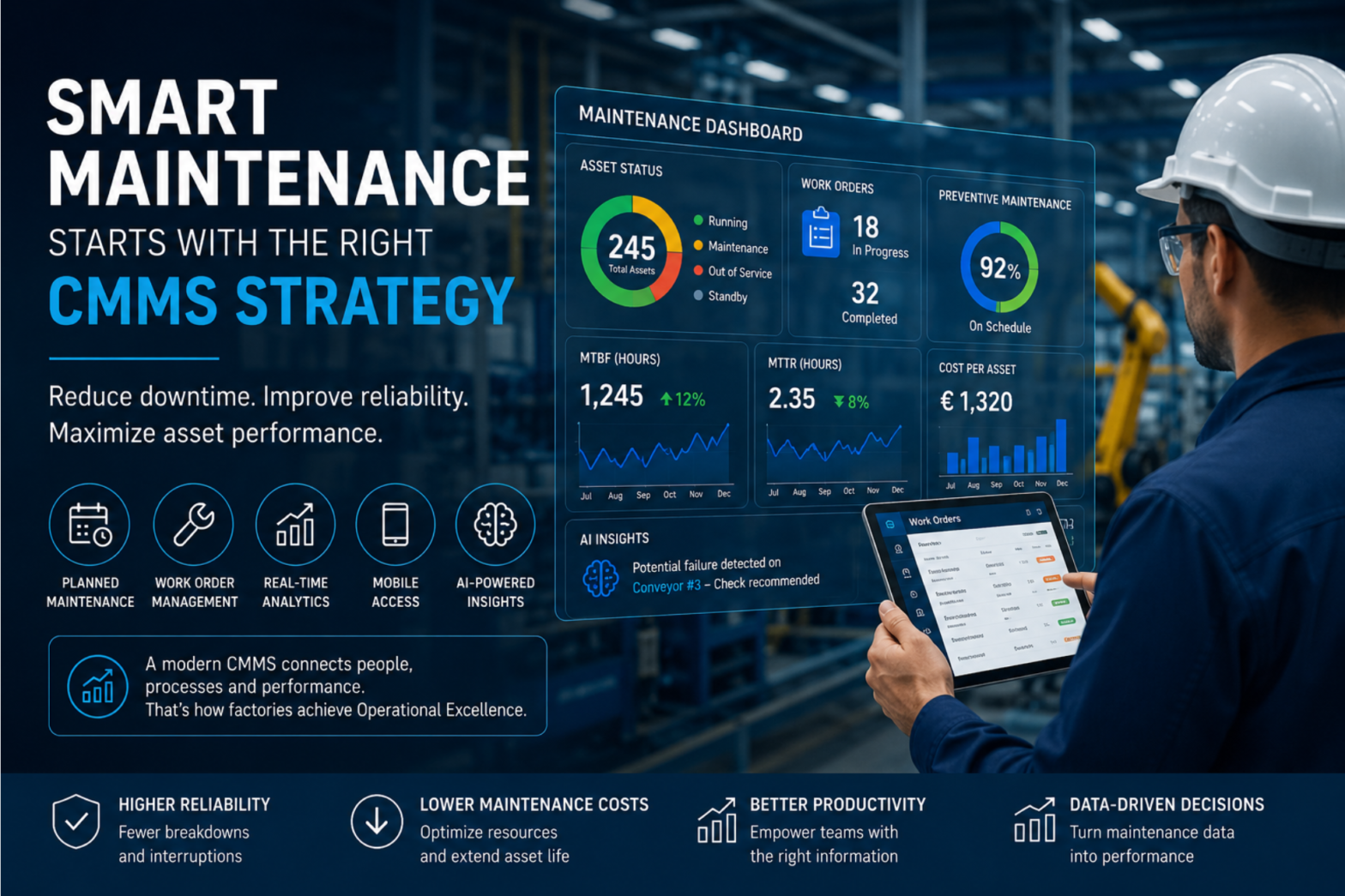
- integrated TPM (Total Productive Maintenance) principles
- disciplined Structured Problem-Solving (A3, 8D,5 Why, PDCA)
- clear ownership and accountability at every organizational level
Without this structure, digital transformation investments risk becoming isolated technical solutions — advanced, but operationally underleveraged.
Industry 4.0 generates transparency.Lean Management generates performance.
Why Some Industry 4.0 Projects Underperform
Across Europe — including Germany — digital transformation studies show a recurring pattern:
- Adoption of Industry 4.0 technologies progresses faster than organizational change.
- Data visibility improves.
- Measurable impact on OEE, productivity, and operational stability often lags behind expectations.
This does not indicate that digitalization fails.
It indicates that digitalization without management integration underperforms.
- Dashboards do not execute.
- Reports do not eliminate losses.
- AI does not create accountability.
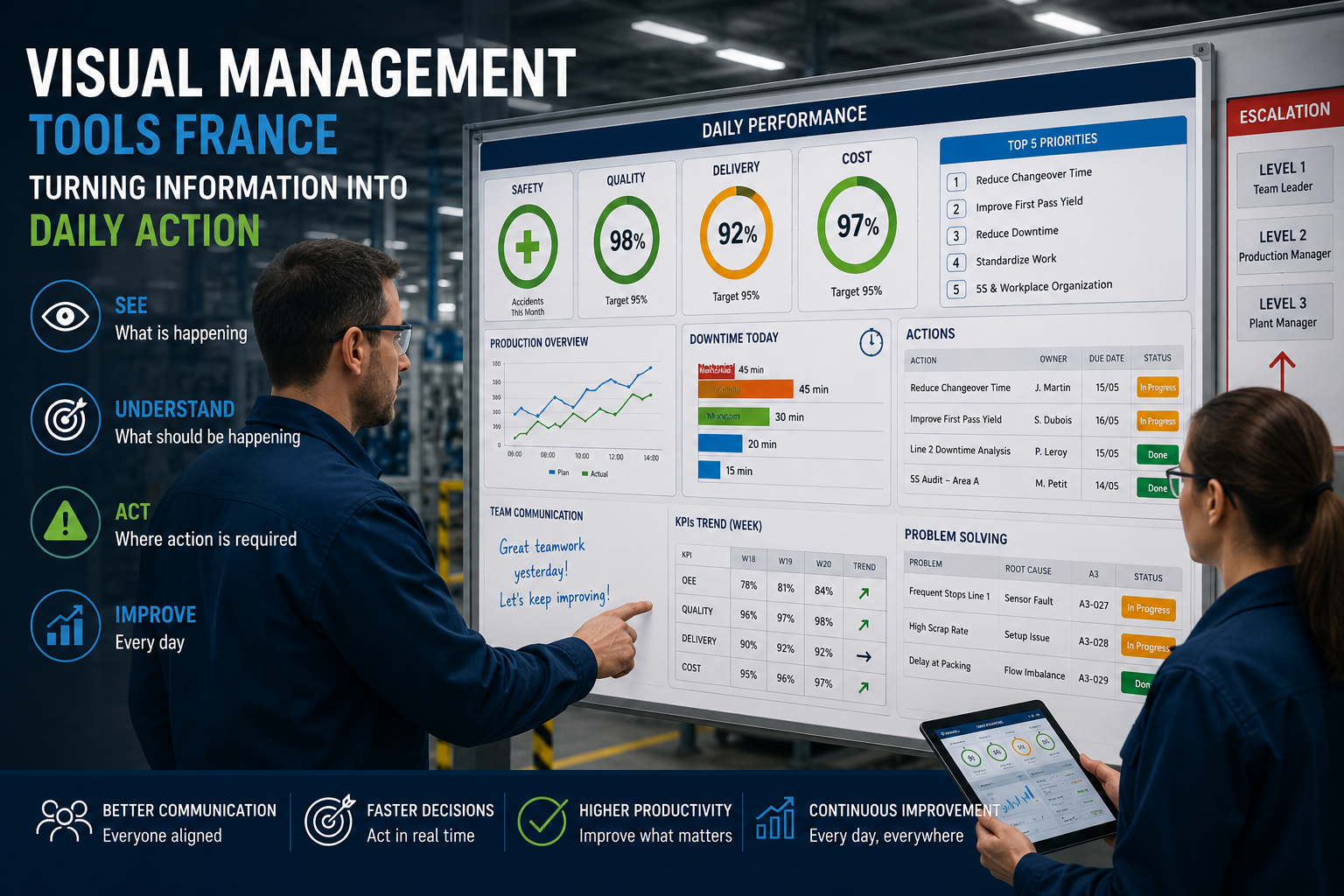
Operational improvement happens only when deviations in KPIs, OEE, downtime, quality, or safety trigger structured and immediate action within a defined Daily Management System.
Where Performance Storyboard® Fits In
This is precisely the gap that Performance Storyboard® addresses.
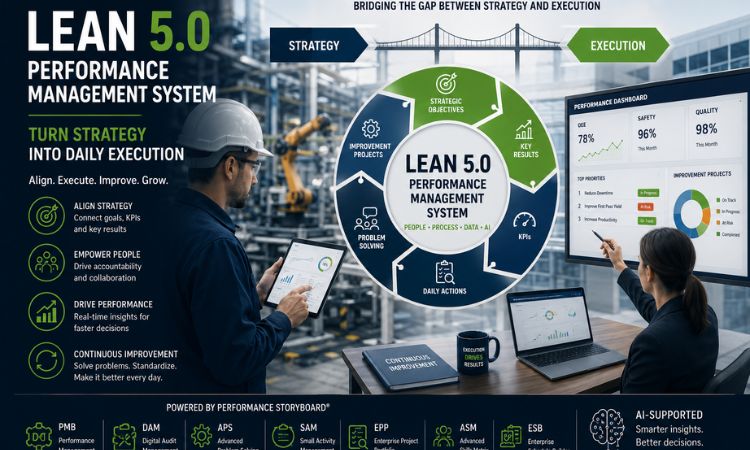
Performance Storyboard® is a modular Lean Management System that connects strategy, KPIs, daily management, TPM routines, audits, structured problem-solving, and people development into one integrated digital framework.
It does not replace ERP or MES.
It creates the management execution layer that ensures technology translates into performance.
It is a modular Lean Management System designed to connect:
- strategy and KPIs
- daily management routines
- TPM and Planned Maintenance
- structured problem-solving (A3, 8D, 5 Why)
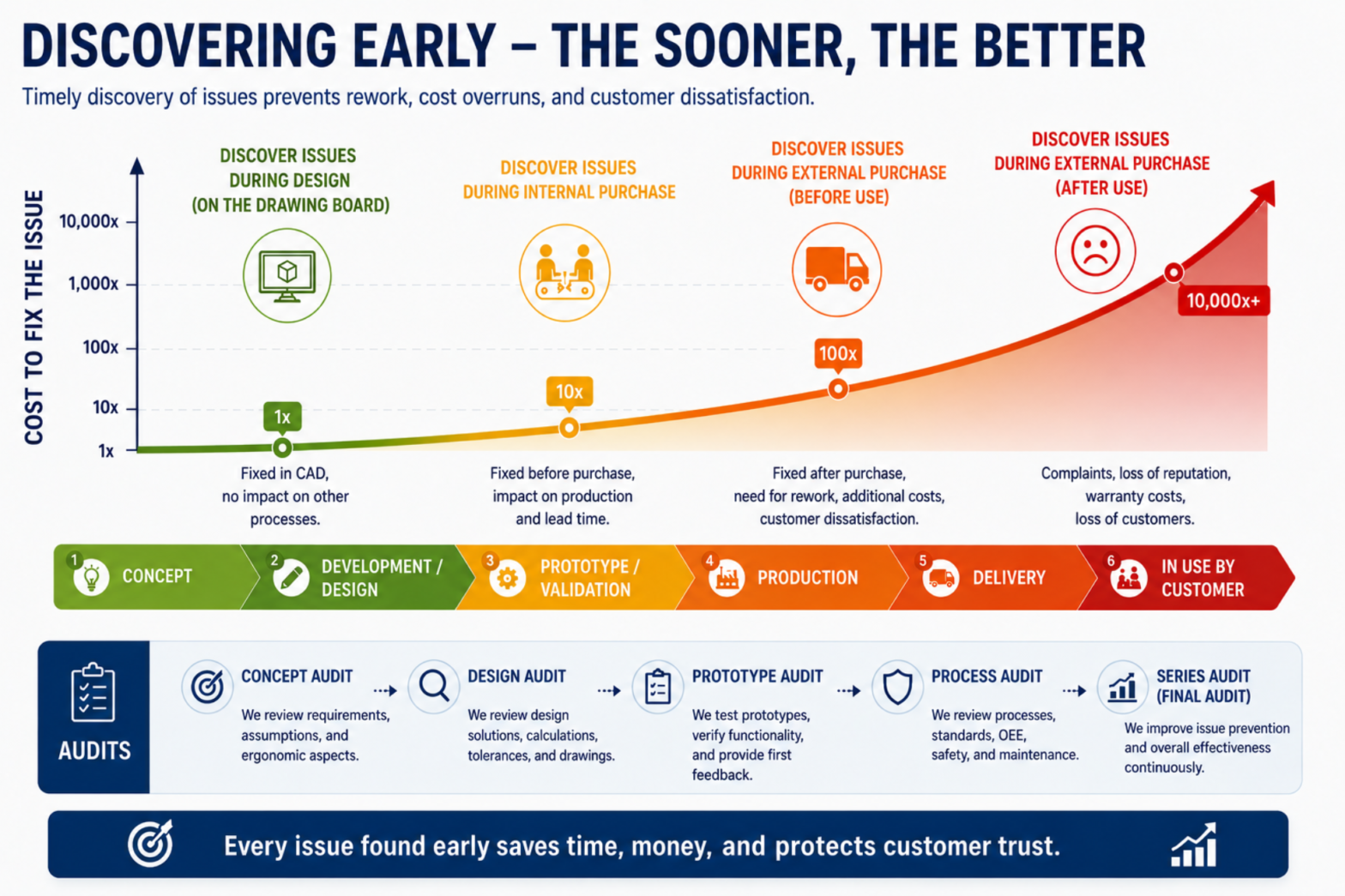
- audits and compliance
- skills and accountability
into one integrated digital framework.
Instead of adding another data layer, it creates a management execution layer.
When a KPI turns red, action is triggered.
When downtime increases, TPM routines are activated.
When audits reveal gaps, structured problem-solving begins.
When competence gaps appear, development plans are linked.
The system ensures that data leads to decisions — and decisions lead to measurable change.
From Smart Technology to Smart Execution
The next competitive advantage in German manufacturing will not come from adding more digital tools.
It will come from integrating:
- Strategy
- KPIs
- Daily Management
- TPM routines
- Audits and compliance
- Structured Problem-Solving
- People development and competencies
into one connected execution framework.
This is precisely where Performance Storyboard® fits.
Performance Storyboard® is a modular Lean Management System that connects strategy, KPIs, Daily Management, TPM routines, audits, Structured Problem-Solving, and people development into one integrated digital framework.
It does not replace ERP or MES systems.
It creates the management execution layer above them.
When a KPI deviation occurs, action is triggered.
When downtime increases, TPM routines are activated.
When audit findings appear, Structured Problem-Solving begins.
When competence gaps are identified, development plans are linked directly to performance needs.
The system ensures that data leads to decisions — and decisions lead to measurable operational results.
Smart Factory = Smart Management
Germany already excels in engineering excellence, automation, and Industry 4.0 technology.
The next step in Smart Factory Germany is disciplined execution:
- Every shift
- Every KPI
- Every deviation
- Every day
Industry 4.0 created transparency.Performance Storyboard® transforms transparency into structured action.
Because a true Smart Factory is not defined by how much data it collects —
but by how consistently it acts on it.