Shop Floor Management (SFM) is not an initiative. It’s not a project. It’s the operating rhythm that defines whether a manufacturing site leads or lags — whether problems are escalated too late or solved before they grow.
SFM is a structured leadership system applied directly on the production floor — where value is created, decisions are made, and problems arise. It ensures that performance is monitored in real time, issues are solved immediately, and teams are engaged daily in driving improvement. With the right mindset and supporting routines, it becomes the backbone of operational excellence.
What is Shop Floor Management?
Shop Floor Management is a systematic leadership method that happens directly where the action takes place — on the production floor. The focus lies on leadership presence, fast problem detection, and structured, daily improvement activities.
It’s built on key principles:
- Clear and visual communication,
- Real-time problem-solving,
- Empowerment and accountability of employees,
- Daily presence and coaching by leadership.
SFM isn’t just a method — it’s a culture of operational excellence.
Core Elements of Effective Shop Floor Management
1. Visual Management
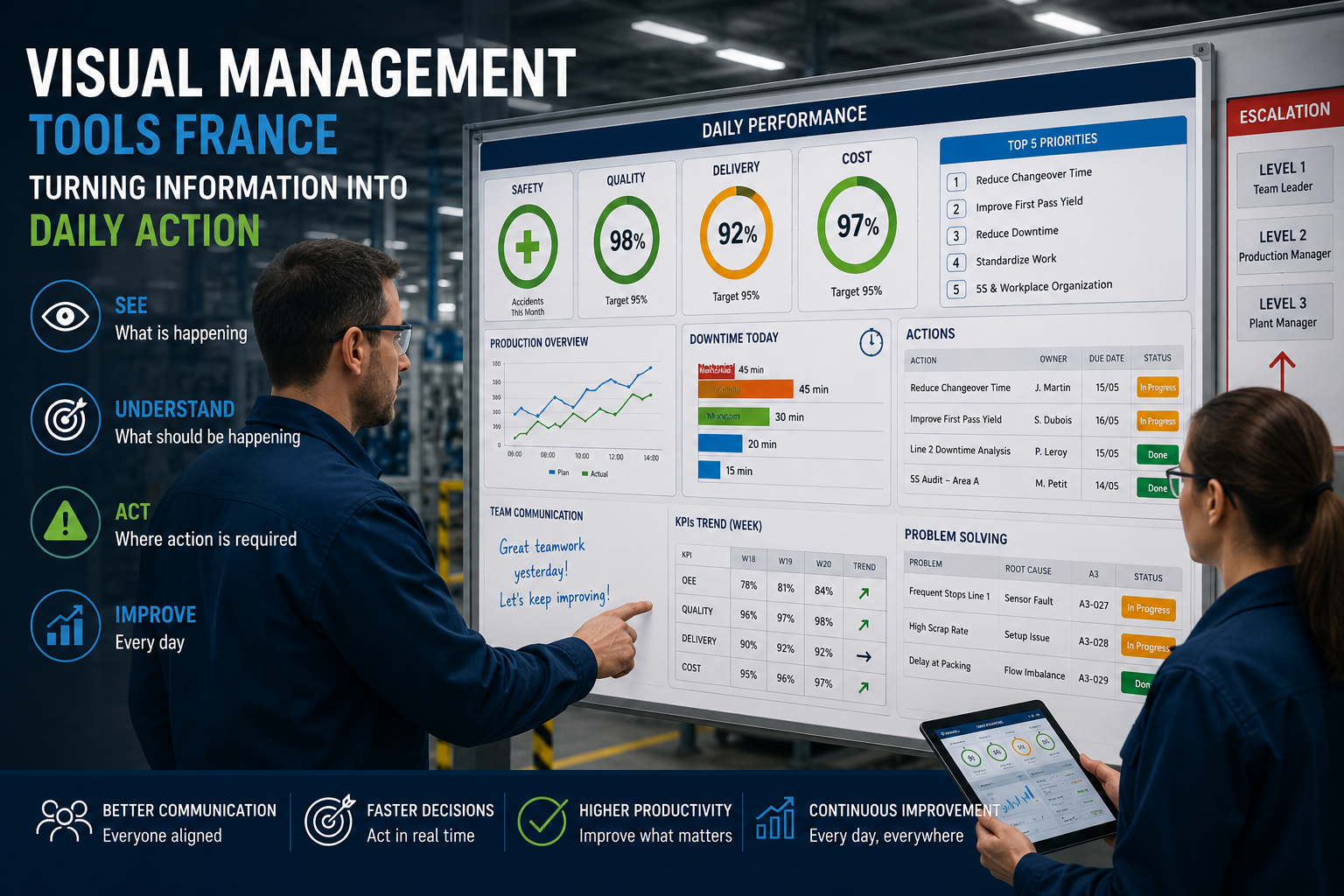
Use of boards, screens, and digital dashboards to display performance indicators, process status, deviations and priorities — all at a glance.
2. Daily Stand-up Meetings
Structured, short meetings at the gemba (where work happens) to:
- review KPIs,
- discuss issues,
- align on actions and priorities.
3. On-the-spot Problem Solving
The team does not escalate issues via email — they address them in real-time, on-site. Tools such as 5 Whys, A3 Problem Solving, and the PDCA cycle become daily habits, not theoretical frameworks.
4. Leader Presence
Leaders are not in offices — they are out on the floor. By observing, asking questions, and supporting teams directly, they become coaches, not bosses.
5. Continuous Improvement
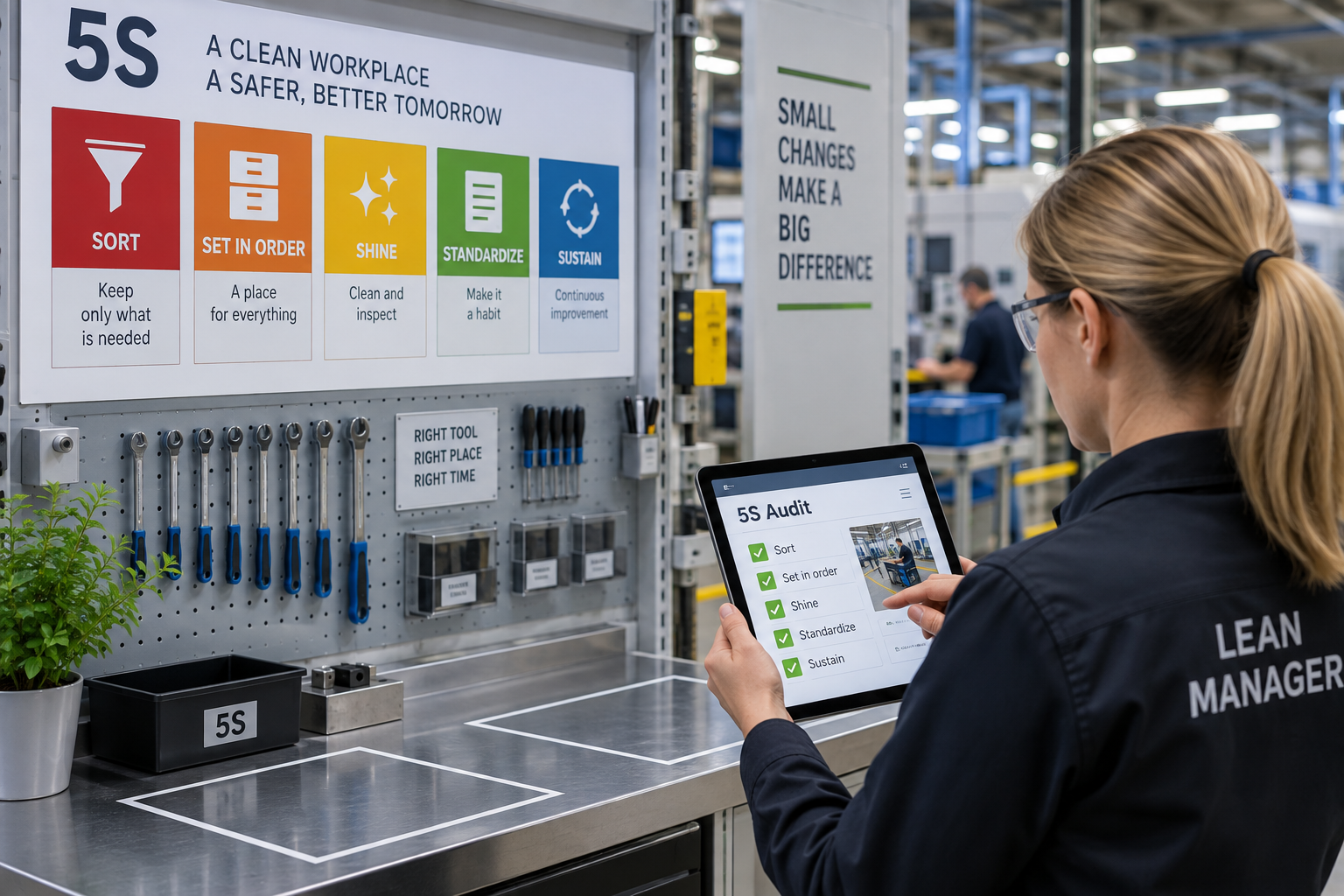
Lean thinking, Kaizen, 5S and TPM principles are integrated into everyday operations. Improvement doesn’t come from big projects, but from small, incremental, consistent steps.
6. Employee Involvement
Operators are not just doers — they’re contributors. In SFM, everyone is responsible for identifying problems and improving the process.
The Hidden Ingredient of SFM Success? Leadership Discipline
Many companies introduce visual boards and lean tools — but stop short. Why? Because without consistent leadership behavior, even the best system fades.
Presence, follow-up, and structured leadership routines are what sustain the system — not the whiteboard itself.
How SFM Works in Practice?
Let’s say your visual board indicates a drop in performance.
- Morning meeting reveals that a machine setup issue caused the disruption.
- The team applies a quick fix, and initiates a root cause analysis.
- A standard operating procedure (SOP) and checklist are implemented to prevent reoccurrence.
- The Performance Storyboard logs, visualizes, and tracks everything.
Digital Tool for Shop Floor Management: PMB – Performance Management Board
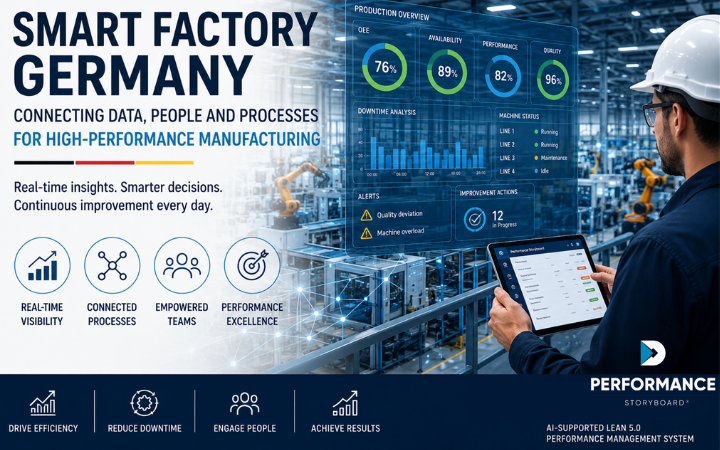
Traditional Shop Floor Management often relies on paper, intuition, and delayed reactions. Performance Storyboard with the PMB (Performance Management Board) module changes that — enabling data-driven, transparent, and proactive execution. It transforms reactive leadership into structured, real-time performance control.
Performance Storyboard – Real-time, visual and connected
Performance Storyboard replaces static boards and spreadsheets with:
- Real-time KPI dashboards,
- Trends, deviations, and escalation tracking,
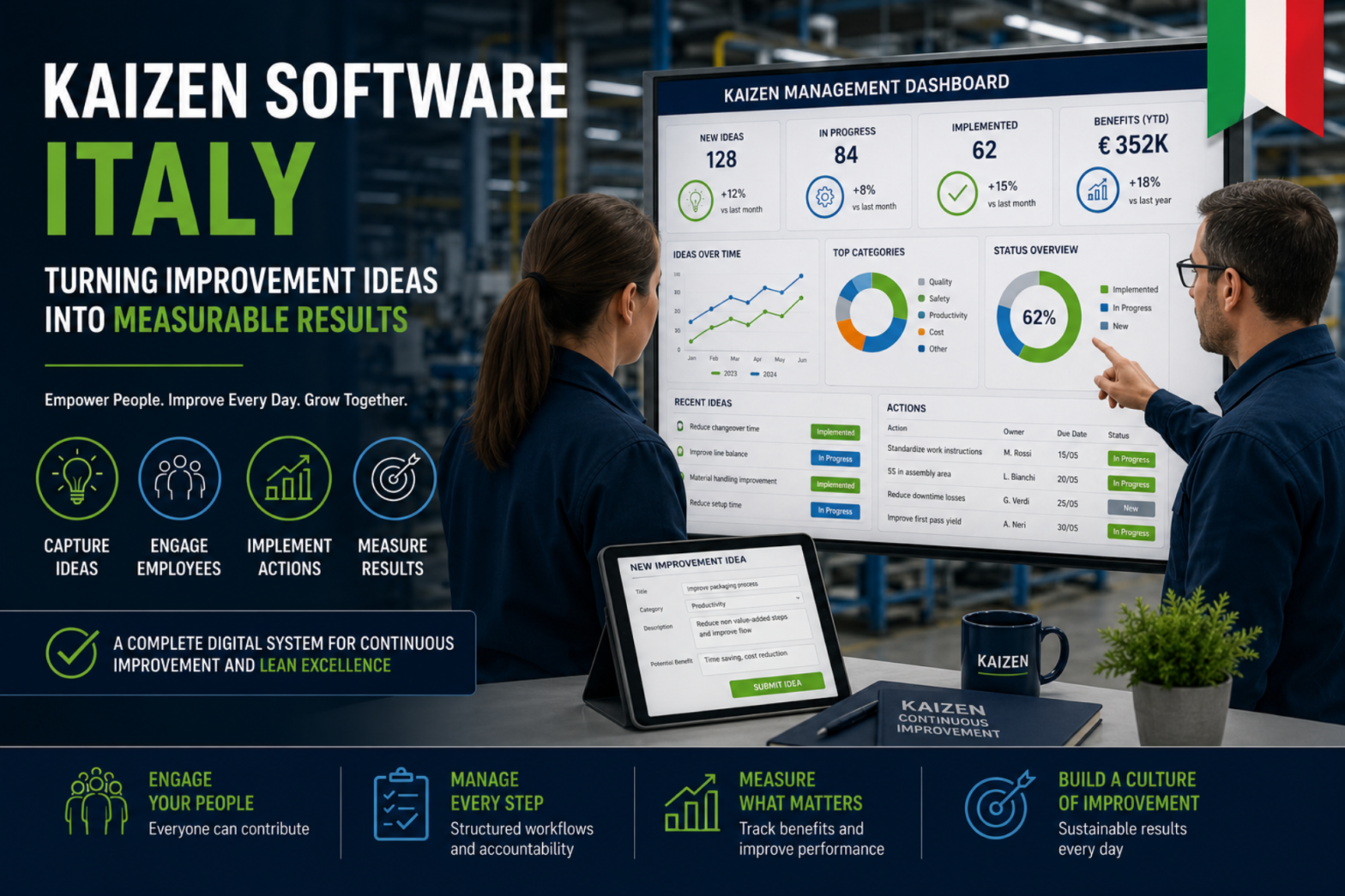
- Integrated improvement actions,
- Full transparency — from the operator to top management.
A single source of truth that’s always up to date — no more lost notes or manual charts.
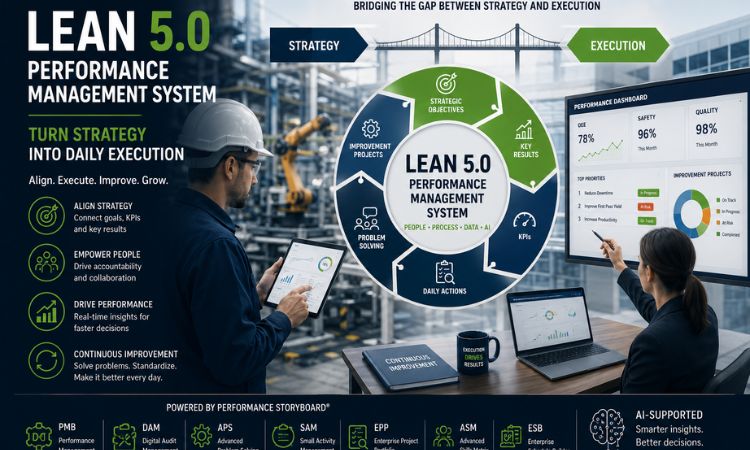
PMB – Align Strategy with Daily Execution
PMB is more than a visual board — it’s a strategic execution engine that:
- Connects top-level goals to shop floor actions,
- Structures performance reviews and tier meetings,
- Drives ownership through target tracking and follow-up.
Performance Management Board (PMB) ensures that daily shop floor management aligns with what truly matters — the company’s strategy.

Why Digital Shop Floor Management Works
✅ Faster decisions – KPIs updated in real time
✅ Greater transparency – one system, one language
✅ Action traceability – nothing is forgotten
✅ Cross-functional collaboration – silos disappear
✅ Engagement – everyone sees how their actions impact results
Conclusion
Shop Floor Management is not a tool — it’s a leadership model.
It creates a culture where:
- Problems are solved, not hidden.
- Teams are engaged, not directed.
- Leaders coach, not command.
And when SFM is enhanced by digital tools like Performance Storyboard and PMB, it becomes scalable, repeatable, and future-ready.
Ready to unlock the power of Shop Floor Management?