How APS – Advanced Problem Solving, as part of the PERFORMANCE STORYBOARD system, turns problem solving into a competitive advantage
In most companies, problems do not occur because people don’t know how to work.
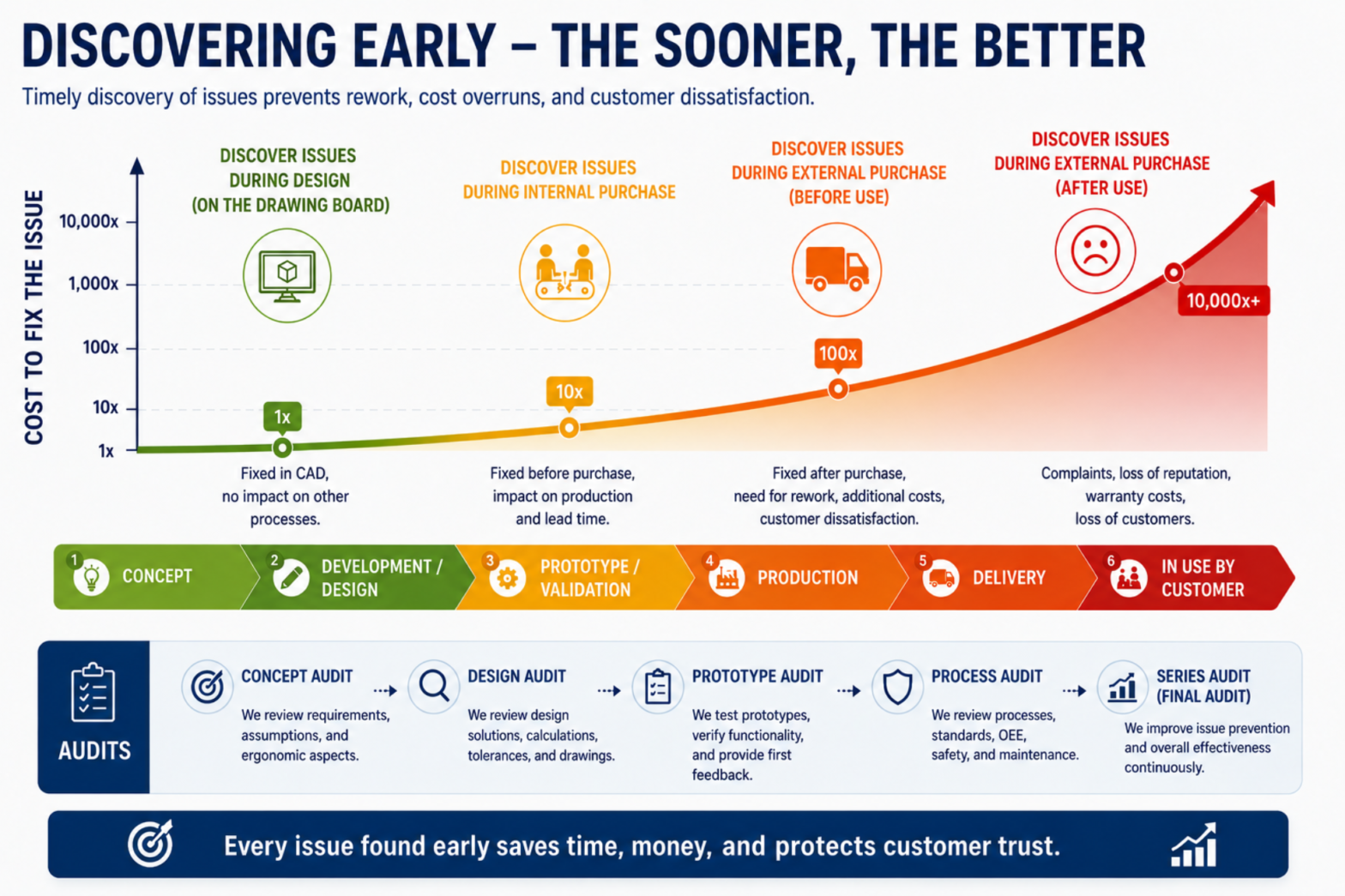
They occur because systems are not stable enough, processes are not clearly managed, and deviations are not addressed in a timely and consistent way.
An even bigger issue, however, is how problems are solved.
Instead of treating problems as a natural part of leadership and organizational learning,
they are often perceived as a disturbance. The result is firefighting: many meetings, endless alignment, a lot of effort – and surprisingly few sustainable solutions.
The same problems keep coming back, often in a slightly different form, but with the same
consequences.
Problem Solving as a Hidden Consumer of Time and Money
In practice, problem solving is not a side activity. Quite the opposite.
Experience from manufacturing and service organizations shows that companies spend 20–40% of their working time on problem solving – not on improvement, but on handling deviations, coordinating tasks, and fixing consequences.
This means that a significant part of organizational energy is not invested in development, but in maintaining basic operational stability.
Let’s look at a concrete example.
A company with 100 employees, an average annual workload of 1,800 hours, and an average gross labor cost of €25 per hour generates approximately €4.5 million in annual labor costs.
If 20% of working time is spent on problem solving, this equals €900,000 per year.
At 40%, the figure rises to €1.8 million per year.
For a company with 500 employees, this means €4.5 to €9 million annually.
These are not theoretical numbers. These are real resources that companies could invest in development, digitalization, or systematic people development – but instead, they are consumed by repeating the same discussions and the same “actions” that do not eliminate the root cause.
Why Do Problems Return Despite Well-Known Methods?
The issue is not a lack of methods.
5 Whys, Ishikawa, PDCA – all of these are well known and widely used.
The real issue lies elsewhere:
- problem solving is not standardized as part of the Lean Management System,
- each problem is handled differently,
- ownership is often unclear,
- the link between problem, root cause, and action is quickly lost,
- when a problem disappears from focus, learning disappears with it.
As a result, problem solving remains a reactive activity, rather than an integral part of daily management.
APS as Part of the Lean Management System within PERFORMANCE STORYBOARD
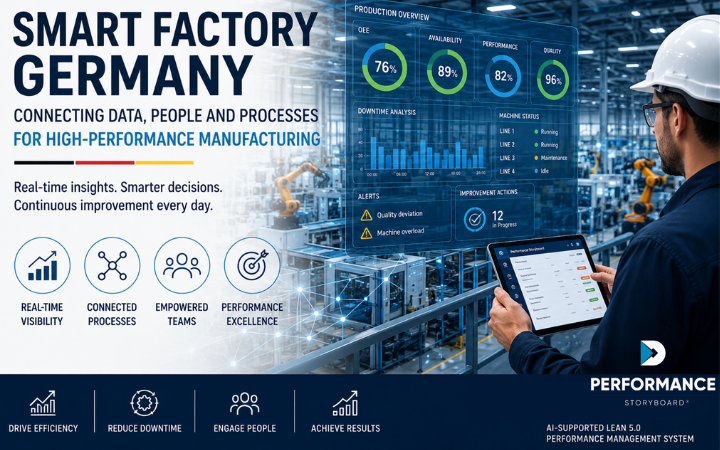
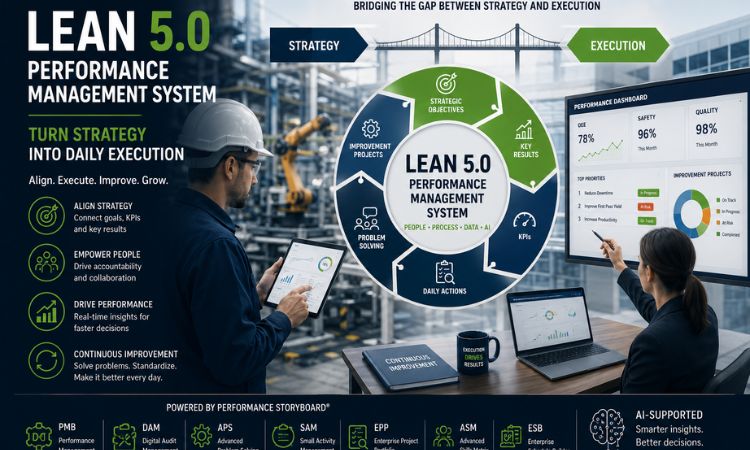
This is where APS – Advanced Problem Solving comes in, as an integral component of the PERFORMANCE STORYBOARD system.
APS does not introduce a new method.
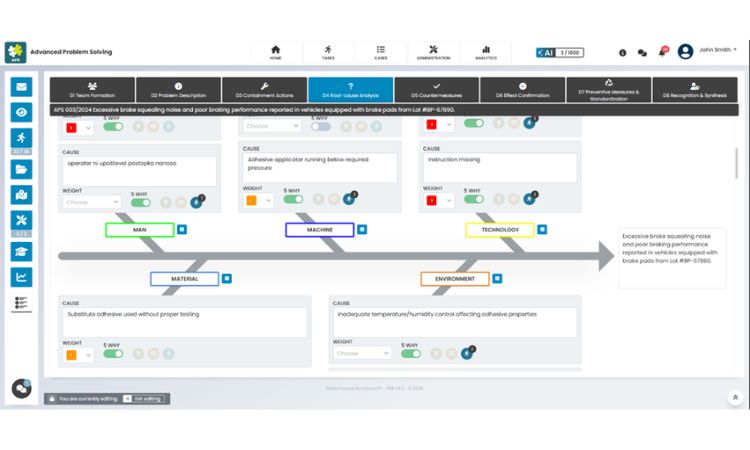
It introduces a disciplined, standardized system that connects:
- problem detection,
- root cause analysis,
- definition of actions,
- tracking of execution,
into a single, coherent daily management flow.
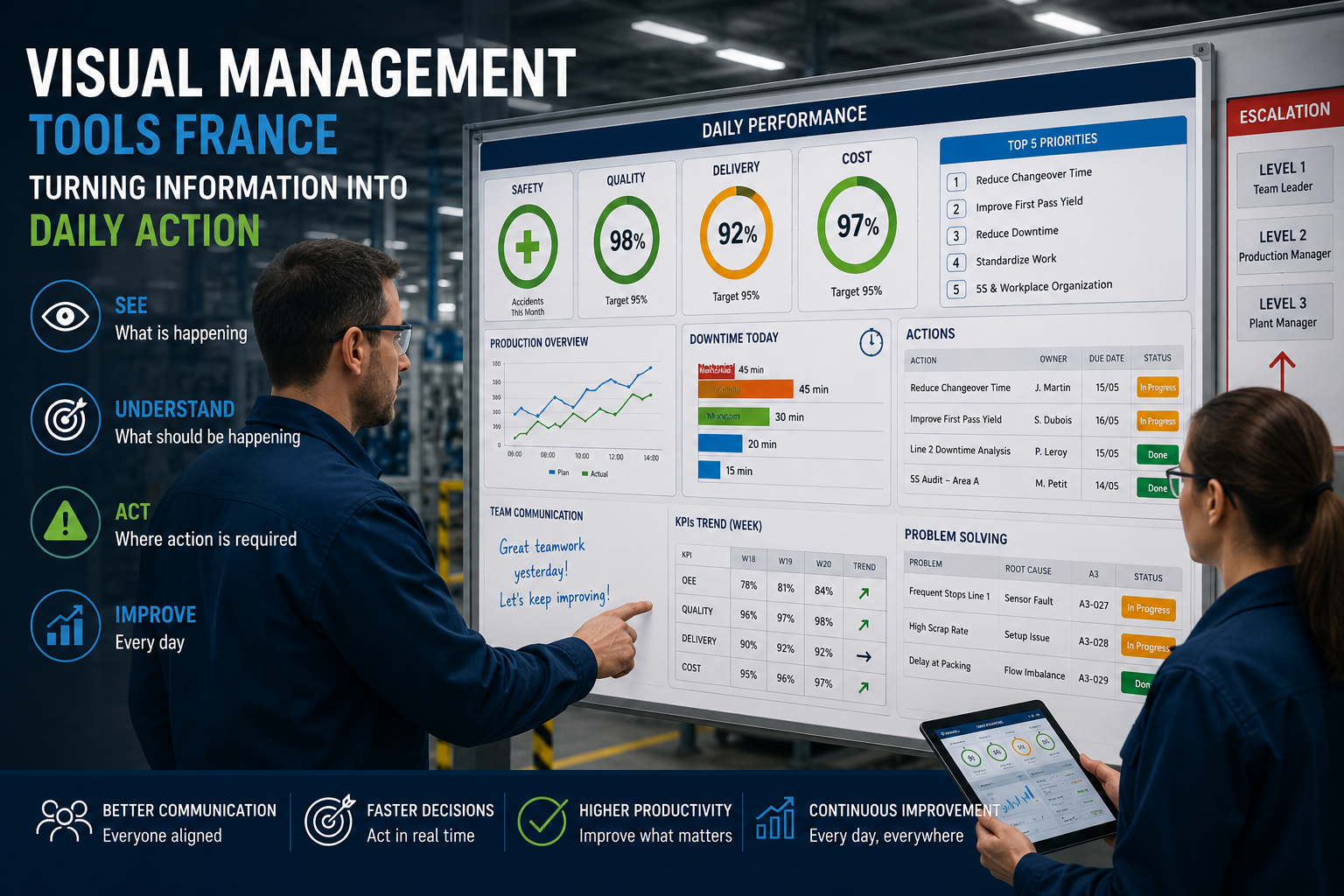
Every problem has a clear owner.
Every problem has a transparent status.
Every action is directly linked to a verified root cause, not to assumptions or general impressions.
Every step is traceable and part of management execution, not merely documentation.
APS therefore acts as an execution mechanism within the Lean Management System – not as a standalone tool.
What Do Companies Actually Gain with APS?
Companies that implement APS as part of daily management routines quickly see tangible results:
- problem-solving time can be reduced by 20% or more,
- execution time for actions can be shortened by up to 80%,
- the quality of solutions improves significantly.
Most importantly:
problems are not closed just to disappear from a list – they are closed because they are truly resolved.
Even a 5–10% reduction in time spent on problem solving can represent hundreds of thousands or even millions of euros per year for mid-sized companies.
At the same time, the organization gains something even more valuable:
stability, learning, and trust in the management system.
From Firefighting to Systematic Execution
Standardized problem solving is not administrative overhead.
It is the foundation of continuous improvement.
When problem solving becomes part of the Lean Management System, people’s energy shifts from firefighting to development. Problems do not disappear – but they become manageable.
And this is where the real competitive advantage lies.
The real shift happens when problem solving is no longer treated as a necessary evil, but as a structured path toward a better organization and consistent daily execution.