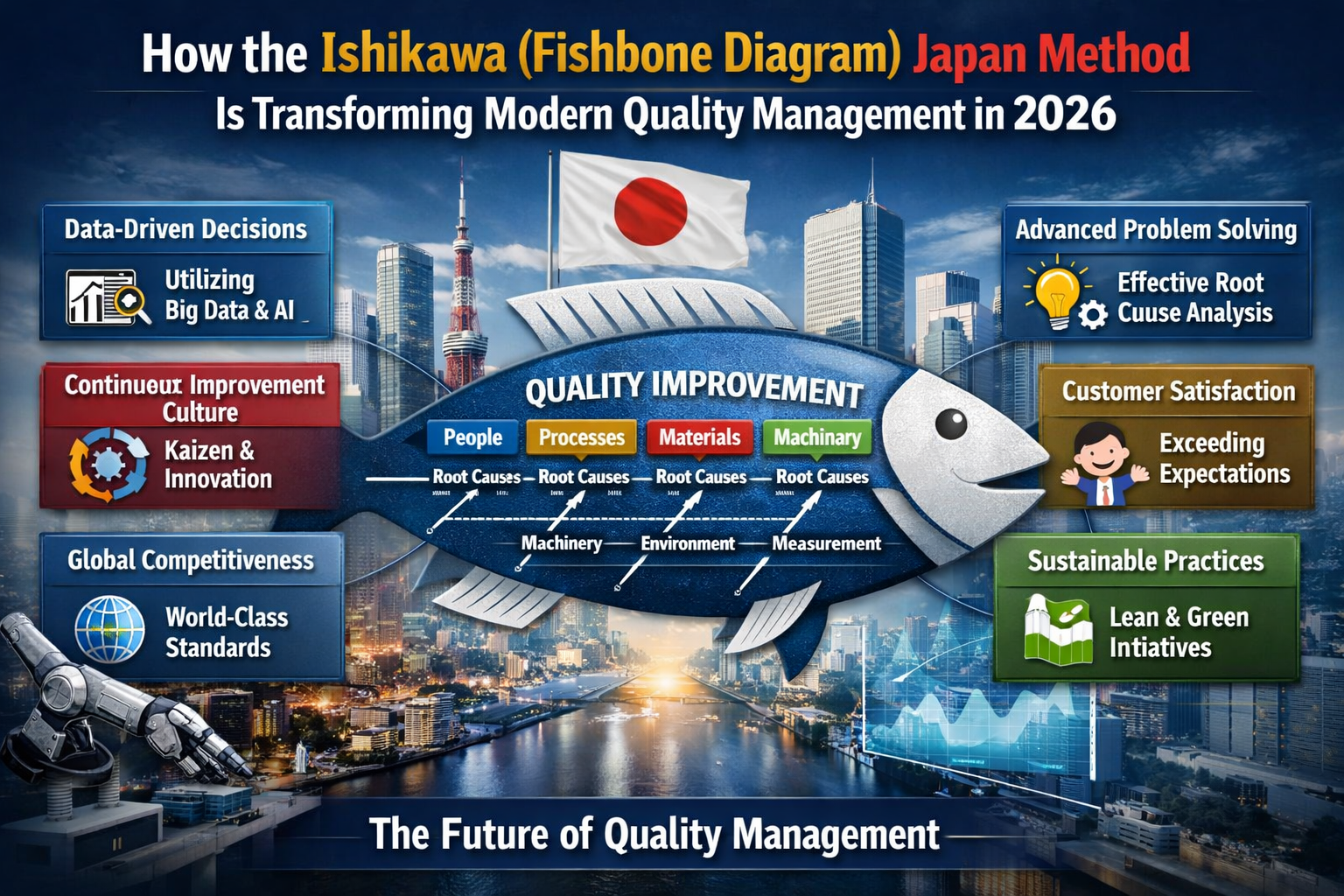
The beginning of every transformation journey in 2026 often starts with one pressing question: why do recurring problems keep resurfacing despite structured systems, KPIs, and digital dashboards? Leadership teams invest in technology, performance boards, and reporting tools, yet root causes remain unclear.
Organizations today face growing complexity—automation, AI-driven processes, supply chain volatility, and workforce transformation. In this environment, superficial problem-solving no longer works. Companies are rediscovering a fundamental truth: sustainable improvement begins with structured root cause analysis.
This is precisely why the Ishikawa (fishbone diagram) Japan from Japan is experiencing renewed relevance. It offers clarity in complexity and structure in uncertainty.
From Symptoms to Root Causes: The Logic Behind the Ishikawa Method
At its core, the Ishikawa (Fishbone Diagram) method is built on a simple but powerful principle: every problem has multiple potential causes, and those causes are interconnected within a system. Rather than reacting to visible symptoms, the method encourages teams to step back and analyze the structure behind the outcome. This systemic thinking is what makes the Ishikawa approach enduring and highly relevant in modern quality management.
The Ishikawa (fishbone diagram) Japan introduces a simple yet powerful logic:
Effect → Categories of Causes → Root Causes → Corrective Actions
Instead of reacting to symptoms, teams systematically explore potential contributing factors. Traditionally structured around categories such as:
- Machine
- Method
- Material
- Measurement
- Environment
This categorization ensures that analysis moves beyond assumptions and explores the full system influencing performance.
In 2026, this structured thinking is more critical than ever in data-rich environments.
Ishikawa in the Era of AI and Digital Transformation
The principles of Kaoru Ishikawa remain highly relevant in today’s AI-driven and digitally transforming world. Known for developing the Fishbone (Cause-and-Effect) Diagram and advancing total quality management, Ishikawa emphasized continuous improvement, root cause analysis, and company-wide quality responsibility.
The Ishikawa (fishbone diagram) Japan method complements digital systems by translating data into structured dialogue. AI may identify patterns—but human teams still need to interpret why those patterns occur.
Today, companies are integrating Fishbone analysis into:
- Digital problem-solving workflows
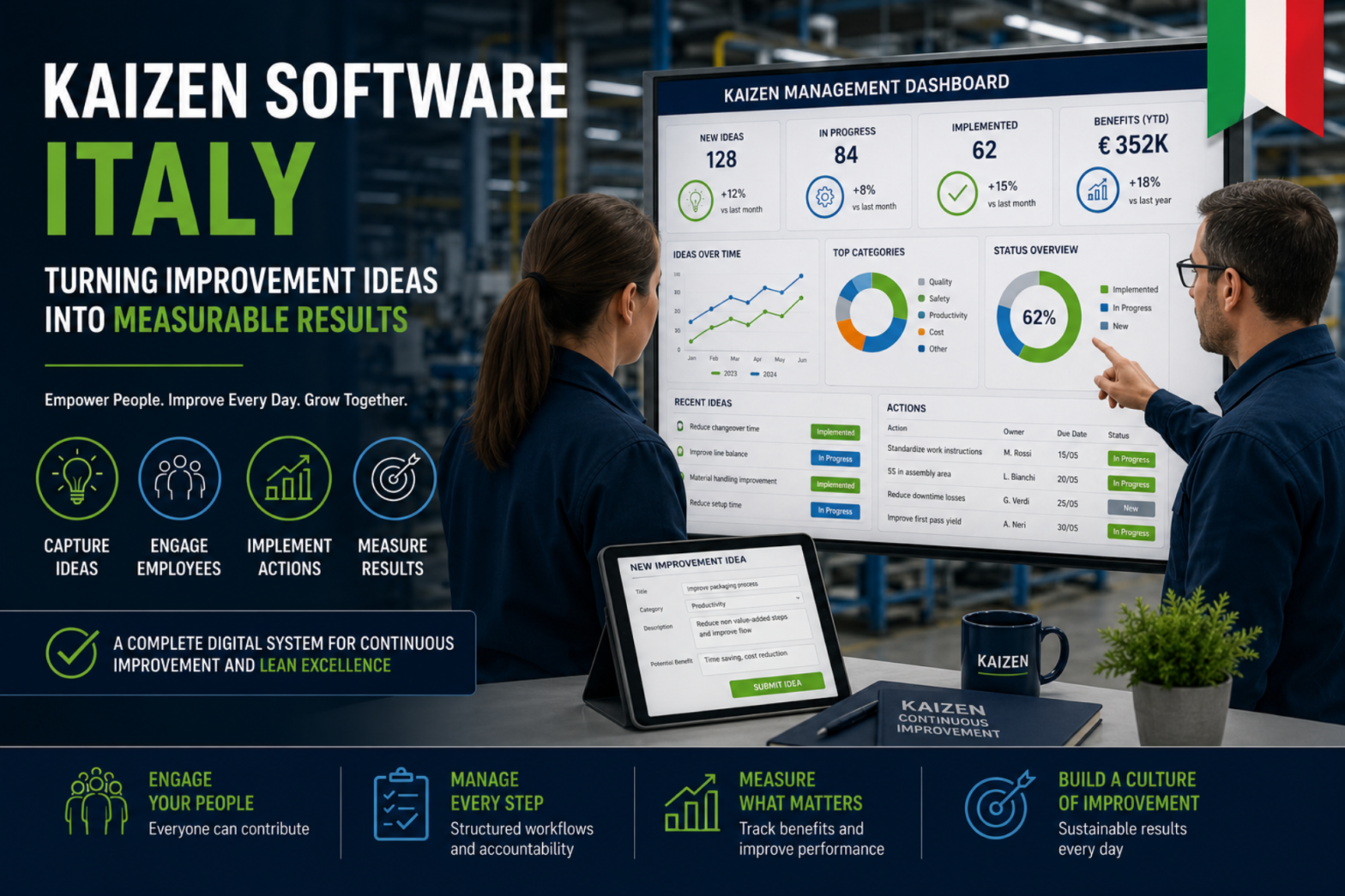
- Continuous improvement software
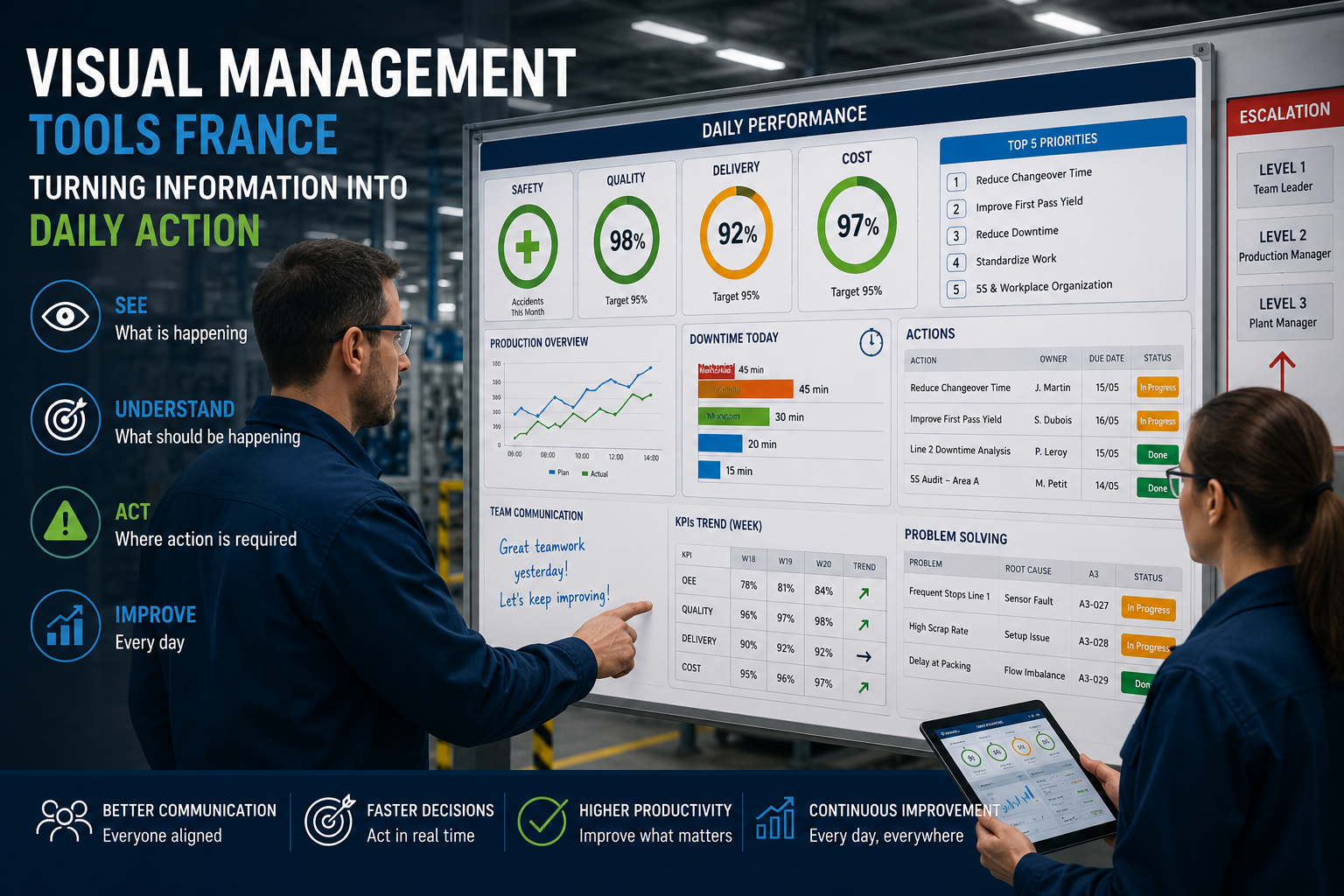
- Performance Management Boards
- Obeya rooms and visual management systems
Rather than replacing traditional tools, digital transformation is amplifying their impact. The Ishikawa diagram becomes the bridge between data signals and human reasoning.
Connecting Ishikawa to Performance Management Systems
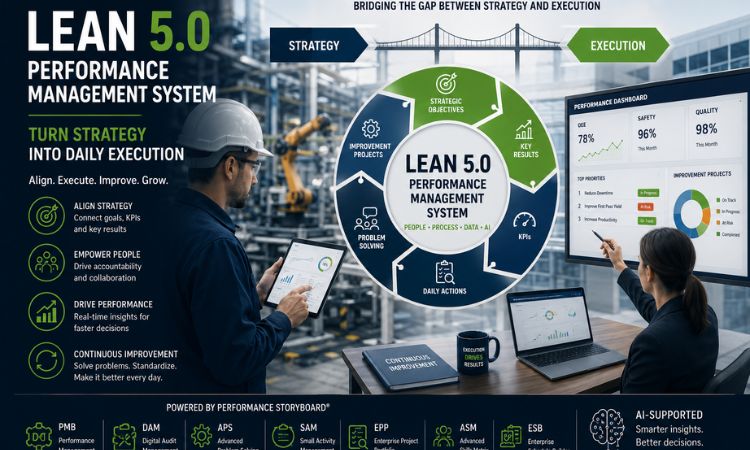
Modern organizations no longer treat problem-solving as an isolated activity. In 2026, quality management must directly support strategic objectives, KPIs, and daily operational targets. This is where the Ishikawa method becomes far more than a root cause tool—it becomes an integral part of the performance management system.
When aligned with structured performance systems—such as KMI → KPI → KAI logic—the Fishbone method strengthens:
- KPI deviations analysis
- Root cause workshops
- Corrective action planning
- Preventive improvement cycles
If a KPI shows recurring deviation, Ishikawa provides the structured method to explore underlying causes. It prevents quick fixes and encourages systemic thinking.
This is where the method evolves from a simple diagram into a leadership tool.
Why the Japanese Method Still Leads Modern Quality Thinking
In an era dominated by automation, artificial intelligence, and complex analytics platforms, it is striking that a method developed in Japan in the 1960s continues to shape modern quality management. The enduring relevance of the Ishikawa method lies not in technology, but in its disciplined thinking structure. While tools evolve, the logic behind systematic root cause analysis remains timeless.
Its strength lies in:
- Clarity
- Visual simplicity
- Systematic exploration
- Team engagement
- Preventive mindset
In an era overwhelmed by dashboards and automation, the simplicity of the Fishbone diagram remains powerful.
It reminds organizations that quality improvement is not about complexity—it is about structured understanding.
One View, One Logic: Bringing Root Cause Analysis to Life
In modern organizations, one of the greatest challenges is fragmentation. Data sits in dashboards, KPIs are tracked in reports, and corrective actions live in separate project tools. Root cause analysis often becomes an isolated workshop rather than an integrated management practice. To create real impact, analysis must connect directly to performance logic.
When organizations consistently apply structured root cause analysis:
- Problems are solved permanently, not temporarily
- Teams think systemically, not reactively
- Improvement becomes embedded in daily work
The Ishikawa (fishbone diagram) Japan method is not just surviving in 2026—it is becoming more essential than ever.
Conclusion
In the age of AI and digital transformation, quality methods with modern technology ensures sustainable performance. The principles of Kaoru Ishikawa emphasize root cause analysis, teamwork, and continuous improvement—elements that remain essential even in highly automated environments.
A performance storyboard strengthens this approach by visually outlining objectives, current challenges, root causes, action plans, and measurable results. It connects AI-driven insights with strategic goals, ensuring that technology supports real business outcomes. By mapping performance gaps and tracking key performance indicators (KPIs), organizations can maintain clarity, accountability, and progress.