When managing quality, most companies focus on KPIs (Key Performance Indicators) – the measures that show how well goals are being achieved: defect rates, customer complaints, on-time deliveries. KPIs are essential, but by nature they are reactive – they measure what has already happened.
On the other hand, there are KRIs (Key Risk Indicators) – measures that highlight potential risks before they turn into real problems. If a KPI tells us how many defects were found, a KRI reveals where defects are most likely to occur. KRIs are therefore proactive – they help prevent issues, not just fix them.
Example:
- KPI: Customer complaint rate < 50 ppm.
- KRI: % of complaints without corrective actions > 0%.
Together, KPIs and KRIs give a complete picture: they show how successful we have been and where the biggest risks may lie in the future.

Table: KPI & KRI for Quality
How DAM and PMB Support Quality Management
DAM – Daily Audit Management
Indicators alone are not enough. Companies need a system to check whether processes, controls, and quality systems are actually working in practice. This is where DAM – Daily Audit Management comes in: a digital tool that enables easy, systematic, and consistent audits.
With DAM, companies can:
- perform daily audits across all levels (from incoming quality to customer complaints),
- quickly identify deviations and risks,
- ensure full traceability and transparency of findings,
- make sure corrective actions are actually implemented and monitored.
The result? Problems are prevented before they reach the customer.
PMB – Performance Management Board
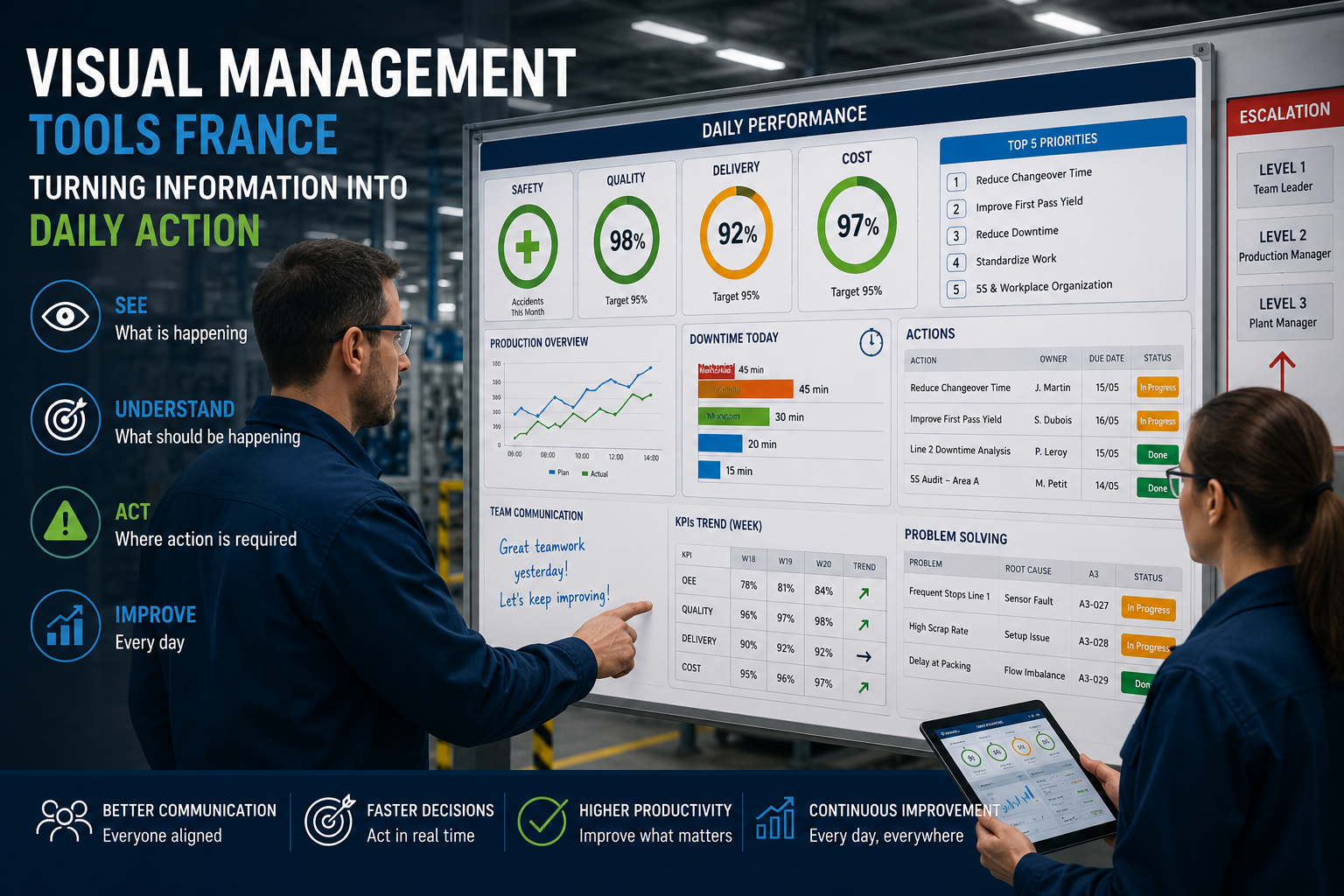
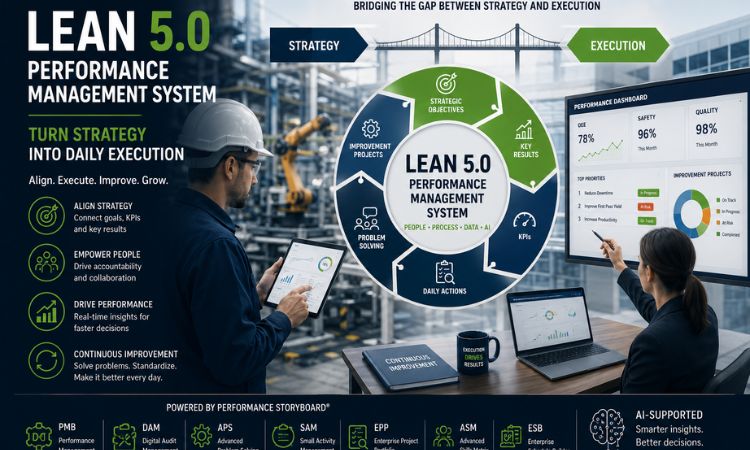
While DAM handles audits and supports the management of KRIs, the PMB – Performance Management Board is designed for managing and visualizing KPIs and KRIs. It ensures that performance indicators are not just numbers in a spreadsheet, but are actively monitored, communicated, and acted upon.
With PMB, companies gain:
- transparent, real-time KPI dashboards,
- a single communication platform across all organizational levels,
- faster decision-making thanks to clear visibility of deviations and trends,
- a culture of accountability – KPIs as drivers of action, not just reports.
The result? KPIs guide everyday decision-making and improvement efforts.

Figure: Example of goals and performance indicators visualized in the PMB tool
Conclusion
- KPIs tell us how well we are meeting our goals.
- KRIs warn us where risks may arise.
- DAM – Daily Audit Management ensures risks are systematically controlled and problems prevented.
- PMB – Performance Management Board makes sure KPIs are actively managed and used to drive organizational excellence.
Together, they form a powerful combination for any company aiming to master quality management and build a culture of continuous improvement.