When we talk about the costs of inefficiency, we usually think of sick leave.
According to the NIJZ (National Institute of Public Health), the average Slovenian employee misses about 21.6 working days per year, which equals roughly 6–7% of total working time.
By comparison, the average across most European countries is between 3% and 5%, while in the United States it’s around 2%.
At first glance, that gap may not seem dramatic — but in reality, it’s just the tip of the iceberg.
Beneath the Surface: The Untapped Potential of People and Machines
Sick leave is visible and measurable.
What’s often invisible — yet far more significant — is the hidden inefficiency of time, knowledge, and equipment that are paid for but don’t create value.
In many Slovenian manufacturing companies, actual production efficiency barely exceeds 50%.
Among employees, true productivity is often even lower — around 40% on average.
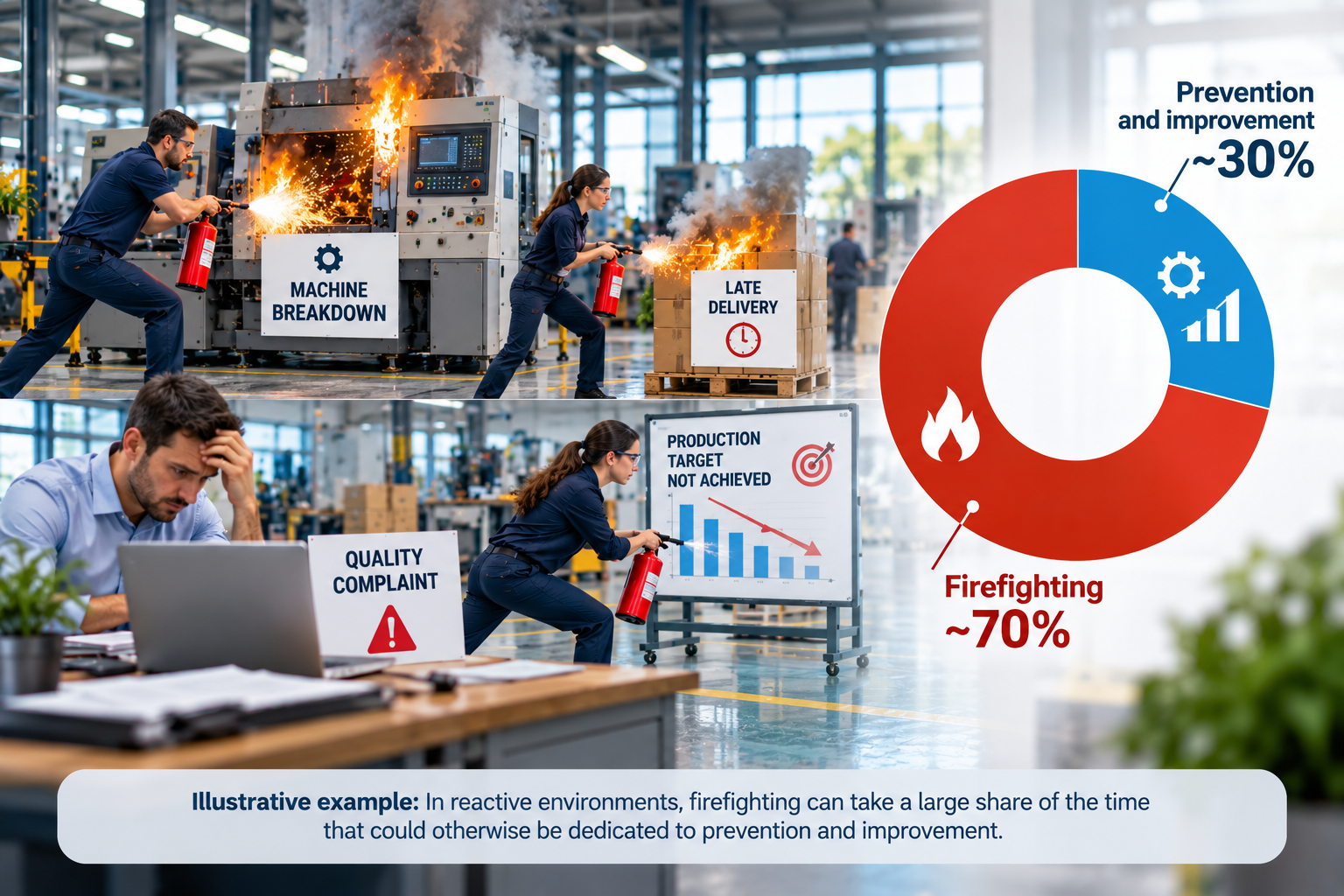
On average, only 10–30% of the working time actually consists of value-added activities — those for which the customer is willing to pay.
This means that more than half of the paid working time is spent on non–value-added activities: waiting, searching for tools, unnecessary movements, fixing errors, wasting time due to unclear instructions, inefficient coordination, or excessive administration.
The Real Cost in Time and Money
Slovenia has roughly 900,000 employees, with an average of 1,680 working hours per year (210 working days × 8 hours).
If the average efficiency is only 40%, then 60% of all paid time is unproductive.
The numbers:
900,000 employees × 1,680 hours × 60% = 907 million hours of lost value every year.
If one working hour costs a company €20, that equals:
907,000,000 × €20 = €18.1 billion in lost value annually.
These are not theoretical figures.
They reflect a real economic impact — the price of poor processes, unclear responsibilities, and underutilized systems.
It’s a cost borne by companies, employees, and the entire national economy.
Fixed Costs, Half the Efficiency
Fixed costs — salaries, energy, facilities, machines — remain the same, whether a company operates at 60% or 100% efficiency.
The difference between those two levels is pure lost profit.
A company that increases its efficiency by just 10 percentage points (from 40% to 50%) could generate an additional €2,000 per employee, without a single new investment.
At the national level, that translates into more than €1 billion in additional value.
The Common Denominator: Underutilization
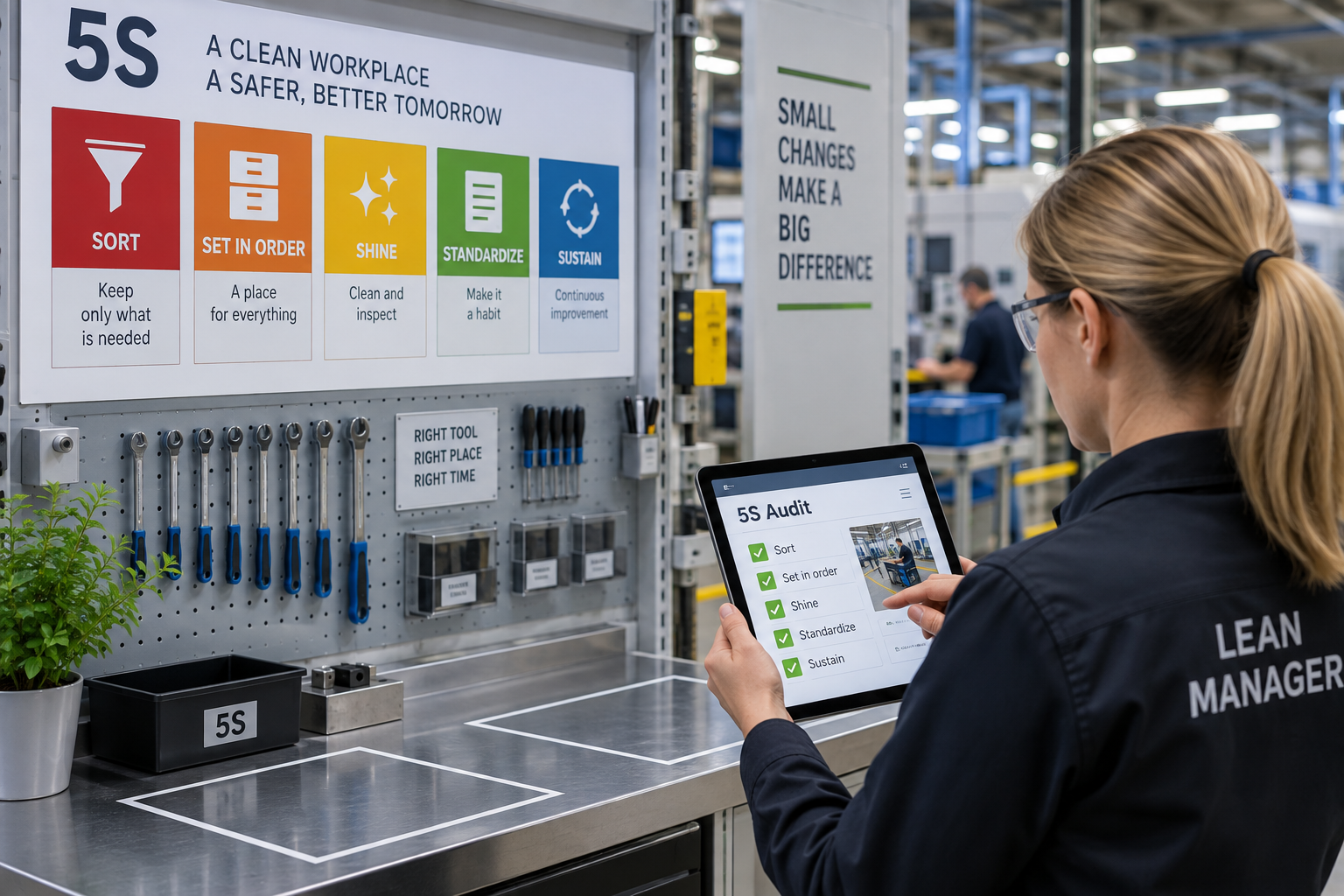
In LEAN and TPM methodology, this is called muda — waste.
It includes everything that consumes resources but doesn’t create value:
- waiting,
- rework,
- unnecessary motion,
- overprocessing,
- excess inventory, and
- the unused potential of people and machines.
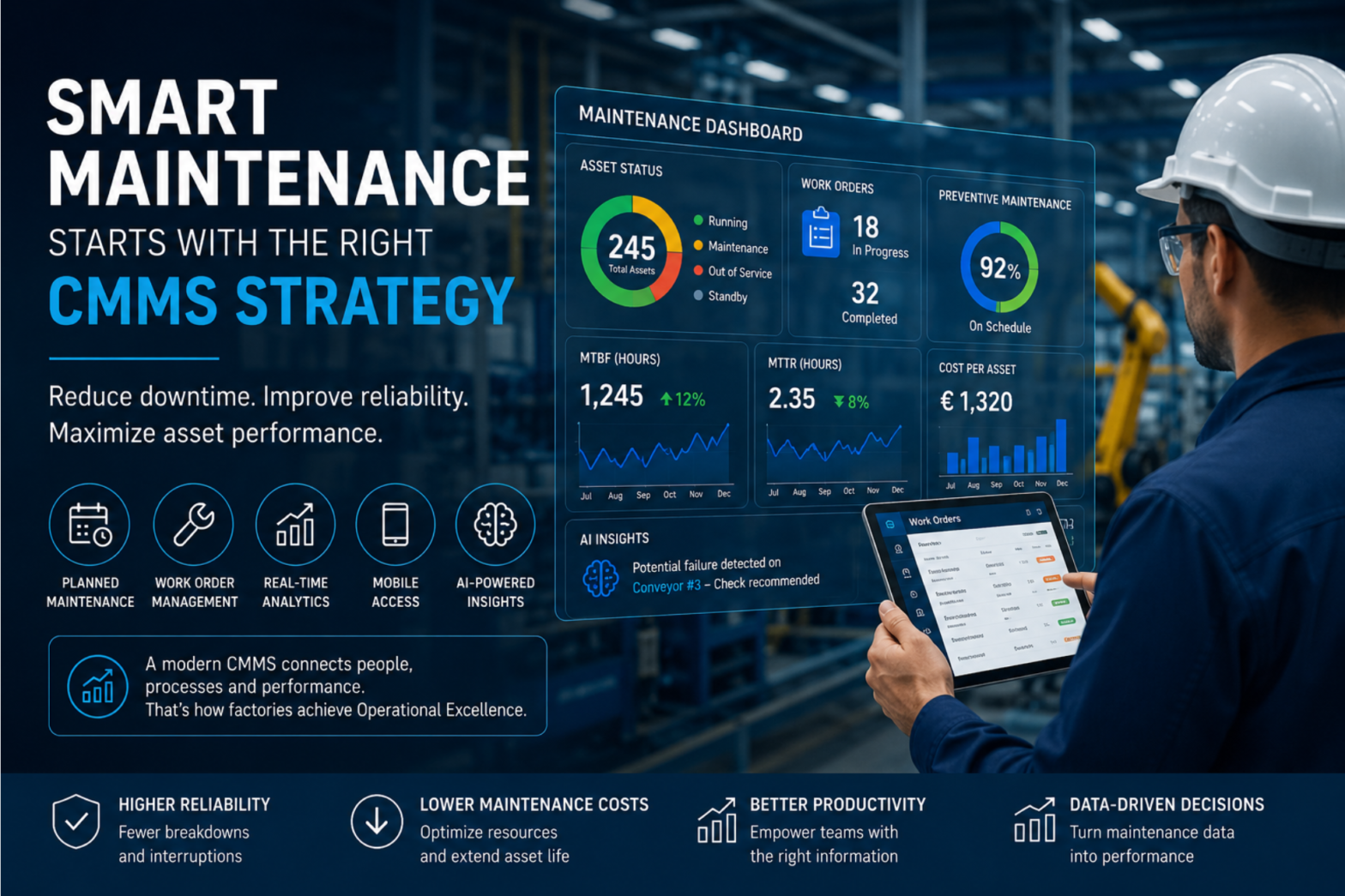
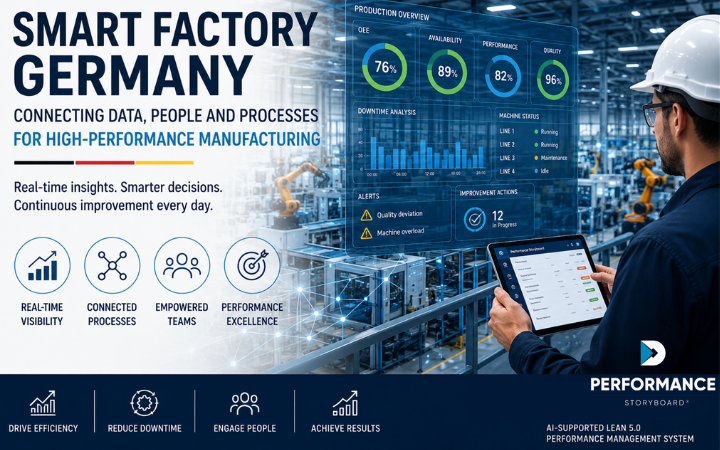
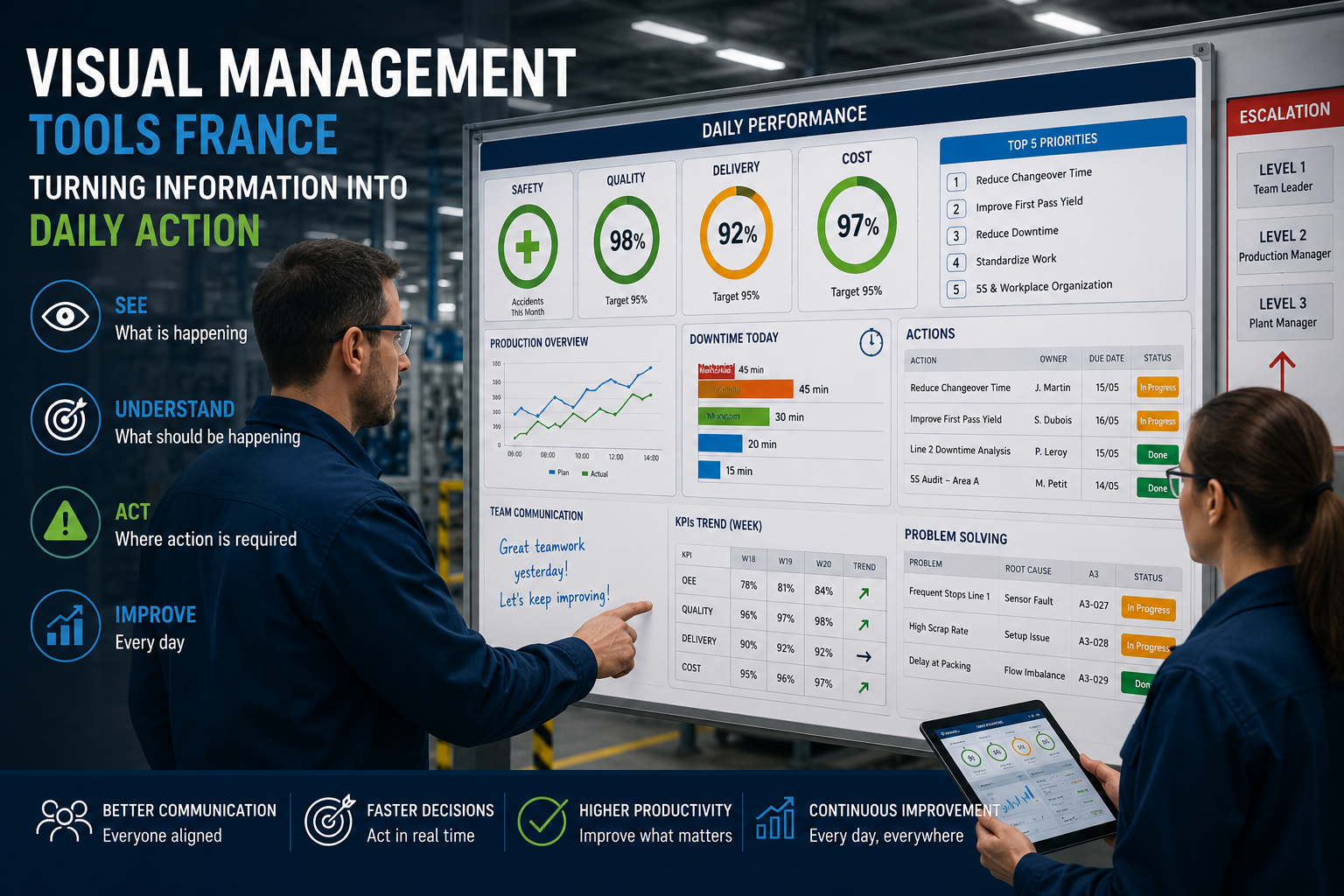
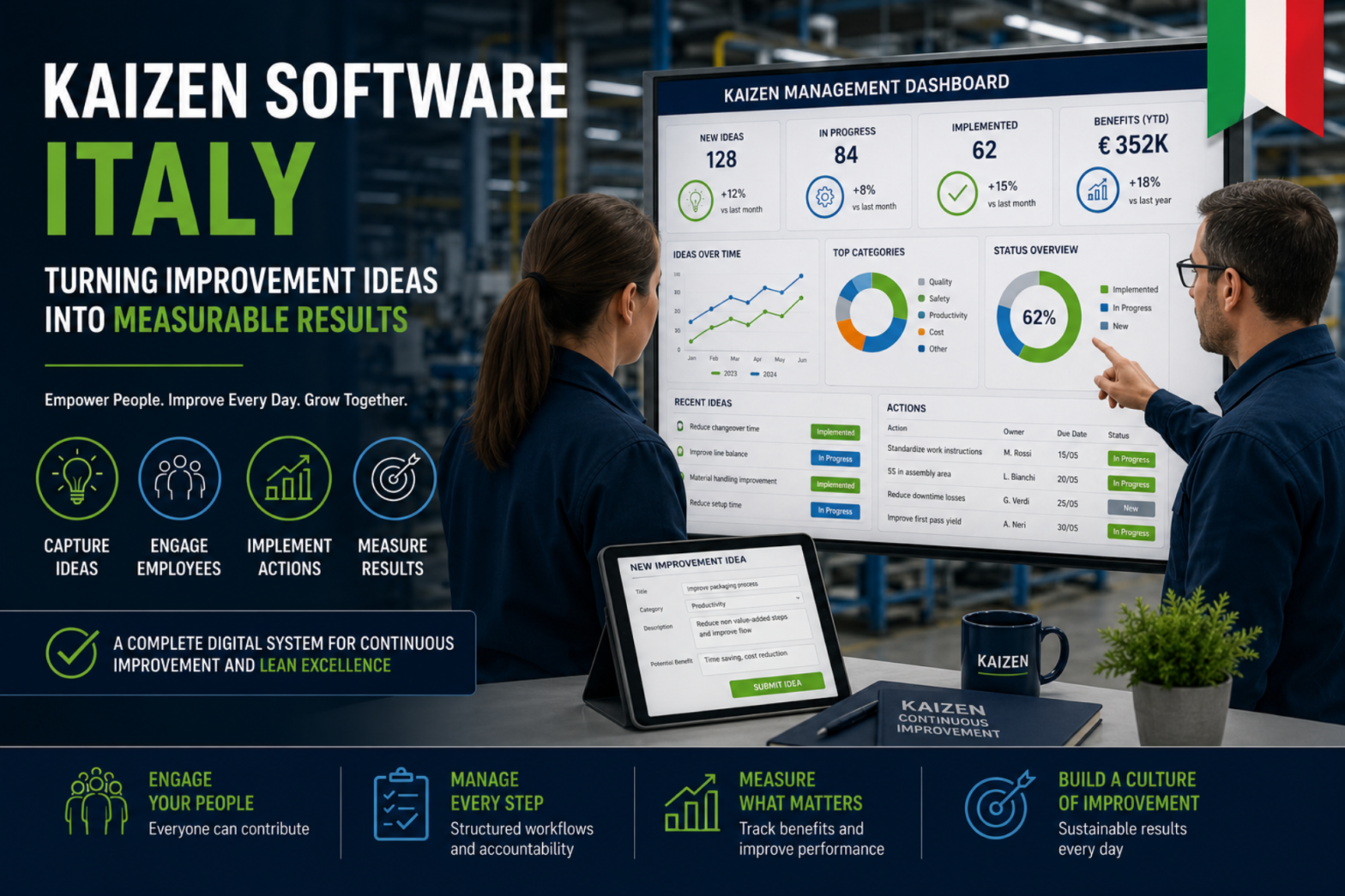
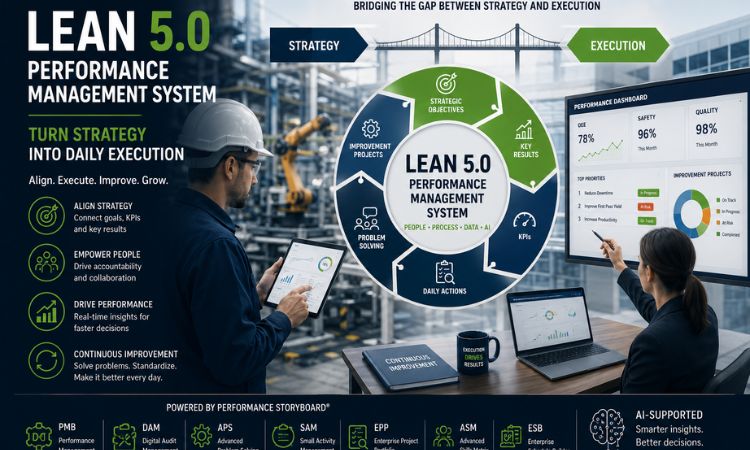
Digital tools such as Performance Storyboard® make these losses visible, measurable, and actionable.
By combining data on performance (OEE, safety and productivity indicators, etc.), absences, individual and team performance, and information flows, a company can accurately identify where the greatest potential for improvement lies.
The Solution: Smart Management of Time, Machines, and People
The solution isn’t working harder — it’s working smarter.
Creating an environment where processes are transparent, tasks are clear, and technology supports people, not the other way around.
To improve efficiency, a company should:
- Measure all types of losses (OEE, Absence Rate, Value-Added Time);
- Implement TPM and TMM principles for continuous machine efficiency;
- Strengthen employee competence and accountability;
- Build a culture where every minute counts, because every minute without added value is a direct cost.

On average, only 10–30% of working time adds real value for the customer.
Conclusion: Slovenia Has the Knowledge – It Needs Awareness
Slovenia has the know-how, the technology, and capable people.
But as long as we accept 40% efficiency as “normal”, we’ll keep losing billions every year.
Each percentage point regained through better processes, collaboration, and digital tools is a step toward a healthier, more competitive economy.
Efficiency isn’t about pressure — it’s about respect for time: of machines, people, and society as a whole.
Final Thought:
How much of your time truly creates value — and how much do you unknowingly give away to inefficiency?