In manufacturing companies, massive amounts of data are generated every day – from orders and inventories to machine efficiency and employee competencies. If these data are not collected and connected, companies quickly lose visibility, leading to delays, errors, and unnecessary costs. It is therefore essential to understand the role of each information system and how they interact. Alongside ERP, MES, SCADA, CMMS, BI, and PLM, companies are increasingly looking at Performance Storyboard®, which helps align these data flows and turn them into a real competitive advantage.
ERP (Enterprise Resource Planning)
ERP is the central business system of a company, integrating finance, procurement, warehousing, sales, and production planning. Its key advantage is a unified database that provides a single overview of the entire business. Management can use ERP to track costs, revenues, inventories, and orders. The downside of ERP is that implementations are typically expensive, time-consuming, and often too rigid to adapt to the specific needs of manufacturing.
MES (Manufacturing Execution System)
MES focuses on the actual execution of production. It enables detailed monitoring of production orders, measurement of OEE, quality control, and complete traceability of batches. Its strength lies in providing a real-time view of what is happening on the line or machine, which is crucial for timely decisions. However, MES often duplicates some ERP functions, which can lead to additional costs and confusion among users.
SCADA (Supervisory Control and Data Acquisition)
SCADA ensures direct monitoring of process parameters such as temperature, pressure, or machine speed, and provides real-time alarms. These systems are robust and reliable, essential for process industries. Their limitation is that they do not include business logic – they record and alert but do not connect data to costs, goals, or productivity.
CMMS / EAM (Computerized Maintenance Management System)
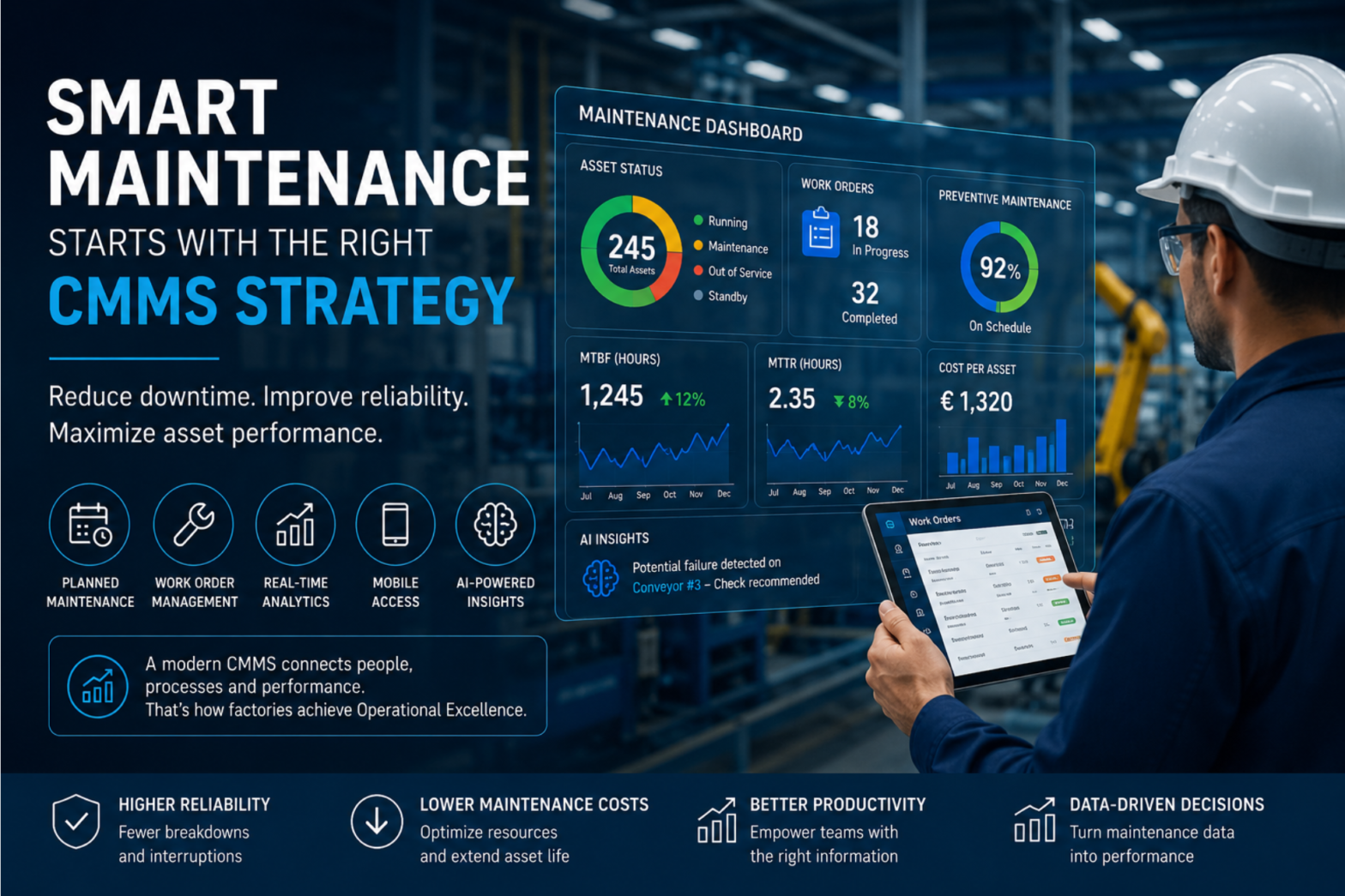
CMMS systems are designed for maintenance management. They enable planning of preventive and corrective actions, asset records, spare parts management, and maintenance cost tracking. Their main benefit is fewer breakdowns and lower downtime costs thanks to better planning and oversight. The drawback is that CMMS often remains an isolated system, without meaningful integration with production or business processes.
BI (Business Intelligence)
BI tools such as Power BI, Tableau, or Qlik provide data visualization, dashboards, and KPI monitoring. Their advantage is flexibility and the ability to create clear and insightful analytics when the data sources are well prepared. The challenge is that the quality of the output fully depends on the quality of the input data – “garbage in, garbage out” applies strongly here. BI is therefore indispensable for digital transformation, but it does not solve core process issues by itself.
PLM (Product Lifecycle Management)
PLM systems cover the full lifecycle of a product – from development and design to production, changes, and servicing. They are used to manage documentation, bills of materials, change management, and product traceability. Their benefit is a comprehensive overview of the product over time, while their downside is high implementation costs and limited applicability outside industries with highly complex products, such as automotive or aerospace.
Where Does Performance Storyboard® Fit In?
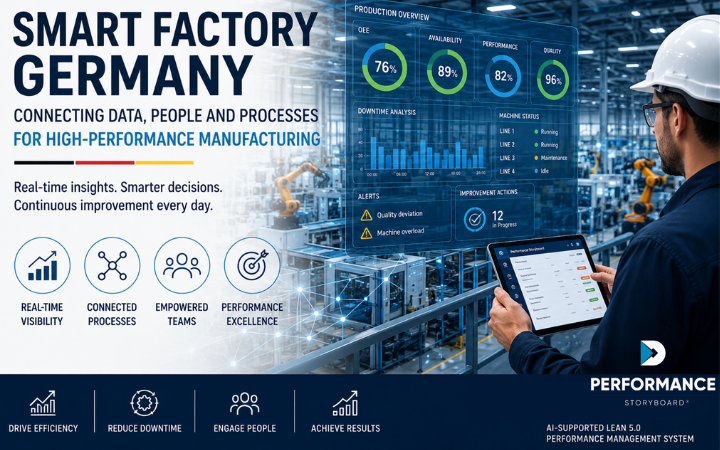
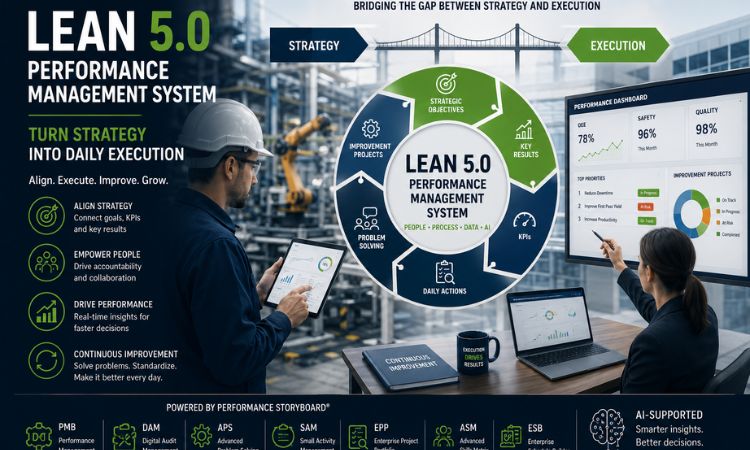
Performance Storyboard® (PSB) is a modular platform that connects strategy, KPIs, and operational execution. It focuses on Lean, TPM, and Industry 4.0/5.0, placing people and processes at the center. It combines tools that companies usually use separately, but here they work together in a single environment with an emphasis on user experience.
- TMM (Total Maintenance Management) covers the functions of a classic CMMS, directly linked to OEE and the TPM pillar “Planned Maintenance.”
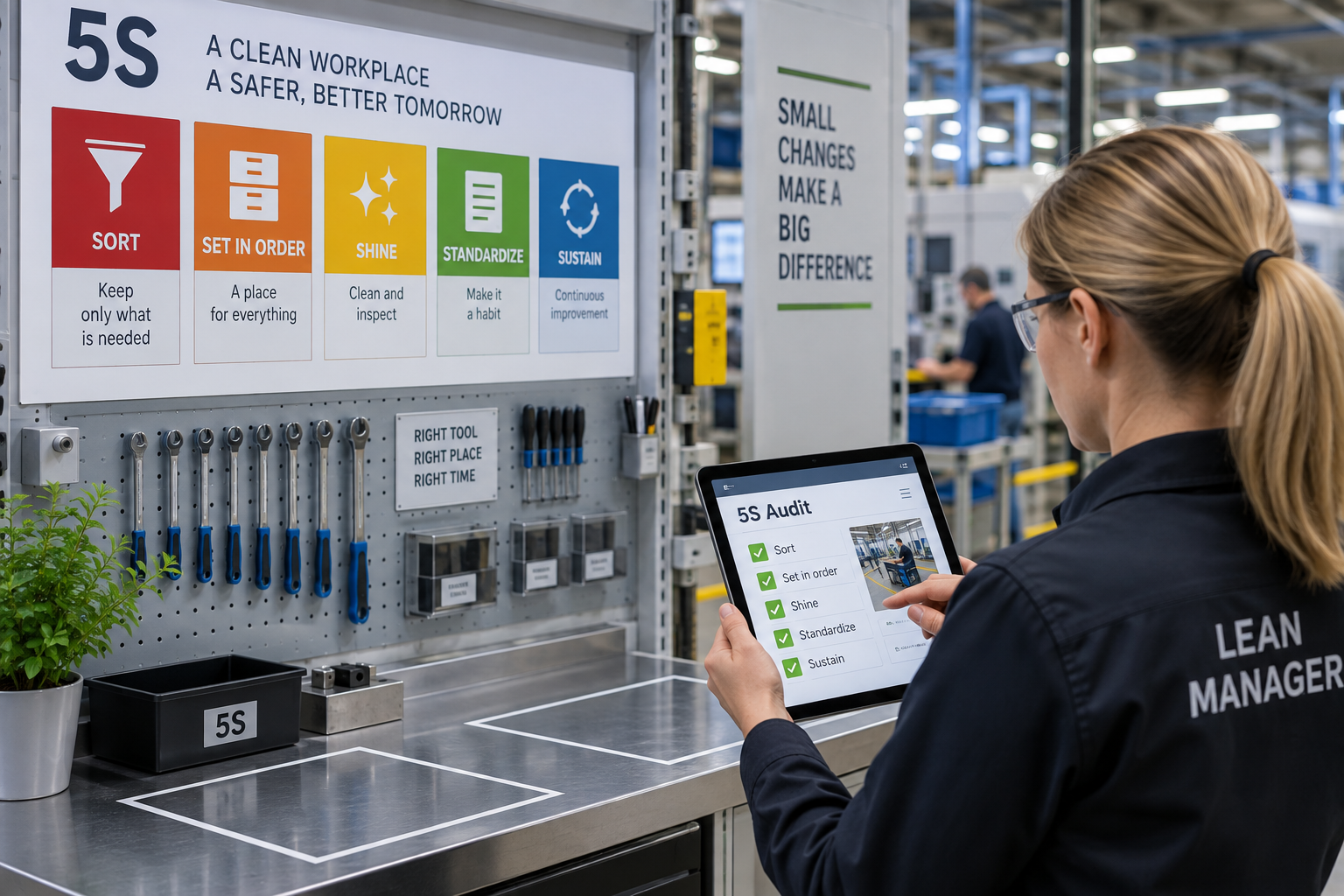
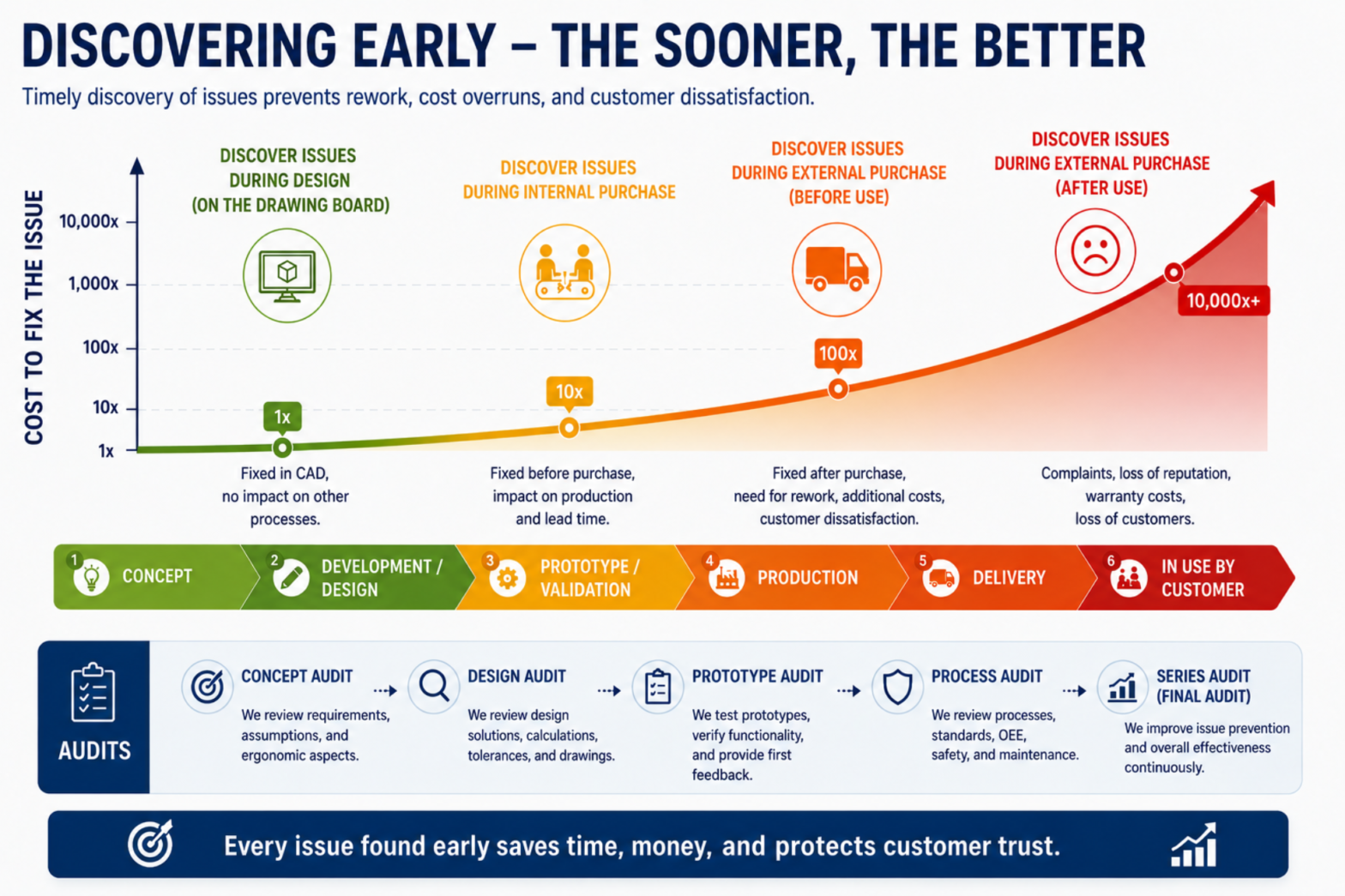
- DAM (Digital Audit Management) systematically manages audits, safety checks, and compliance.
- APS (Advanced Problem Solving) supports structured problem solving using A3, 8D, and 5Why methods.
- ASM (Advanced Skills Matrix) manages competencies and supports workforce multiskilling.
All tools within PSB are interconnected, meaning that data from one module directly enhance another. Audit results can trigger problem-solving actions, maintenance data appear in efficiency KPIs, and workforce competencies are linked to production requirements and continuous improvement needs. This creates a transparent and connected digital environment where information flows seamlessly.
Integration and Connectivity
PSB can integrate with other information systems such as:
- ERP (tasks, KPIs, costs),
- MES (efficiency, downtimes),
- BI (Power BI, Tableau) for advanced analytics,
- external solutions such as Evocon for OEE.
This allows companies to reduce the number of separate tools, improve user experience, lower license costs, and maintain integration with existing enterprise systems.
Conclusion
ERP is the backbone of a company, MES its heart, SCADA the senses, CMMS maintains reliability, BI is the analytical brain, and PLM the memory of products. Performance Storyboard® connects all these elements – goals, people, methods, and data – into a unified framework that enables companies to turn digitalization into true competitive advantage.